

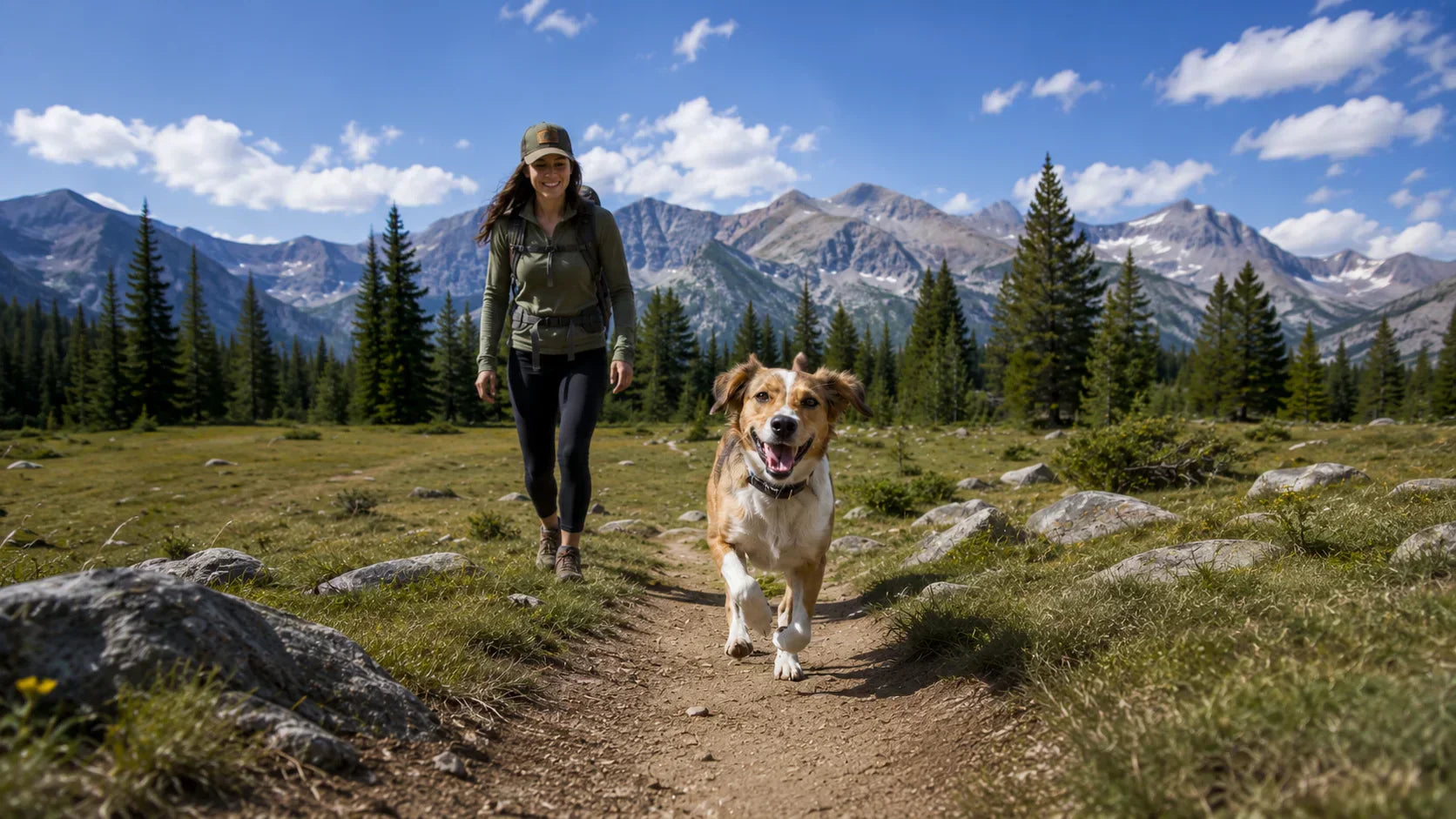
Good dog ownership means more than love, food, and play. It also means knowing when your dog should stay on a leash and when more freedom may be appropriate. Many outdoor problems start when leash manners are weak or basic commands are not reliable. If your dog gets distracted, pulls hard, or ignores you, a simple walk can turn stressful fast. The good news is that clear rules and steady training can help you make safer choices every time you head outside.
Dog leash laws are based on real incidents where loose dogs caused accidents, bites, or conflicts. For example, there have been news reports of dogs running into traffic and causing serious car accidents, such as a case reported by ONSCENE TV News where a loose dog led to a multi-vehicle crash. Dog bite incidents involving off-leash dogs are also frequently covered, including reports by CNN on injuries caused when uncontrolled dogs approached strangers. In addition, wildlife chases have resulted in fines and stricter enforcement, as noted in National Park Service reports about dogs disturbing protected animals (https://www.nps.gov/articles/pets.htm). Owners may also face legal responsibility if an off-leash dog causes harm.
These laws aim to prevent risks, but they vary widely by location. Some places require dogs to be leashed at all times, while others allow off-leash activity in designated areas like dog parks. Rules may also differ for trails, beaches, and campgrounds, and some areas limit leash length, such as the six-foot rule in Los Angeles County.
Because regulations change by city, park, or state, it is important to check local rules before going out. When in doubt, keep your dog on a leash.
A dog on a leash is physically connected to the owner or handler through a leash. This gives the owner control over the dog’s movement, distance, and direction. Walking a dog on a leash is the most common and safest option for public spaces such as sidewalks, neighborhood streets, parks, parking lots, and busy trails.
A dog off leash is not physically attached to the owner. The dog can move more freely, but the owner is still responsible for keeping the dog under control. Off-leash freedom should only happen where it is legal, safe, and appropriate.
Several factors should guide your decision before letting your dog off leash.
The first factor is the law. If local dog leash laws require dogs to be leashed, your dog should stay on a leash, even if they are well trained.
The second factor is your dog’s behavior. A dog that runs after squirrels, jumps on people, ignores recall, barks at other dogs, or becomes overly excited should not be off leash in open public spaces.
The third factor is the environment. Busy streets, crowded parks, parking lots, unfenced areas, wildlife zones, and narrow trails are usually not safe places for off-leash activity.
The fourth factor is other people and pets. Not everyone wants to be approached by a dog. Some dogs are nervous, reactive, elderly, injured, or in training. Keeping your dog on a leash shows respect for other people sharing the same outdoor space.
Leash walking gives you structure, safety, and a real chance to teach better leash manners. It helps you prevent accidents, avoid conflict with other dogs, and guide your pet through distracting spaces without losing control. That matters a lot when leash pulling is still an issue.
One of the biggest benefits of walking a dog on a leash is control. A leash helps you guide your dog away from traffic, unsafe objects, aggressive animals, wildlife, and other hazards.
Even a well-behaved dog can react suddenly to a loud noise, moving bicycle, running child, or nearby animal. With a leash, you can quickly redirect your dog and prevent dangerous situations.
Using a leash in public can also help reduce bite risks. The CDC notes that responsible pet ownership, including socializing dogs and using a leash in public, can help prevent dog bites.
A dog on a leash is also easier to manage in high-distraction places. This is especially important for puppies, newly adopted dogs, strong dogs, reactive dogs, or dogs that tend to pull. A leash does not replace training, but it gives you an important layer of safety while training is still in progress.
Walking a dog on a leash is also a valuable training opportunity. During daily walks, dogs learn how to move calmly beside their owner, ignore distractions, wait at crossings, and pass people or other dogs politely.
Leashed walks can support better socialization because your dog gets exposed to different sounds, smells, surfaces, people, and environments in a controlled way. Instead of rushing into every interaction, your dog learns to observe, stay calm, and follow your lead.
Good leash manners also protect your relationship with neighbors and other dog owners. Letting a dog run up to strangers may seem harmless, but it can create stress or conflict. A polite dog on a leash gives people space and helps make public areas more comfortable for everyone.
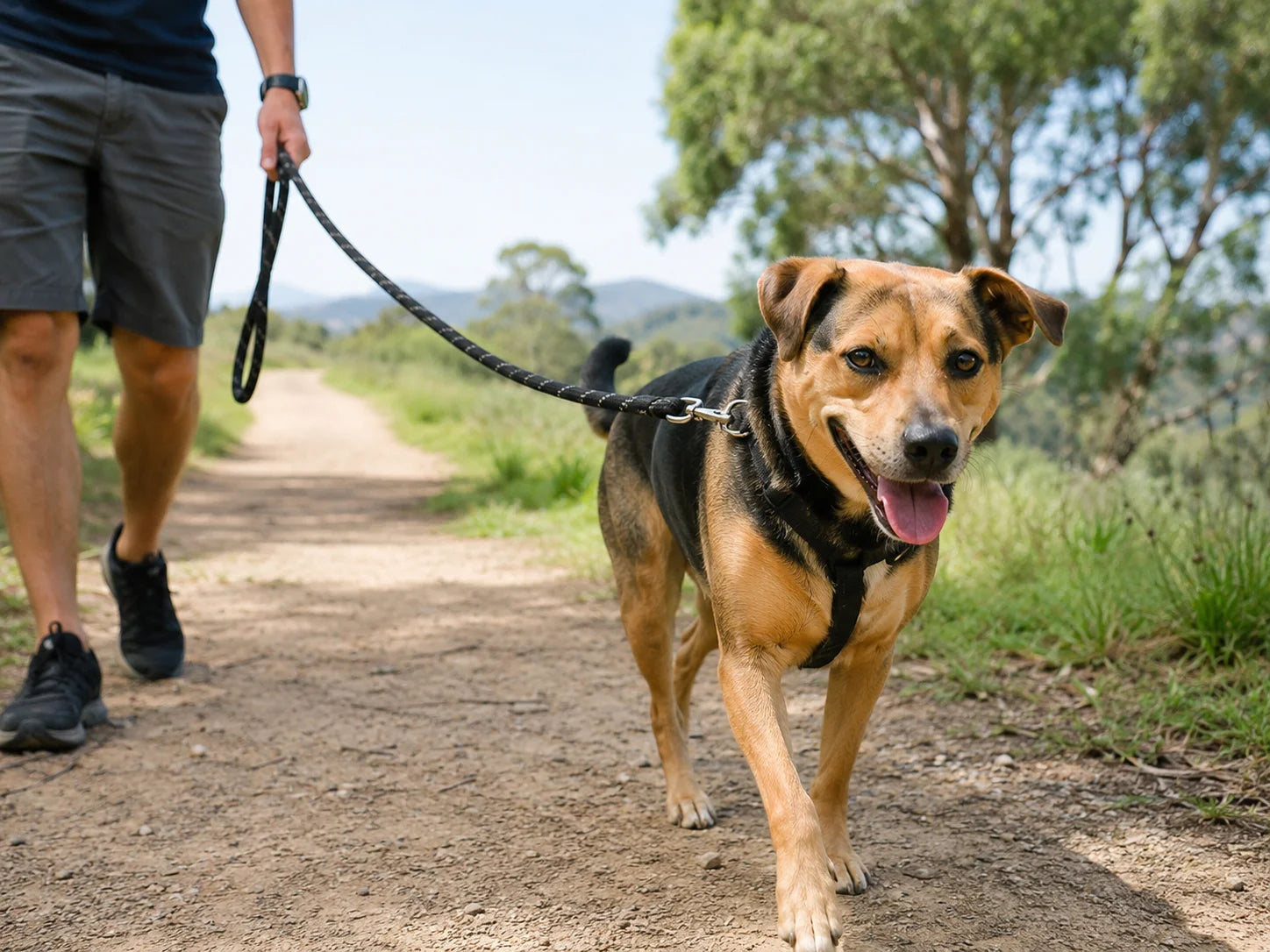
A dog off leash should only be allowed in areas where off-leash activity is permitted and safe. The most common places include fenced dog parks, designated off-leash areas, private fenced yards, dog training fields, and certain marked beaches or trails.
A fenced dog park is often one of the safest places for off-leash play because the area is designed for dogs to run and socialize. However, even inside a dog park, owners must supervise their dogs closely. Some city dog park rules require owners to remain inside the park, keep a leash available, clean up after their dogs, and remove aggressive dogs immediately.
For open spaces such as beaches or trails, owners need to be extra careful. An area may look open and safe, but it may still have leash rules, wildlife protection rules, seasonal restrictions, or hidden hazards.
Before letting your dog off leash, ask yourself:
Is this area officially marked as off leash?
Can I see my dog at all times?
Will my dog come back immediately when called?
Are there other dogs, children, cyclists, or wildlife nearby?
Is the area fenced or safely away from traffic?
If the answer to any of these questions is no, it is better to keep your dog on a leash.
Off-leash freedom should be earned through training. A dog off leash needs more than basic friendliness. They need reliable obedience in real-world environments.
The most important skill is recall. Your dog should come back immediately when called, even around distractions. A dog that only comes back at home or in quiet places may not be ready for off-leash spaces.
Other useful skills include “stay,” “leave it,” “wait,” and calm walking near people or other dogs. Your dog should also be able to stay within sight and avoid chasing wildlife.
Owners should practice these skills first in safe, controlled environments. A long leash can be helpful during training because it gives your dog more freedom while still keeping them connected to you.
Off-leash success is not about letting a dog do whatever they want. It is about giving freedom while maintaining control.

More freedom for your dog, more convenience for you.
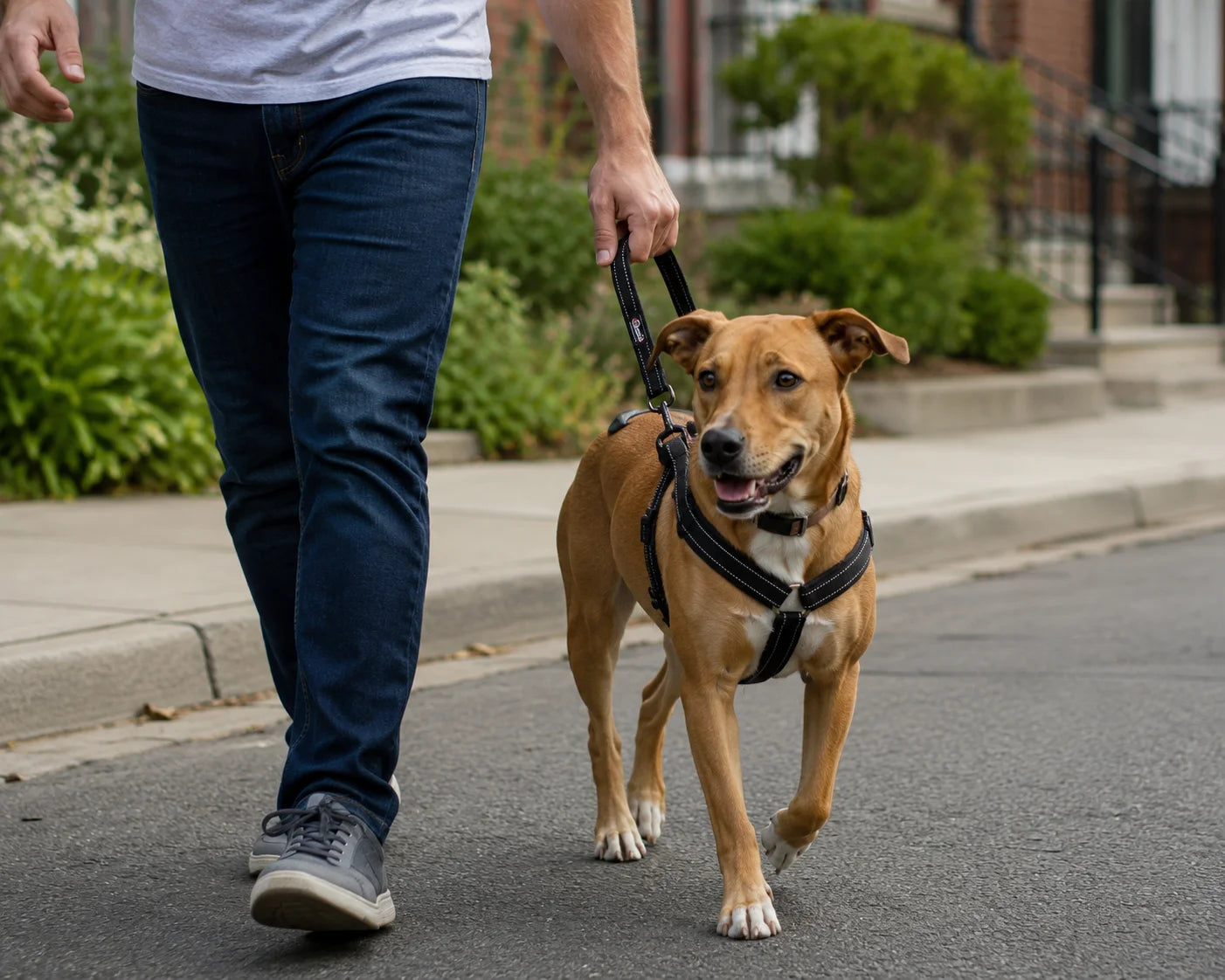
Neighborhood streets and city sidewalks are places where leash control matters the most. Cars, delivery trucks, children, joggers, cyclists, other dogs, and unexpected noises can all create sudden distractions.
In these areas, a dog on a leash is usually the safest choice. A standard leash gives enough space for comfortable walking while keeping your dog close enough to control. For crowded sidewalks, crossings, or busy streets, a shorter hold or traffic handle can help keep your dog safely beside you.
Walking a dog on a leash in the neighborhood also helps build a predictable daily routine. Your dog learns where to walk, when to pause, and how to behave around familiar distractions.
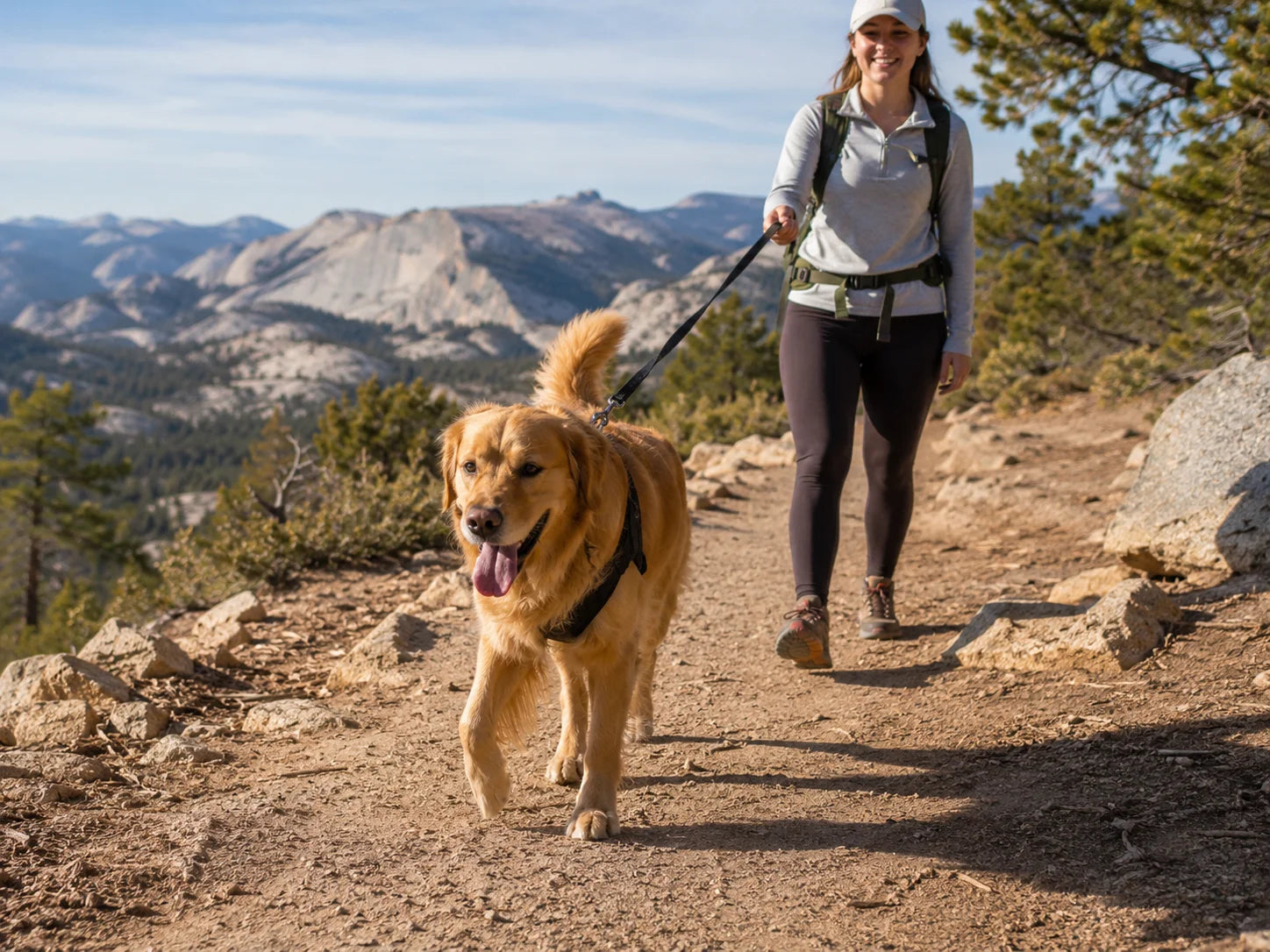
Outdoor recreation areas often have their own rules. A park may allow dogs, but still require them to stay on leash. A trail may be dog-friendly, but only if dogs are restrained. A beach may allow dogs off leash in one section but require leashes in another.
National parks and protected outdoor areas may have stricter rules because of wildlife, sensitive habitats, and visitor safety. For example, Yosemite’s B.A.R.K. Ranger guidance says pets must be restrained on a leash no longer than six feet, even if the pet is well behaved.
Campgrounds also require careful leash use. Dogs may become excited by wildlife, food smells, unfamiliar people, or nearby pets. Keeping your dog on a leash around campsites and shared paths helps prevent unwanted encounters and keeps the area safe for everyone.
Before visiting parks, trails, beaches, or campgrounds, owners should check the official rules for that specific location. Do not assume that a dog-friendly place automatically allows dogs off leash.
For most daily walks, a standard leash is the most practical choice. A 4- to 6-foot leash gives your dog enough room to walk comfortably while still allowing you to maintain control.
This type of leash works well for neighborhood walks, city sidewalks, public parks, and general outdoor use. It is simple, reliable, and easy to manage.
A standard leash is also a good choice for training basic walking manners. It helps your dog learn to stay near you, respond to direction changes, and avoid pulling too far ahead.
For early morning, evening, or low-light walks, a reflective leash can improve visibility. This is especially helpful near roads, parking lots, or shared paths where drivers and cyclists need to see you and your dog.
A traffic handle leash is useful in busy areas because it gives you closer control when needed. It can help when crossing streets, passing other dogs, entering stores, walking through crowds, or moving through narrow spaces.
If your dog is strong, excited, or still learning leash manners, a traffic handle can make outdoor walks feel safer and more manageable.
A long leash can be useful for training in open areas. It gives your dog more room to explore while still keeping them connected to you. This can be helpful for recall practice, relaxed field walks, and preparing for future off-leash training.
However, long leashes are not ideal for crowded sidewalks, busy parks, parking lots, or areas near traffic. They can become tangled, trip people, or allow your dog to get too far away too quickly.
A long leash works best in wide, quiet, open spaces where leash rules allow it and where the owner can safely manage the extra length.
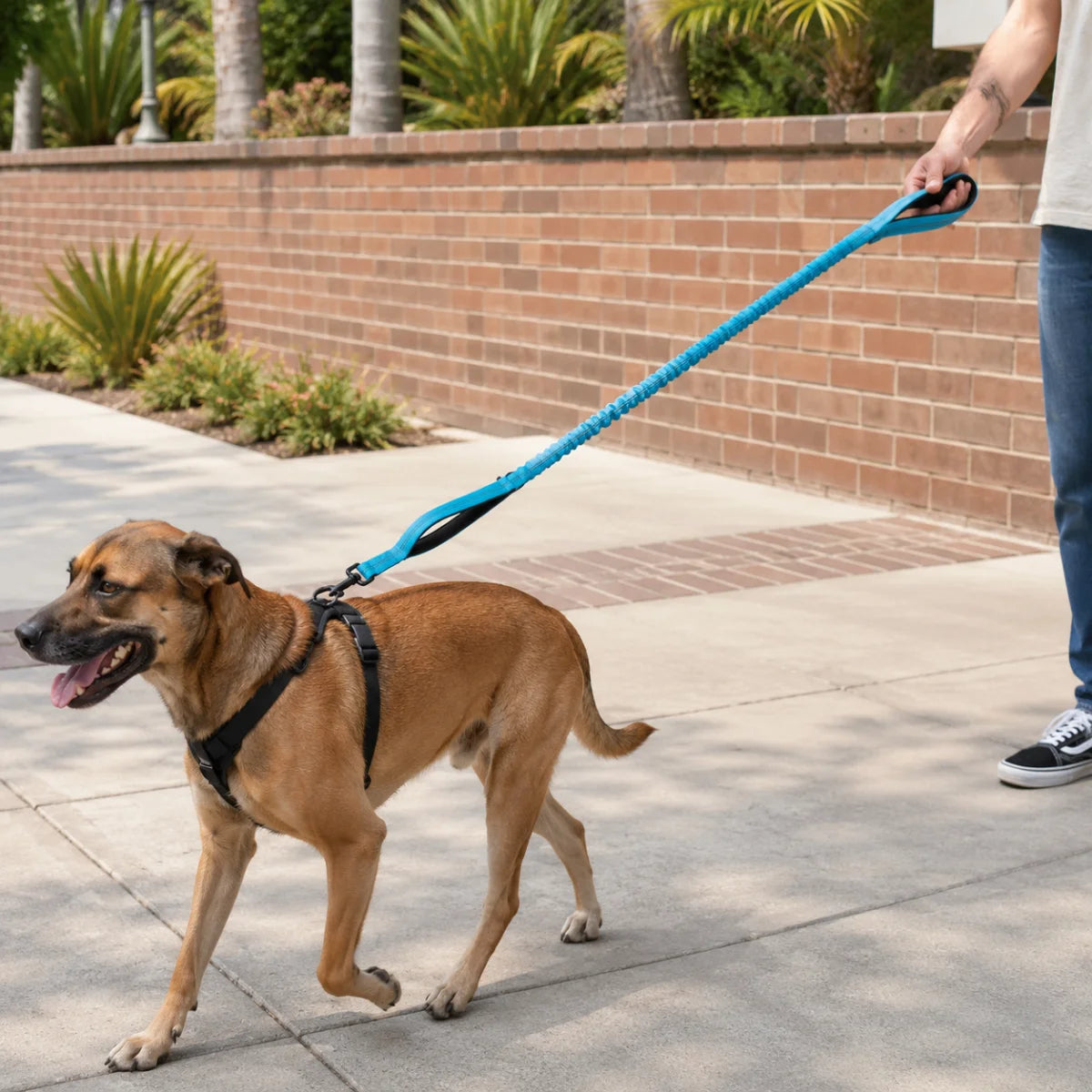
Understanding dog leash laws is an important part of responsible dog ownership. Before walking your dog outdoors, it is always worth checking local rules, posted signs, and park or trail guidelines.
A dog on a leash is usually the safest choice in public spaces, especially around traffic, people, other dogs, and wildlife. Walking a dog on a leash gives you control, supports better training, and helps prevent accidents or conflicts.
A dog off leash can enjoy more freedom, but only in legal, safe, and controlled areas. Off-leash time requires reliable training, strong recall, and owner awareness.
The best approach is not simply choosing leash or off leash. It is knowing when each option is appropriate. With the right leash, good training, and respect for outdoor rules, every walk can be safer, smoother, and more enjoyable for both you and your dog.
Please read our FAQs page to find out more.
It can be illegal to walk a dog off leash in many public areas, depending on local dog leash laws. Some cities require dogs to be on a leash in parks, sidewalks, streets, and shared outdoor spaces. If an area is not clearly marked as off leash, it is safer to keep your dog leashed.
Your dog may be ready for off-leash time if they have reliable recall, stay within sight, ignore distractions, and remain calm around people, dogs, wildlife, and traffic. Start in safe, enclosed spaces before trying open off-leash areas.
For most public walks, a 4- to 6-foot leash is a practical choice because it gives your dog some freedom while still allowing control. Some cities specifically limit leash length in public areas; for example, New York City requires dogs in public places to be leashed with a leash no longer than six feet.
Puppies should only be off leash in safe, enclosed areas. Young dogs are easily distracted and may not have reliable recall yet. For public walks, puppies should usually be on a leash so they can learn good walking habits safely.
Yes. Even in an off-leash dog park, you should bring a leash. You may need it when entering or leaving the park, separating dogs, calming your dog, or following rules outside the fenced area.