
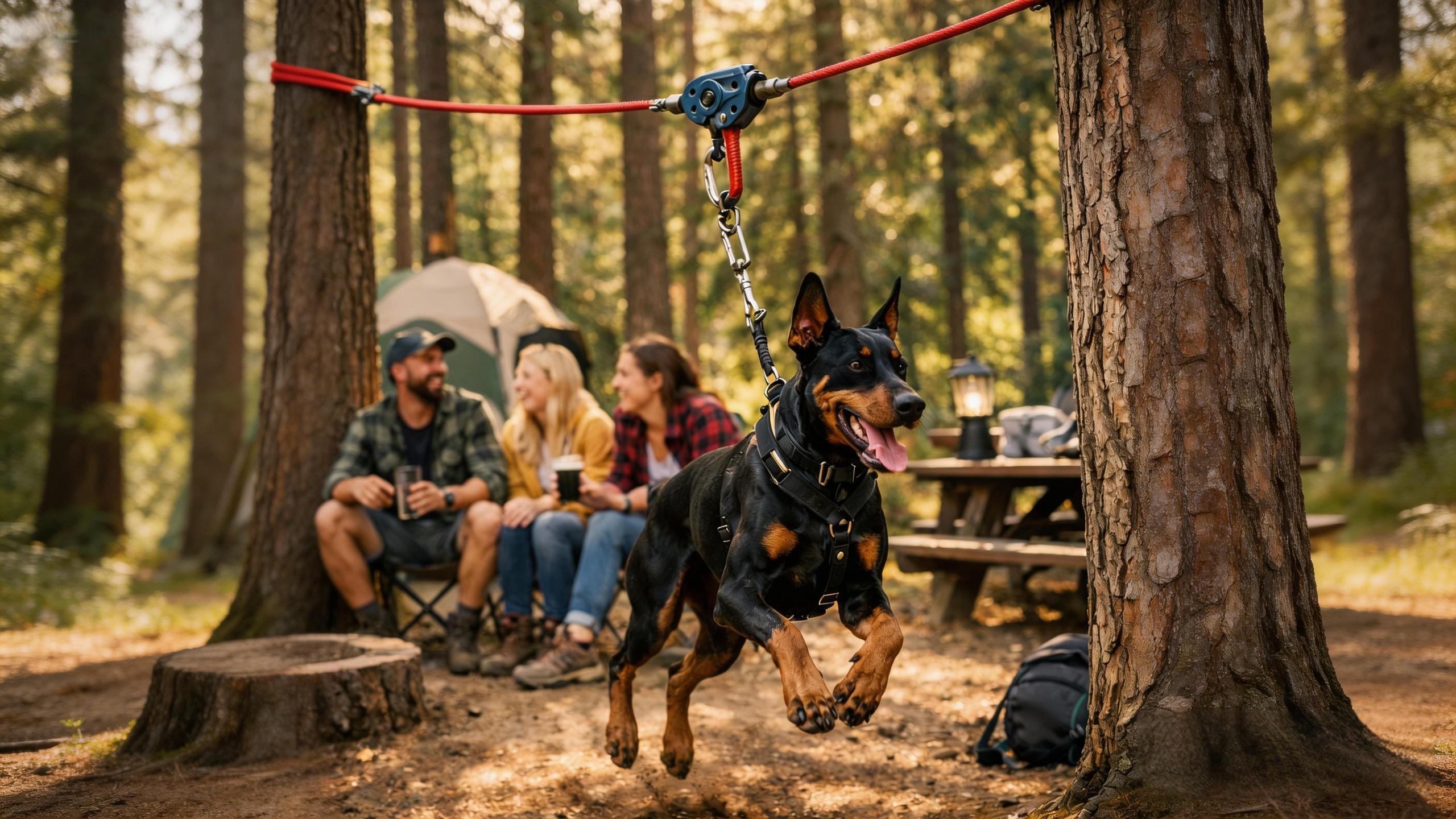
Choosing the right dog tie out is more important than many dog owners realize. A tie out that is too short can limit your dog's movement and cause frustration, while one that is too long or not strong enough may create safety risks.
This dog tie out guide will help you understand how to choose a dog tie out based on your dog’s size, behavior, environment, and daily activities. Whether you need a tie out for your backyard, camping trips, or outdoor training, selecting the correct length and strength ensures both safety and comfort.
The first step when you choose a dog tie out is to evaluate your dog’s weight, strength, and pulling behavior. Bigger dogs naturally produce more force, especially when they see other animals, get excited, or try to chase something. Choosing the wrong size dog tie out may lead to breakage or safety risks.
Dog tie out sizing typically follows weight ranges. Dogs under 25 lbs usually only need a lightweight tie out, medium dogs (25–60 lbs) should use medium-duty options, large dogs (60–100 lbs) need heavy-duty steel cable tie outs, and dogs over 100 lbs require industrial-strength versions designed for strong pullers. A practical rule in any dog tie out guide is to choose a dog tie out rated for at least two to three times your dog’s body weight for reliable safety.
Length is one of the most important factors when you choose a dog tie out, because it directly affects your dog’s freedom of movement and overall safety. A properly sized tie out gives your dog enough room to explore while preventing accidents or tangling.
Below is a quick dog tie out length guide to help you choose the right size based on your space and usage needs. A 10–15 ft dog tie out works best for small yards, patios, or training situations where better control is needed. A 20–30 ft dog tie out is the most popular choice for standard backyard use because it provides a good balance between freedom and safety. For larger properties, a 30–50 ft dog tie out is ideal since it allows dogs more room to exercise and explore. If you frequently go camping or live in a rural area, a 50+ ft dog tie out provides maximum roaming space and flexibility. When following a proper dog tie out guide, the key is to match the tie out length to both your outdoor space and your dog’s energy level.
When using a dog tie out guide, many owners focus only on size and weight. However, behavior is just as important when you choose a dog tie out. Dogs with different personalities create very different levels of tension, even if they weigh the same.
Dog behavior plays a major role in how you choose a dog tie out because temperament directly affects the amount of force placed on the cable. Calm or low-energy dogs that stay within a small area usually do well with a standard dog tie out that matches their weight rating, since they rarely create sudden stress on the line. In contrast, dogs that frequently pull or lunge toward noises, people, or wildlife often need a heavy-duty dog tie out or one with shock-absorbing features, as sudden bursts of force can exceed their actual body weight. Dogs that tend to chew on ropes or softer materials should use a vinyl-coated steel cable dog tie out for better durability and safety. Meanwhile, high-energy or easily excited dogs benefit from tie outs with 360-degree swivel clips to help prevent tangling, which is one of the most common safety issues mentioned in any professional dog tie out guide. Understanding your dog’s behavior, not just their size, will help you choose a dog tie out that is both safe and long-lasting.
Now that you understand your dog’s size, behavior, and your outdoor space, the next step is to look at the tie out itself. Many owners choose a dog tie out based only on length, but the hardware is just as important. The cable strength, materials, and connectors all affect safety and durability. This part of the dog tie out guide explains what features you should check before you choose a dog tie out.
The length of a dog tie out determines how much space your dog can use. A longer cable gives your dog more freedom to move. A shorter cable gives you more control. You should always balance freedom and safety when you choose a dog tie out. You should also check your yard before choosing the length. Your dog should not be able to reach risks like pools, roads, fences, or stairs. The right dog tie out length helps prevent accidents.
Many dog owners follow a simple rule. They allow about 5 to 10 feet of tie out length for every 10 pounds of body weight. This rule only works as a starting point. Your yard size, your dog's behavior, and your outdoor setup will also affect the final choice. Here is a general reference chart to help you choose a dog tie out length:
| Dog Weight | Tie Out Length | Example Use Case |
|---|---|---|
| 10–25 pounds | 10–15 feet | Ideal for small yards and puppies |
| 26–50 pounds | 15–25 feet | Great for medium breeds like Beagles or Border Collies |
| 51–90 pounds | 25–30 feet | Suitable for large, active breeds like Labradors or German Shepherds |
| 90+ pounds | 30–50 feet | Giant breeds or trolley systems for maximum roam |
Tip: When in doubt, begin with a shorter length and test the full movement area before allowing more range.
When you choose a dog tie out, you should not only look at the length. You should also pay attention to the material. Different materials offer different levels of strength, flexibility, and safety.
Common dog tie out materials vary in strength, flexibility, and intended use. Steel cable is one of the most durable options and works well for dogs that tend to chew. Poly rope is lighter and more flexible, which makes it a good choice for calmer dogs or temporary setups. Reflective dog tie outs improve visibility at night and help owners keep track of their dogs in low light conditions. Shock-absorbing dog tie outs work best for strong or energetic dogs because they help reduce the impact from sudden pulling.
You should always attach a dog tie out to a harness, not a collar. Using a collar can cause serious neck or spine injuries if your dog runs to the end of the line. A harness spreads the force across your dog’s chest and back. This makes it the safest option for tie-out use.
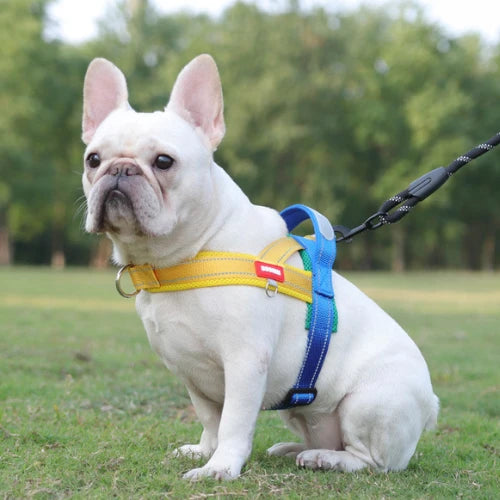
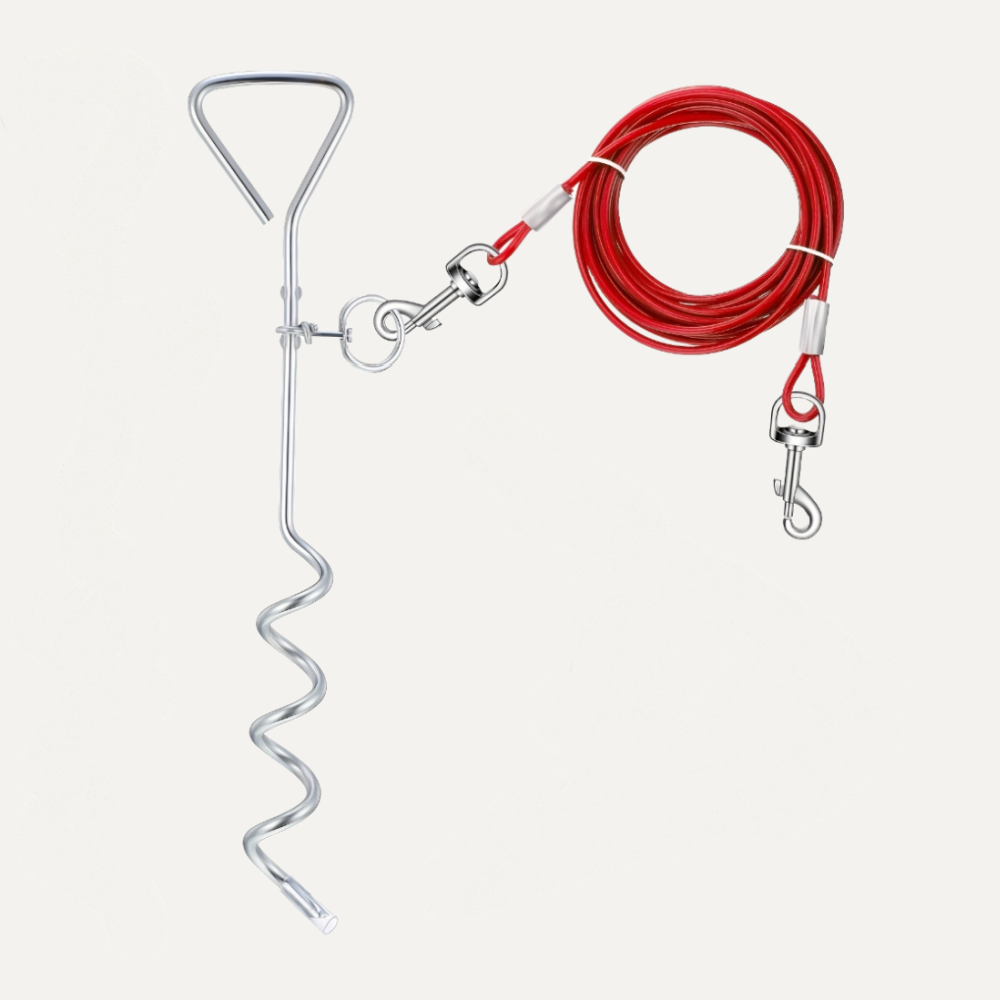
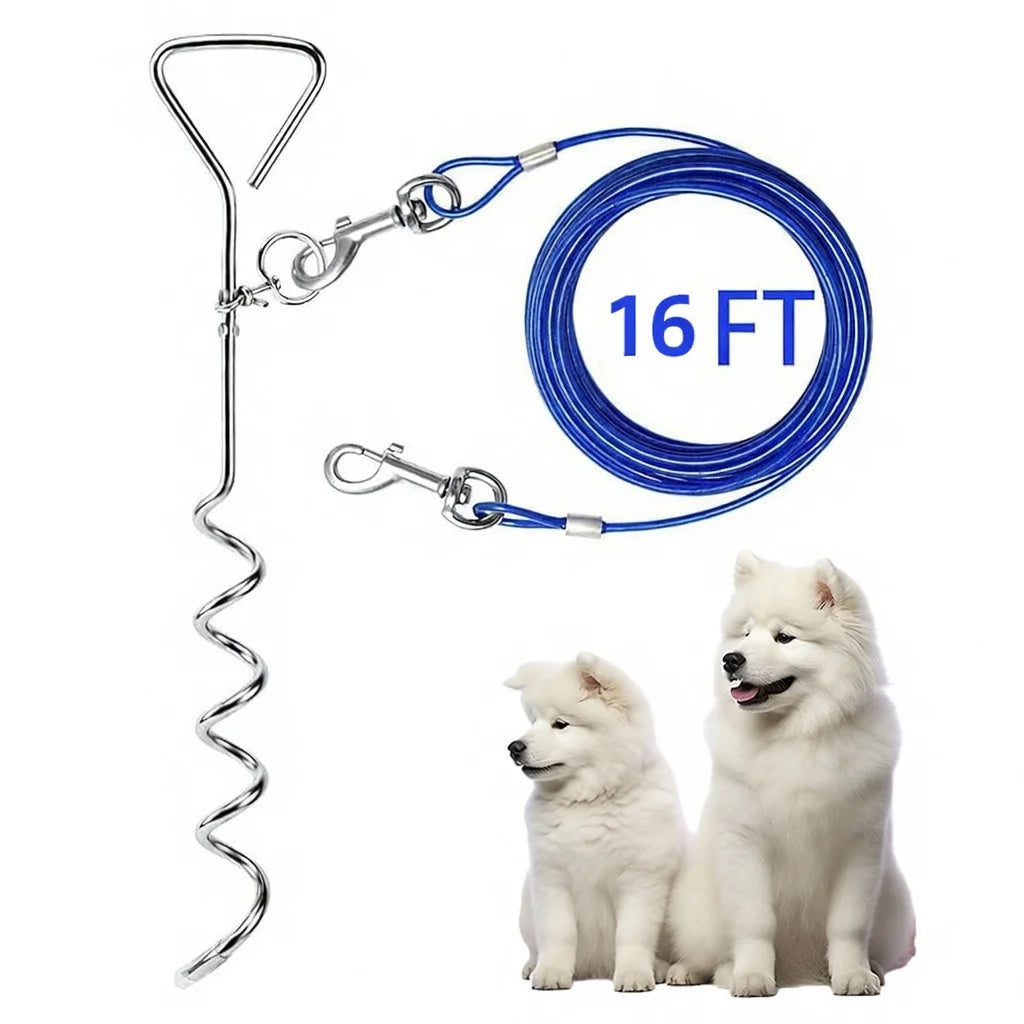
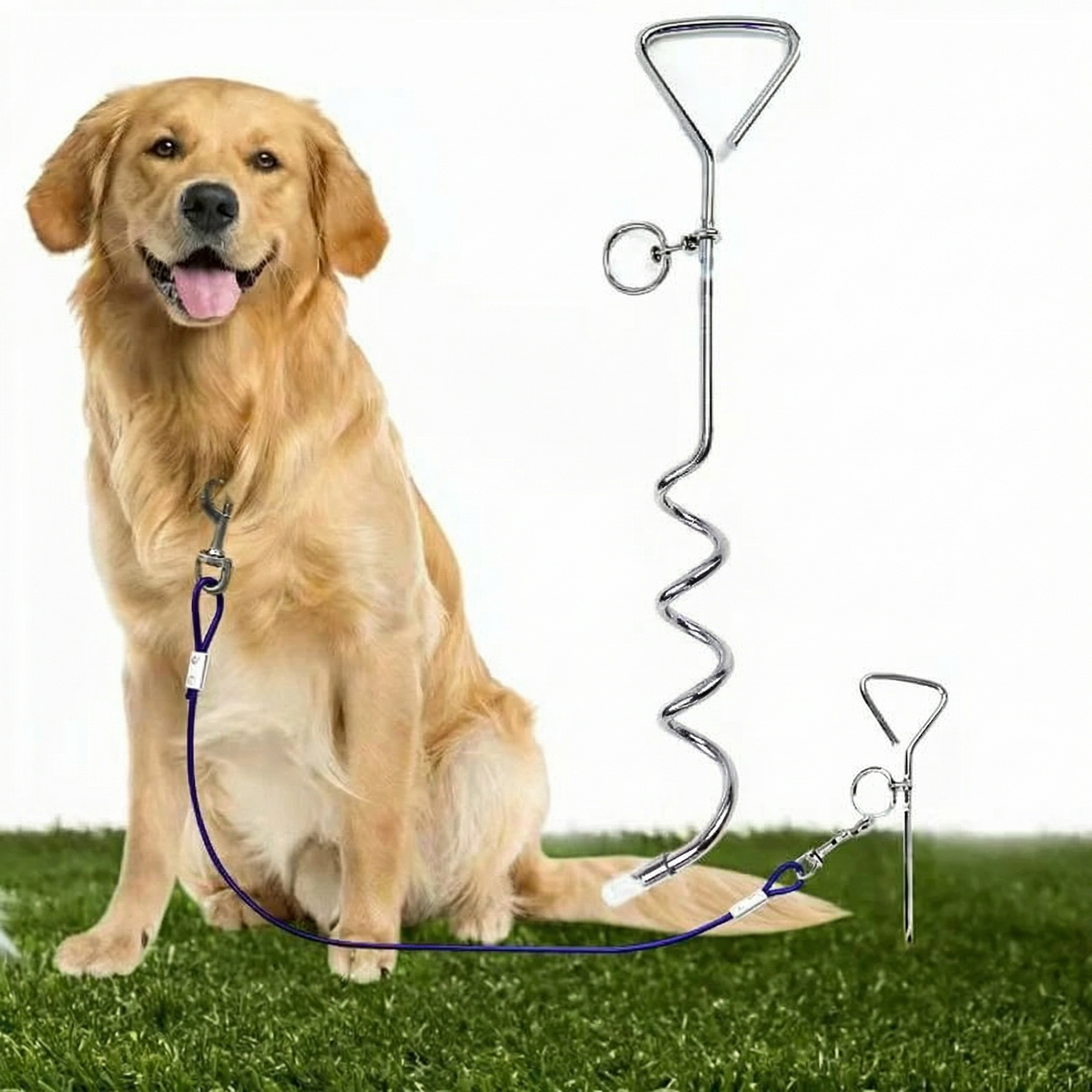
Tangling is one of the most common problems with dog tie outs. You should check that both the stake and the cable clips have 360-degree swivels. These swivels let the cable turn as your dog moves. This helps prevent the line from twisting and forming knots. Using swivel hardware makes your dog tie out safer and easier to use every day.

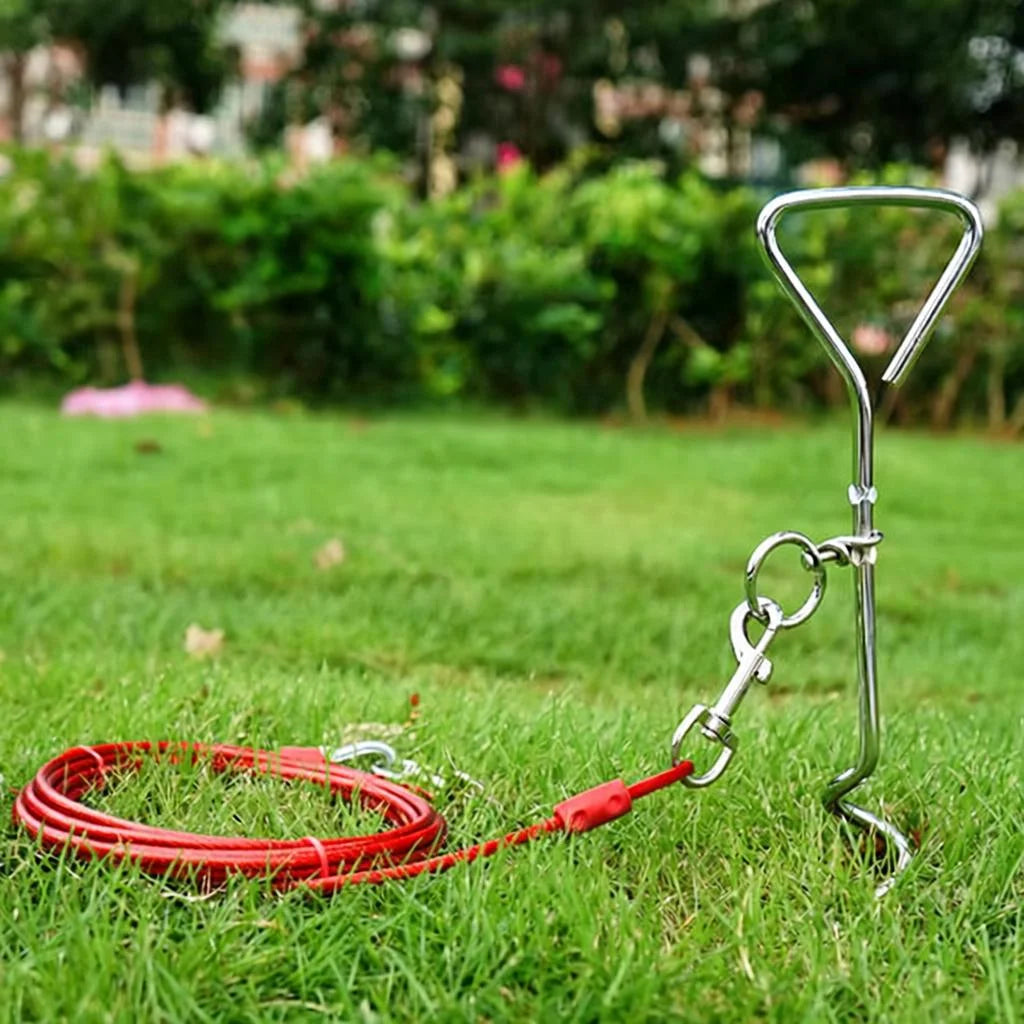
When you set up a dog tie out, the anchor is just as important as the cable. A secure anchor keeps your dog safe and prevents the tie out from coming loose.

Choosing the right equipment does not have to be hard. This dog tie out guide helps you pick the right setup so your dog can enjoy the outdoors safely. You might use a simple stake for a small dog or a heavy-duty trolley for a large breed. Knowing how to choose a dog tie out correctly gives you peace of mind. It also gives your dog safe and happy time outside.

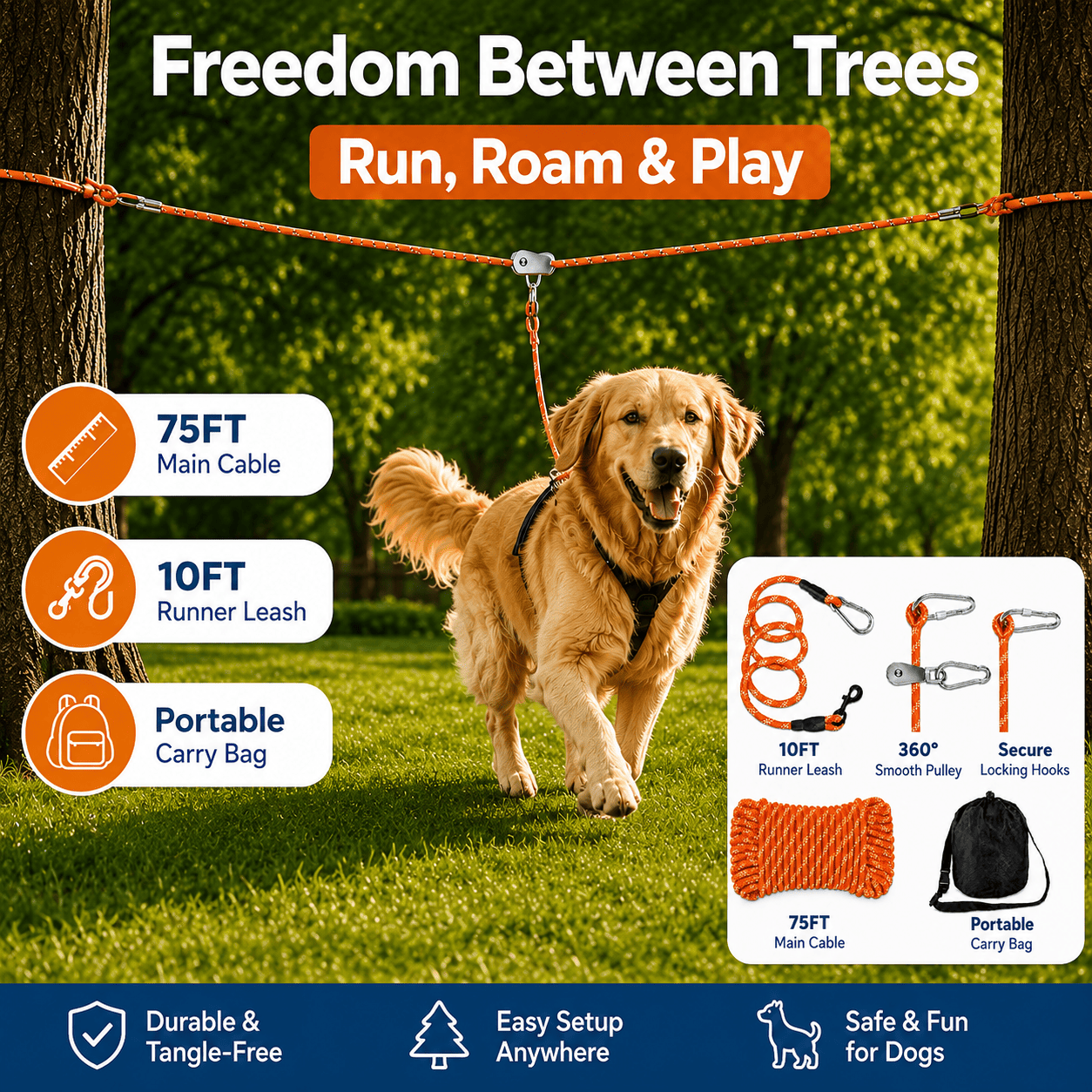
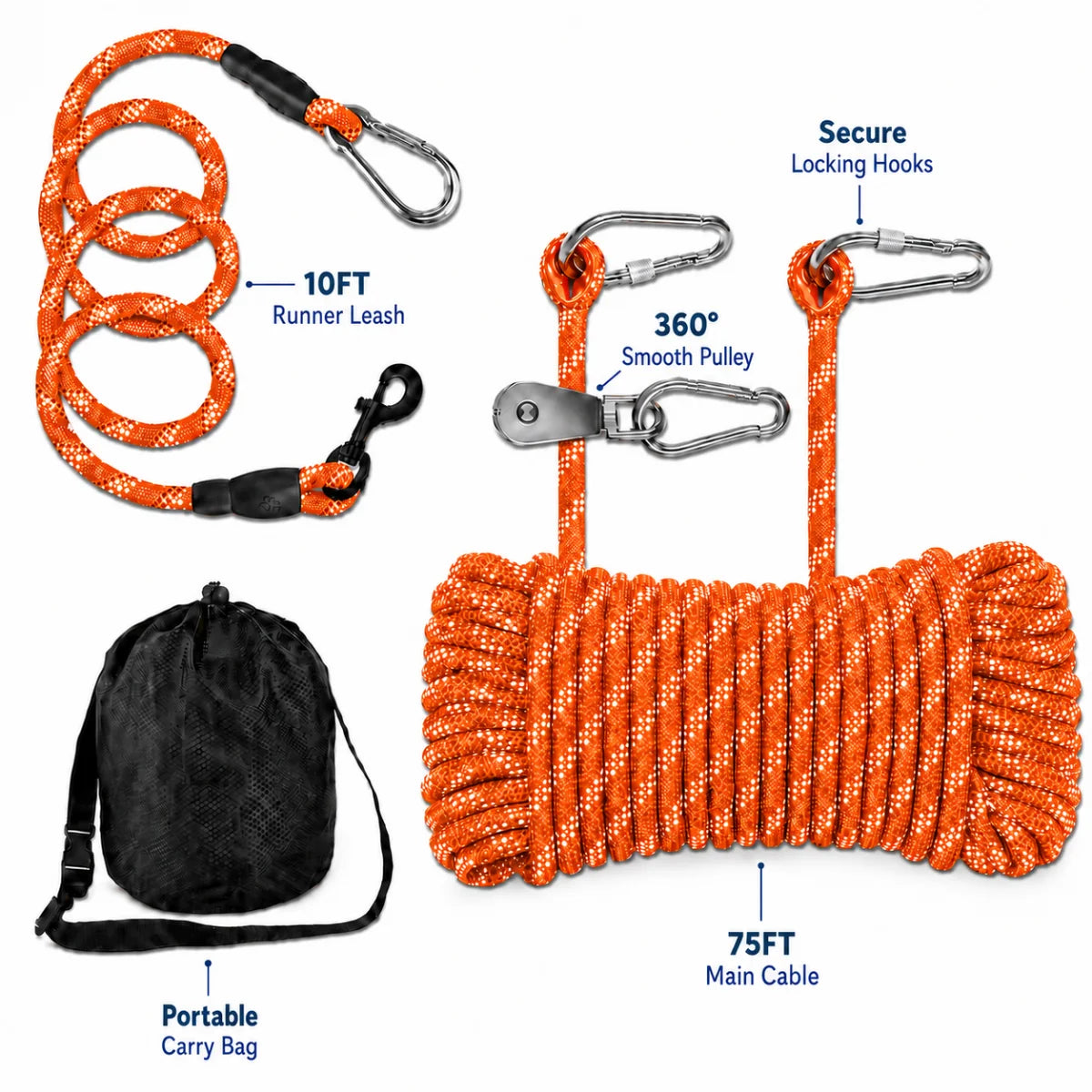
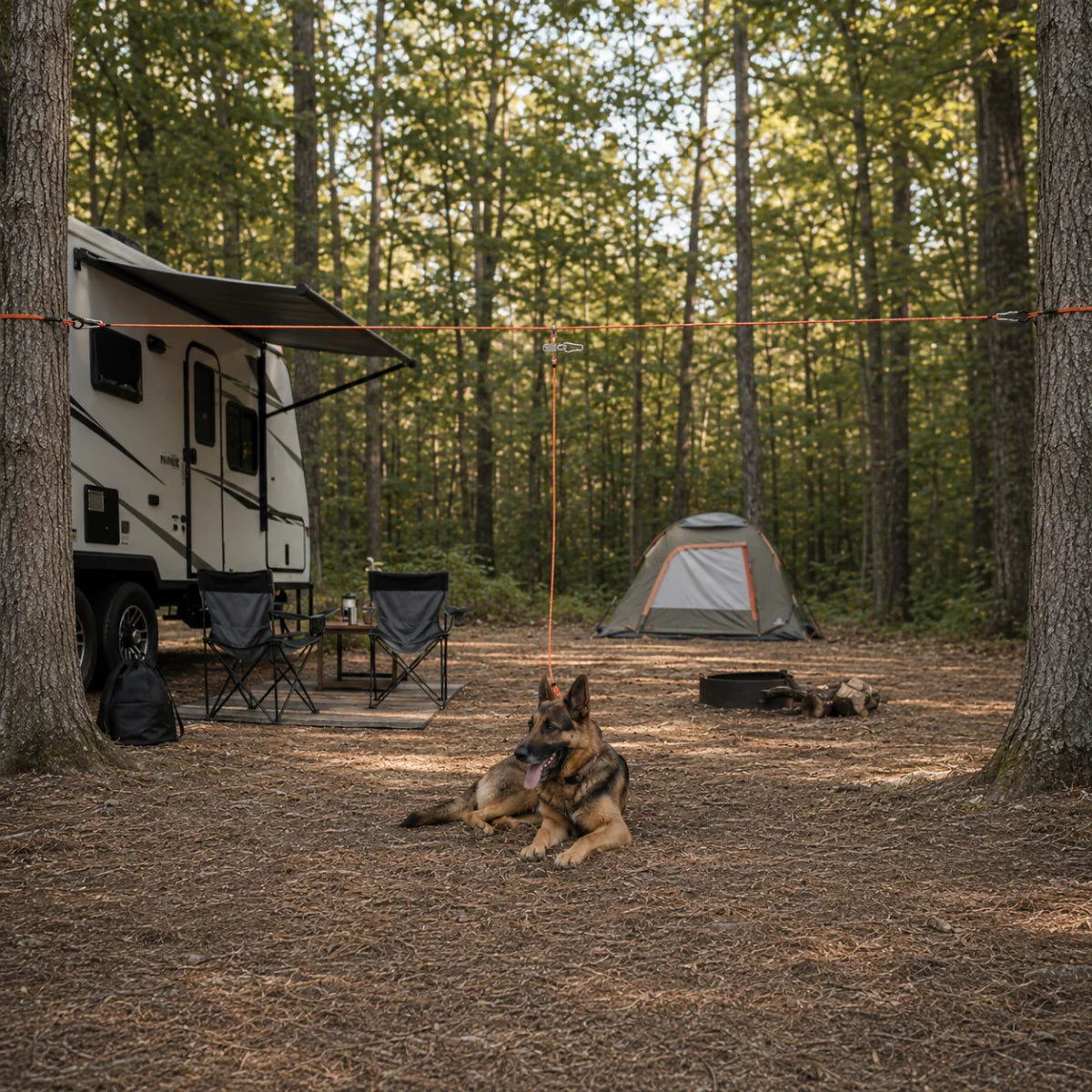
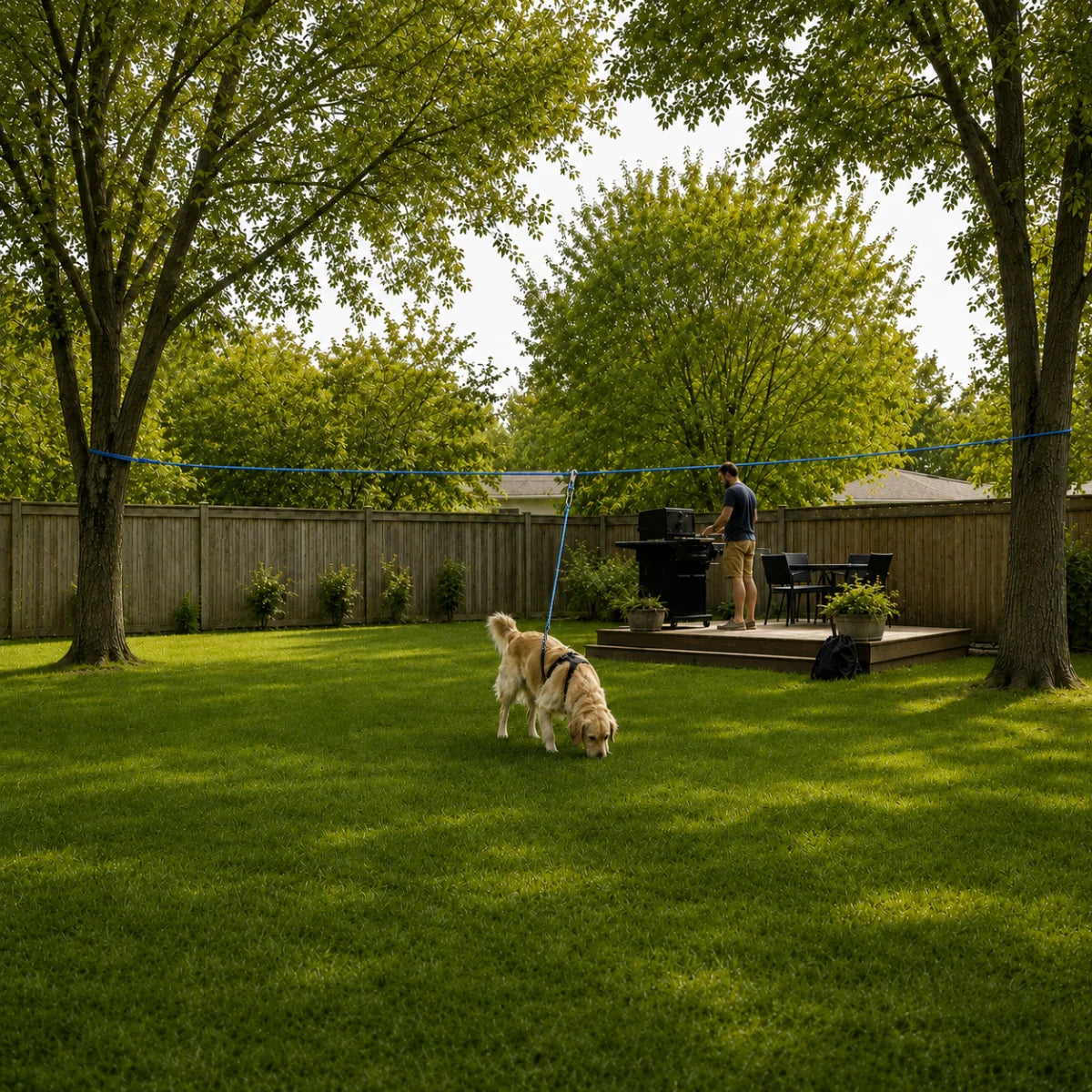
Overhead Outdoor Reflective Dog Tie Out Cable
Please read our FAQs page to find out more.
You can use a dog tie out in many outdoor situations where you want your dog to stay safe while still having room to move. Many owners use dog tie outs in backyards when fences are not available. Dog tie outs also work well during camping trips, picnics, or beach visits when you need a temporary setup. Some people use a dog tie out during outdoor training or while doing yard work so their dog can stay nearby.
Yes, you can use a dog tie out instead of a fence in some situations, especially when you need a temporary or flexible outdoor setup. Many dog owners use tie outs in yards without fencing, during camping trips, or while spending time outdoors. A dog tie out guide recommends choosing the correct length, strength, and anchor so the system stays secure. You should always supervise your dog and make sure the area is safe and free of hazards.
Yes, a dog tie out can be safe when it is used for short periods and with proper supervision. Most experts recommend that owners do not leave dogs on a tie out for long hours or without checking on them. A good dog tie out guide suggests using a harness, choosing the right length, and making sure the area is safe. Owners should also provide water, shade, and a comfortable resting spot. Regular checks help ensure the dog stays safe and comfortable.
Some dogs need time to get used to a dog tie out, especially if they have never used one before. You can start with short sessions and stay nearby so your dog feels safe. You can also add toys or treats to create a positive experience.
A dog can stay on a dog tie out for short periods when the owner is nearby and the area is safe. Most dog tie out guide recommendations suggest using tie outs for temporary outdoor time, not for all-day restraint. Owners should check their dog often and provide water, shade, and breaks for exercise. Many experts suggest limiting tie out time to 30 minutes to a few hours depending on the dog’s comfort, weather, and energy level.