
How to Choose the Best Dog Tie-Out: Cable & Stake Guide
- by JonesMila
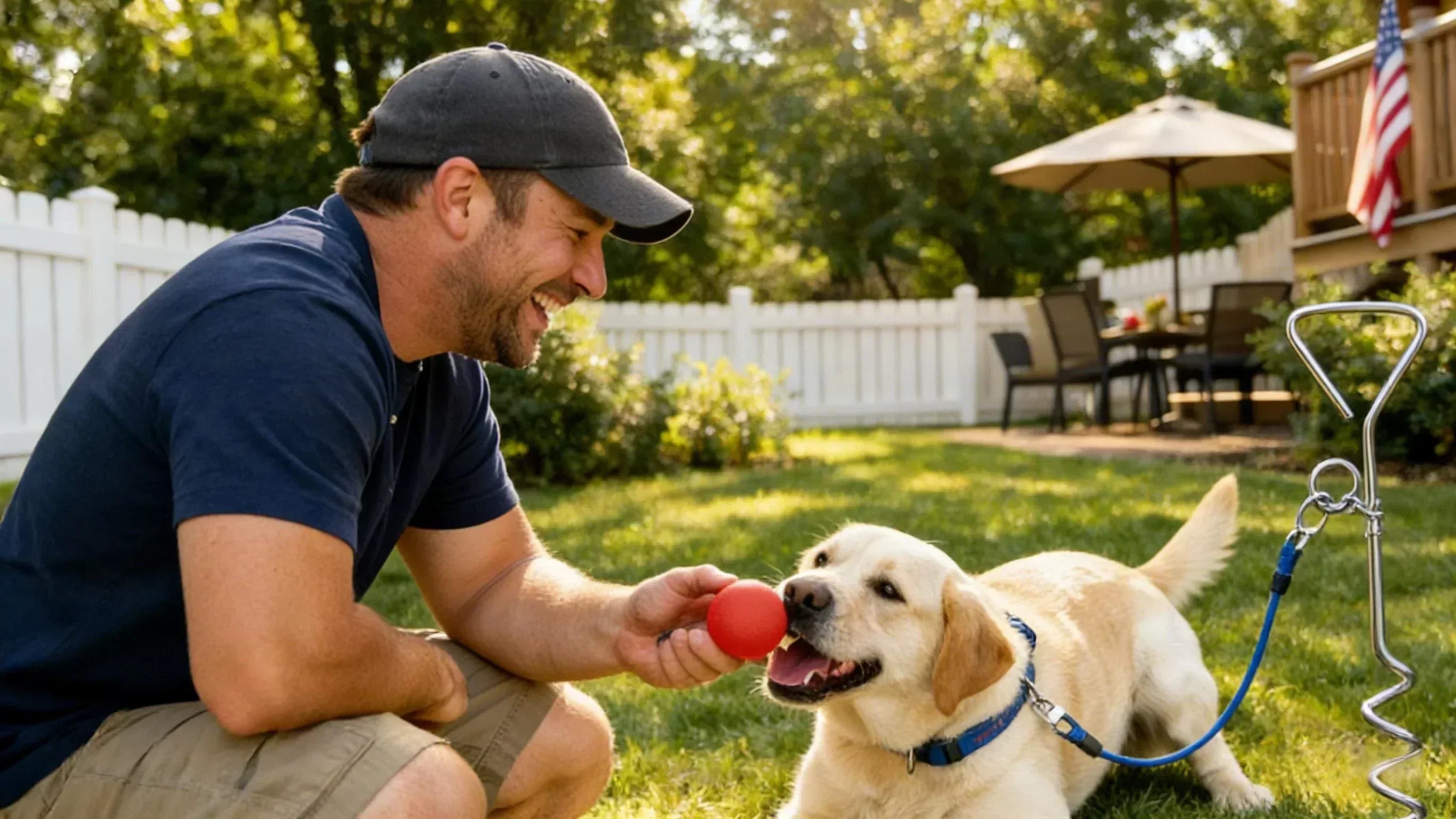
You only wanted to let your dog spend a few minutes outside in the yard. When you went back to check on them, you saw a problem. Your dog had wrapped the line tightly around a tree. The ground stake had come loose from the soil. In the worst case, your dog was no longer there. Even more concerning, one sudden sprint to chase a squirrel could strain or injure their neck.
A dog tie out system seems simple. But when you choose a dog tie out incorrectly—or use it improperly—it can lead to tangling, escape, or injury.
This guide explains how to choose a dog tie out based on five key factors and covers six essential safety rules for safer outdoor use.
Different environments require different setup methods. You should choose a dog tie out based on ground type and stability, not just convenience.
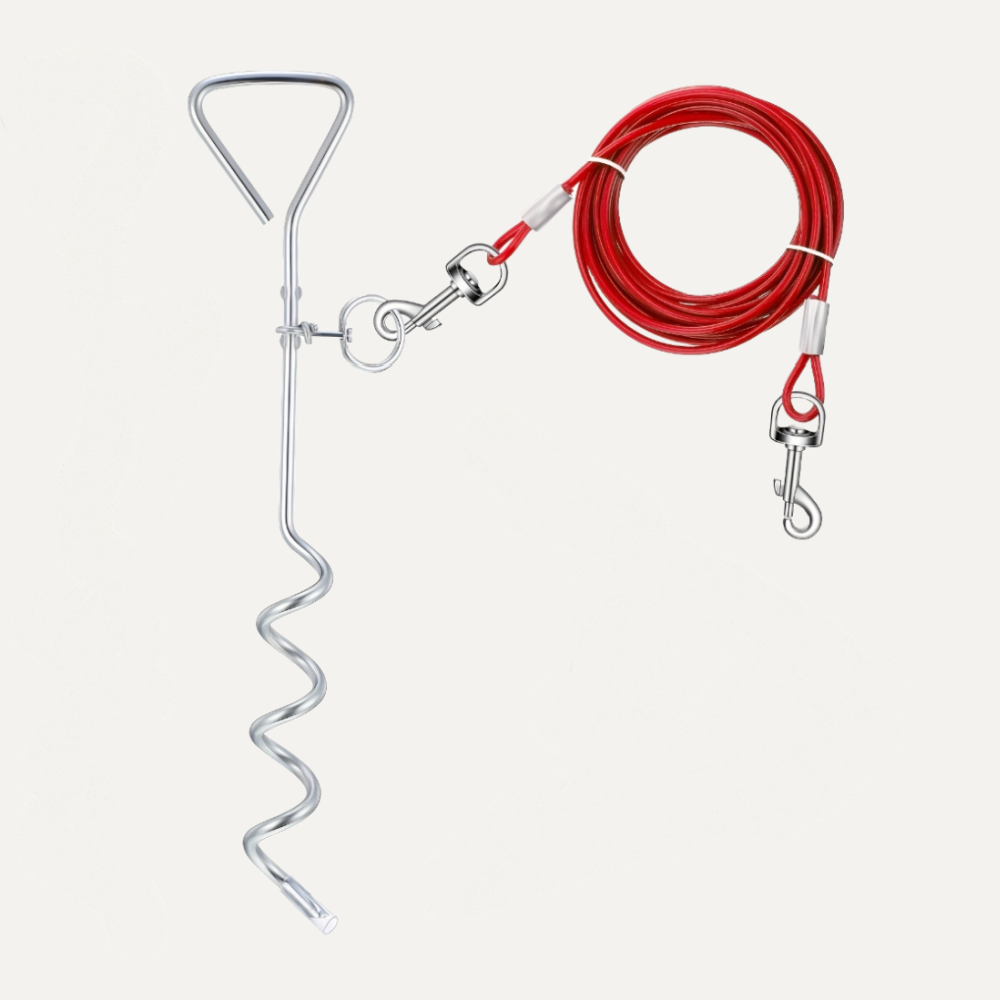
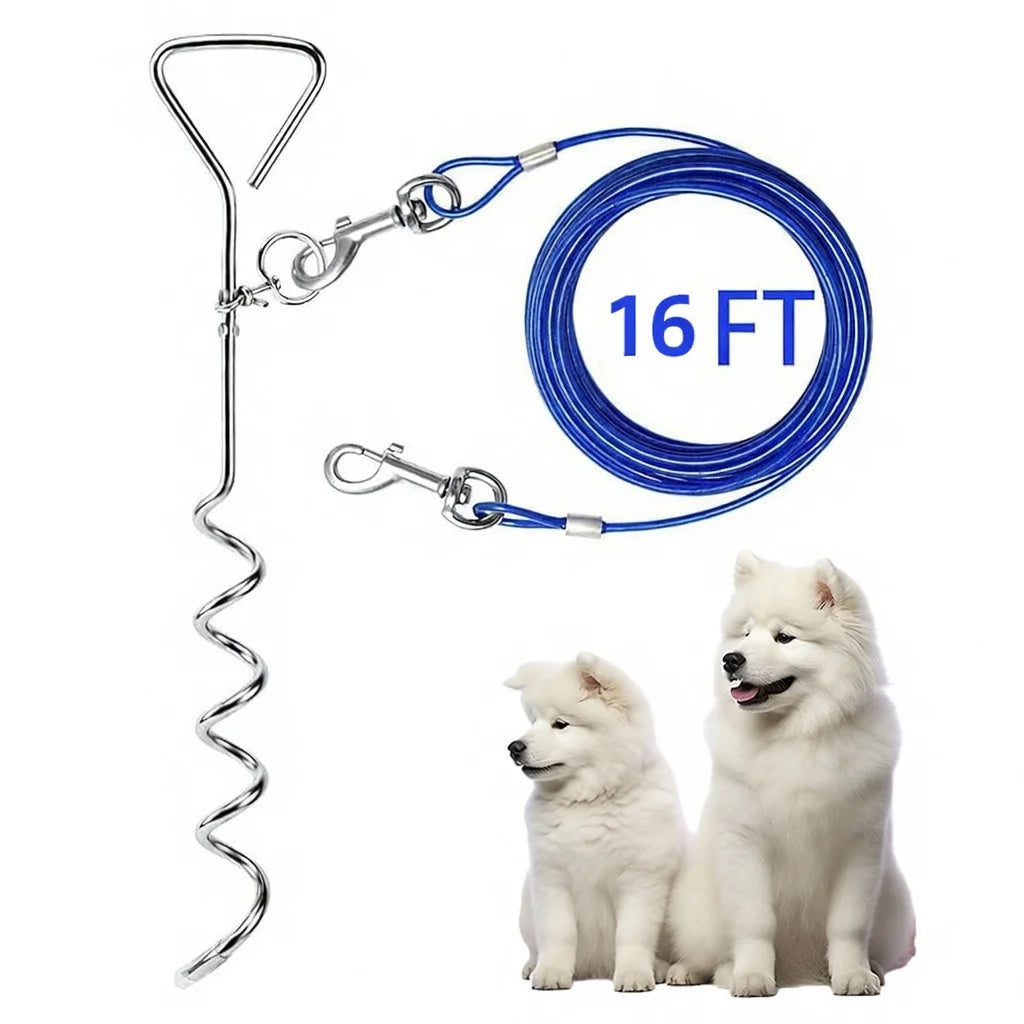
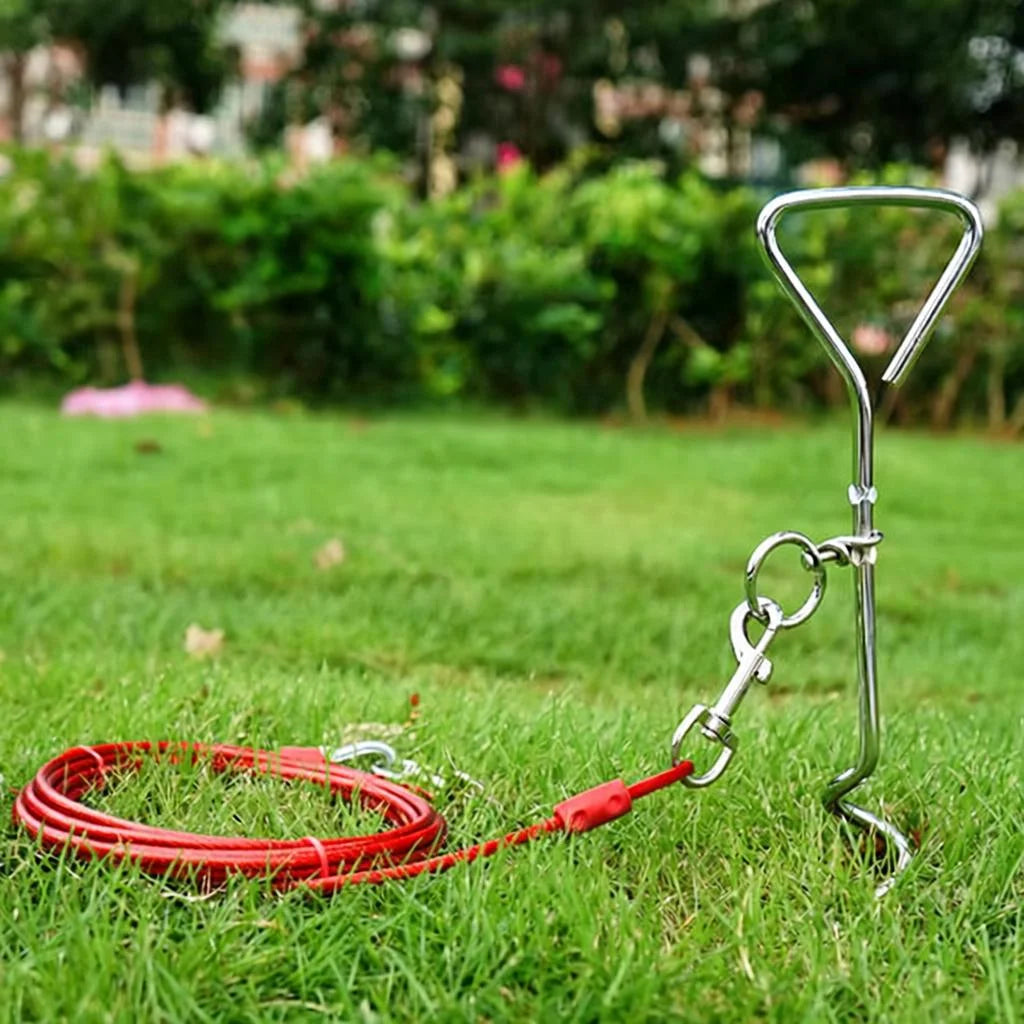
Backyard (Soil or Grass): Most home yards with firm soil can support a spiral stake. You can twist it into the ground for simple setup. However, soft, sandy, or loose soil reduces holding strength. Larger dogs over 50 lbs may pull standard stakes loose. In these cases, a heavy-duty screw-in stake provides better stability.
Camping (Wooded or Hard Ground ): Rocky or compact ground often prevents stake use. In these settings, a portable dog tie out that wraps around a fixed object works better. A tree strap system allows you to secure the line to a tree trunk, picnic table, or other solid structure. This setup avoids relying on ground anchors.
Beach (Sand): Sand does not hold standard stakes well, so you need a different solution at the beach. A beach dog tie out uses a weighted sandbag system to secure the dog tie out instead of relying on deeper ground penetration. You fill the bag with sand and place it firmly on stable ground to create resistance. This setup works better on loose or shifting surfaces. You should still check the anchor regularly, because digging, wind, or foot traffic can reduce stability over time.
Dog tie-out systems commonly use steel cable, nylon rope, or vinyl-coated steel cable.
Steel: Offer strong durability and high resistance to chewing. This material works well for dogs that pull hard or react quickly to movement. The steel core provides reliable strength, which makes it a safer option for medium to large dogs with strong force.
Nylon: Lighter and more flexible. This material feels softer and allows easier movement. It suits calm dogs that do not pull or chew. However, nylon is not ideal for heavy chewers because teeth can damage the fibers over time.
Coated: Combines a steel core with a protective outer layer. The coating helps resist rust and weather exposure. It also makes cleaning easier and extends the product’s lifespan. This option works well for outdoor use in changing weather conditions.
The most critical step when you choose a dog tie out is matching the product’s strength to your dog’s power. Every dog tie out is designed to handle a certain weight range and level of force. You need to check the manufacturer’s weight rating before you buy. The rating should meet or exceed your dog’s current weight.
Small Breeds (Under 35 lbs): Small dogs need light equipment. A lightweight nylon line or a vinyl-coated cable usually works well. You should choose smaller clasps. Heavy clips can pull on a puppy or small dog and cause discomfort.
Medium Breeds (35–60 lbs): Medium dogs need more strength. A standard steel cable with a vinyl coating gives a good balance between durability and flexibility. This type of dog tie out can handle moderate pulling while still allowing easy movement.
Large Breeds (60–150 lbs): Large dogs require stronger hardware. You should look for thick cables with large, solid clasps. Some products use extra-strong clips that are often called “cattle-style” clasps. The Boss Pet Products Prestige cable is an example designed for dogs up to about 125 lbs. These products are built to handle strong pulling.
Giant Breeds (150+ lbs): Giant dogs need the highest strength rating. You should look for a dog tie out that is rated for 200 lbs or more. These cables are much thicker than standard options. They also include reinforced rings and heavy clips. The Frisco Heavy Duty cable is one example made for very large dogs.
How far do you want your dog to move? The length of a dog tie out directly affects both freedom and safety.
10–40 feet: This range works well for small to medium yards. It gives your dog space to walk and explore while limiting running speed. This length helps reduce the force of a sudden stop at the end of the line.
40–60 feet: This range fits larger yards or open areas. It allows more movement and natural behavior. You must check the surroundings carefully to prevent access to fences, roads, or obstacles.
60–80 feet: This length is best for wide, open spaces with few hazards. It gives the most freedom but requires close supervision. A longer line increases running speed and impact force.
As a general rule, choose a length that gives room to move but does not allow your dog to reach streets, sharp objects, or unsafe areas.
A tangled dog is a stressed dog. When you choose a dog tie out, look for hardware that ensures smooth movement.
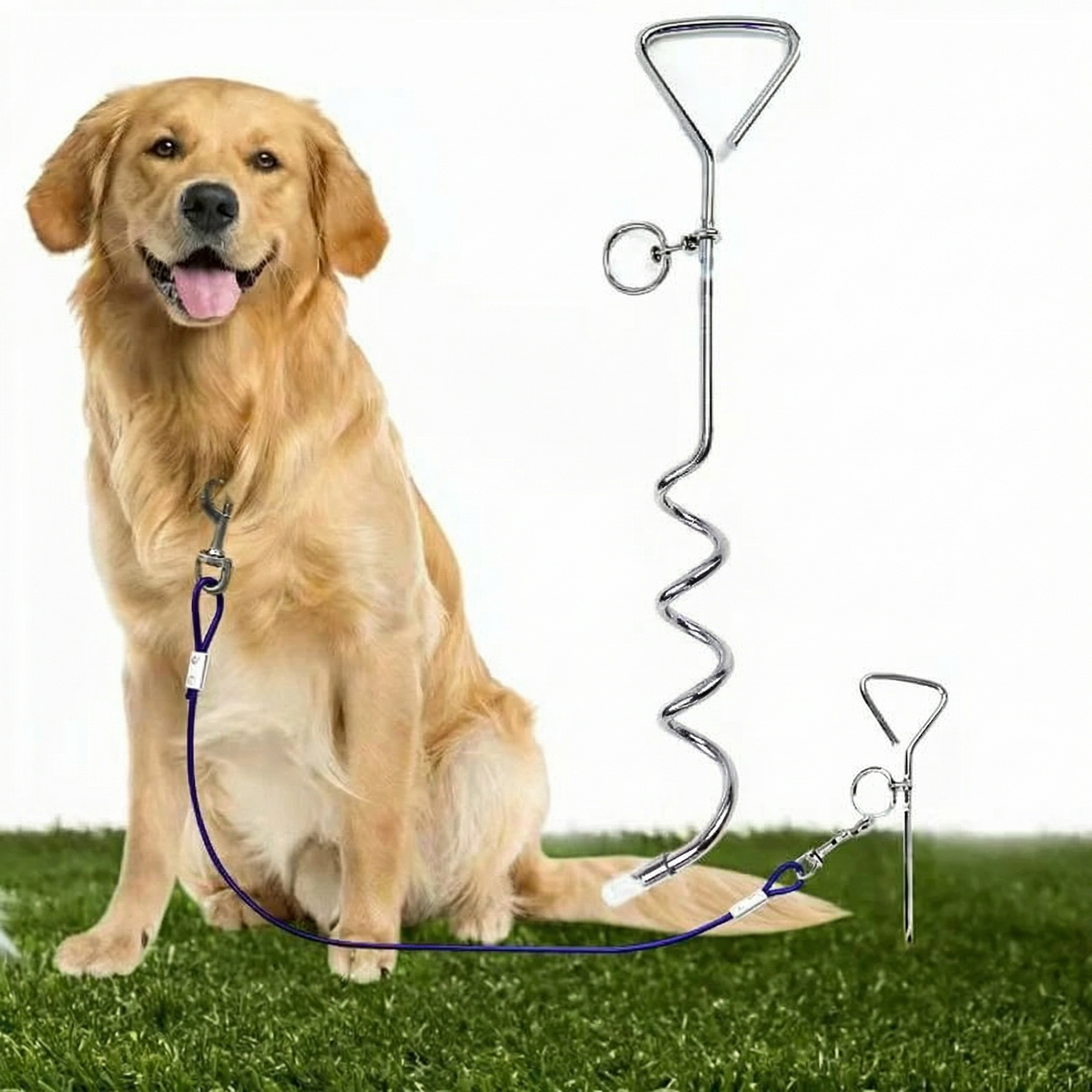
360-Degree Swivel Clips: These prevent the line from twisting on itself. The best dog tie out cables have heavy-duty swivels at both ends .
Shock-Absorbing Springs: Some cables, like the Ruffin' It or Boss Pet Prestige, feature a bungee or spring section. This absorbs the shock when a dog hits the end of the line, reducing neck strain .
A dog tie out is meant for short, supervised outdoor time and should not be used as a long-term containment solution. You should always stay nearby and never leave your dog unattended for long periods, as this can lead to stress, tangling, or injury.
Before each use of a dog tie out, you should check the line for fraying, inspect clips for any bending or deformation, and make sure the anchor is firmly secured in the ground or to a fixed object. If you find any sign of damage, you should replace the dog tie out immediately to avoid safety risks.
This is vital. Attaching a tie-out to a collar—especially during a high-speed chase—can cause severe neck and spine injuries. A well-fitted harness distributes pressure safely across the chest and shoulders.
You should walk through the full radius of the dog tie out before letting your dog outside. Remove lawn furniture, potted plants, gardening tools, or any other objects that the line may catch on. Also check the area for toxic plants or mushrooms that your dog could reach, since eating unsafe vegetation can cause health problems. Keeping the space clear helps reduce tangling risk and keeps your dog safer while moving around.
You should avoid using a dog tie out during extreme weather. Do not use it in extreme heat, freezing conditions, thunderstorms, or high winds, because bad weather can increase stress and cause panic pulling. Strong wind, lightning, or temperature extremes may also raise the risk of injury. For your dog’s safety, it is better to keep them indoors when weather conditions are unstable.
Tie-outs are only a temporary solution and should not be used as a replacement for fencing or direct supervision. Keeping a dog on a tie out for long periods may lead to frustration, aggression, or anxiety because the dog cannot move freely. Short outdoor sessions are the safest choice, and you should always stay nearby to monitor your dog’s behavior and safety.

Choosing the right dog tie out is mainly about safety, comfort, and matching the product to your dog’s size, strength, and environment. A good dog tie out should help reduce tangling, prevent escape, and lower neck pressure during movement. Remember that a tie out is a short-term outdoor tool and requires supervision, regular inspection, and proper weather use.
Please browse our tie out collection to find more options that fit your dog’s needs.
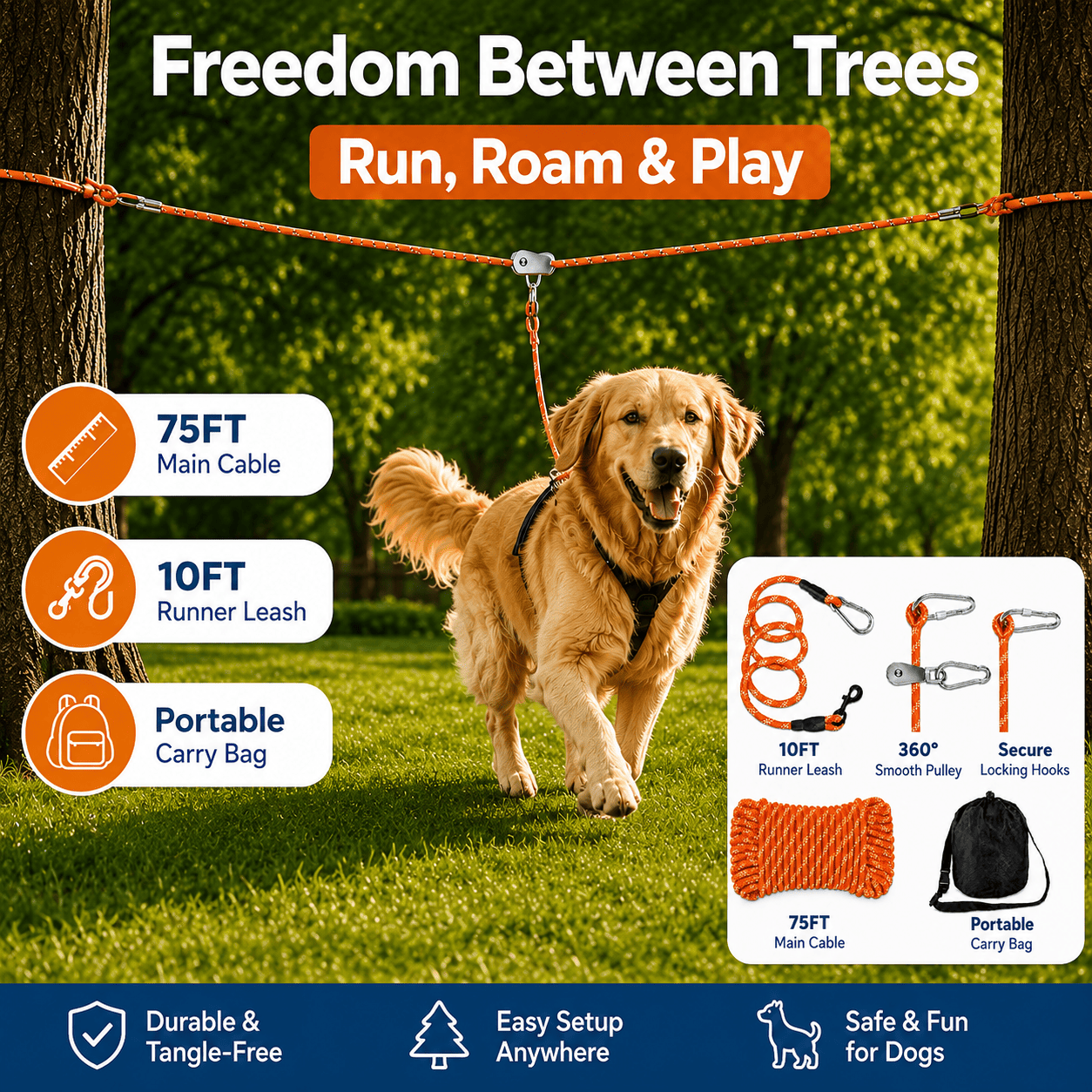
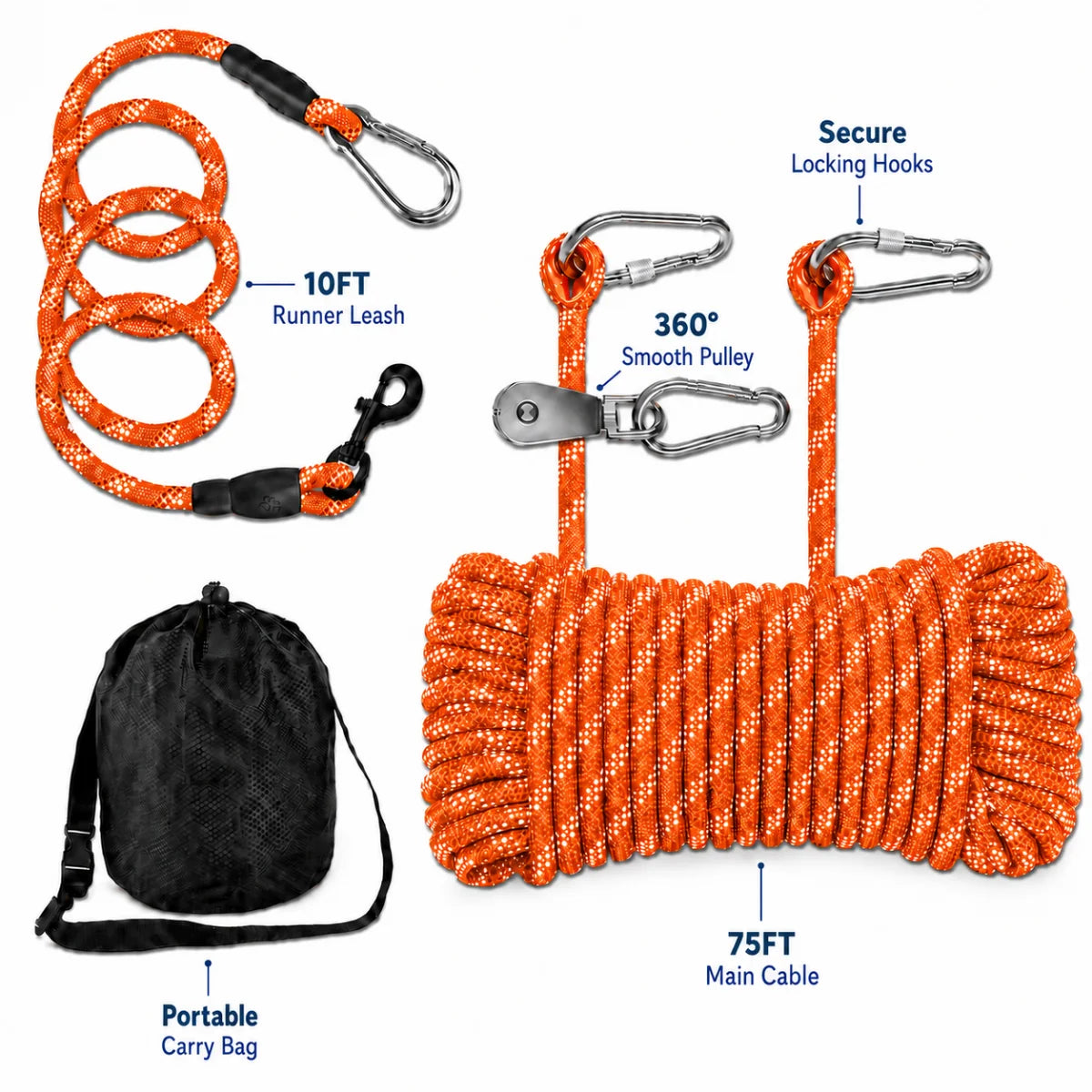
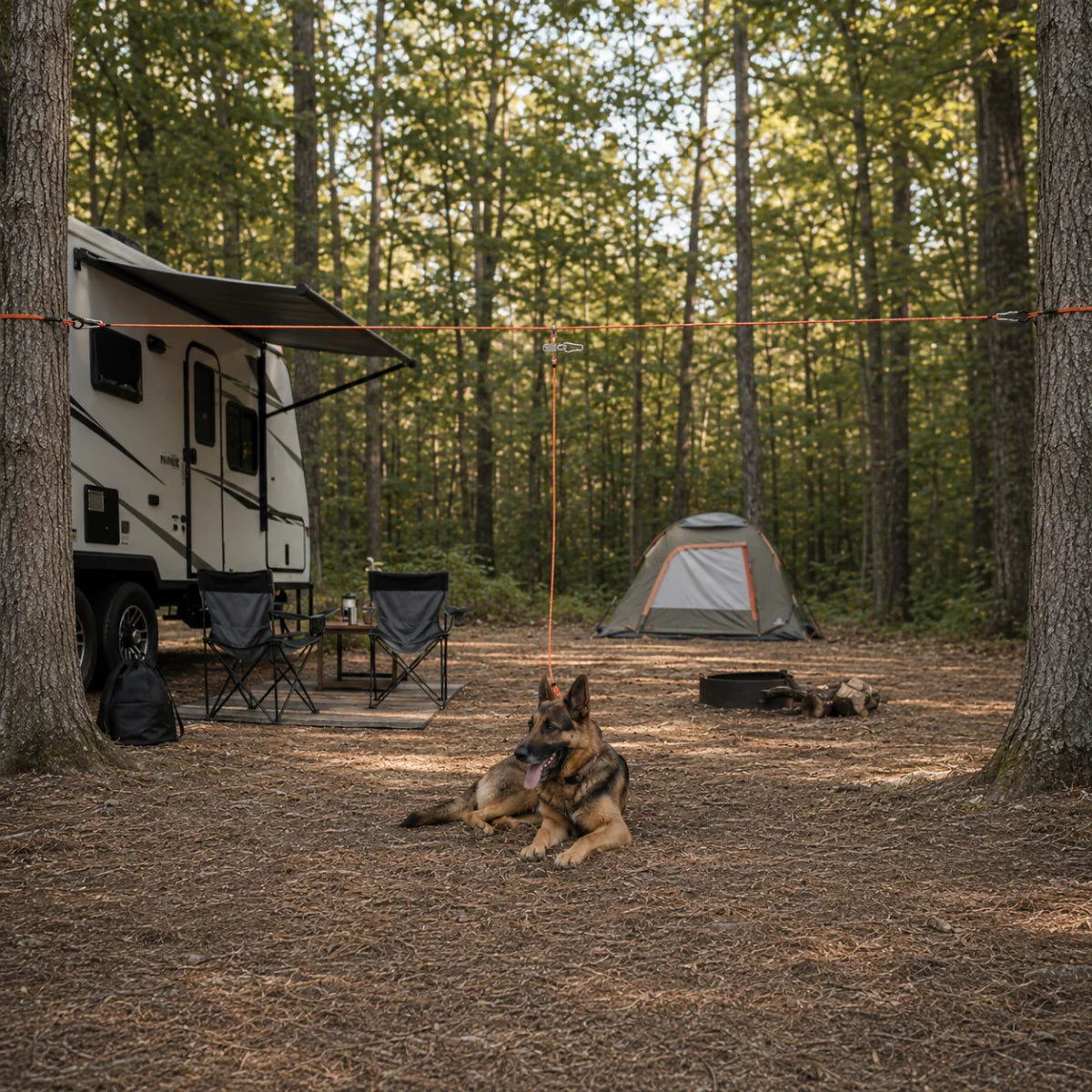
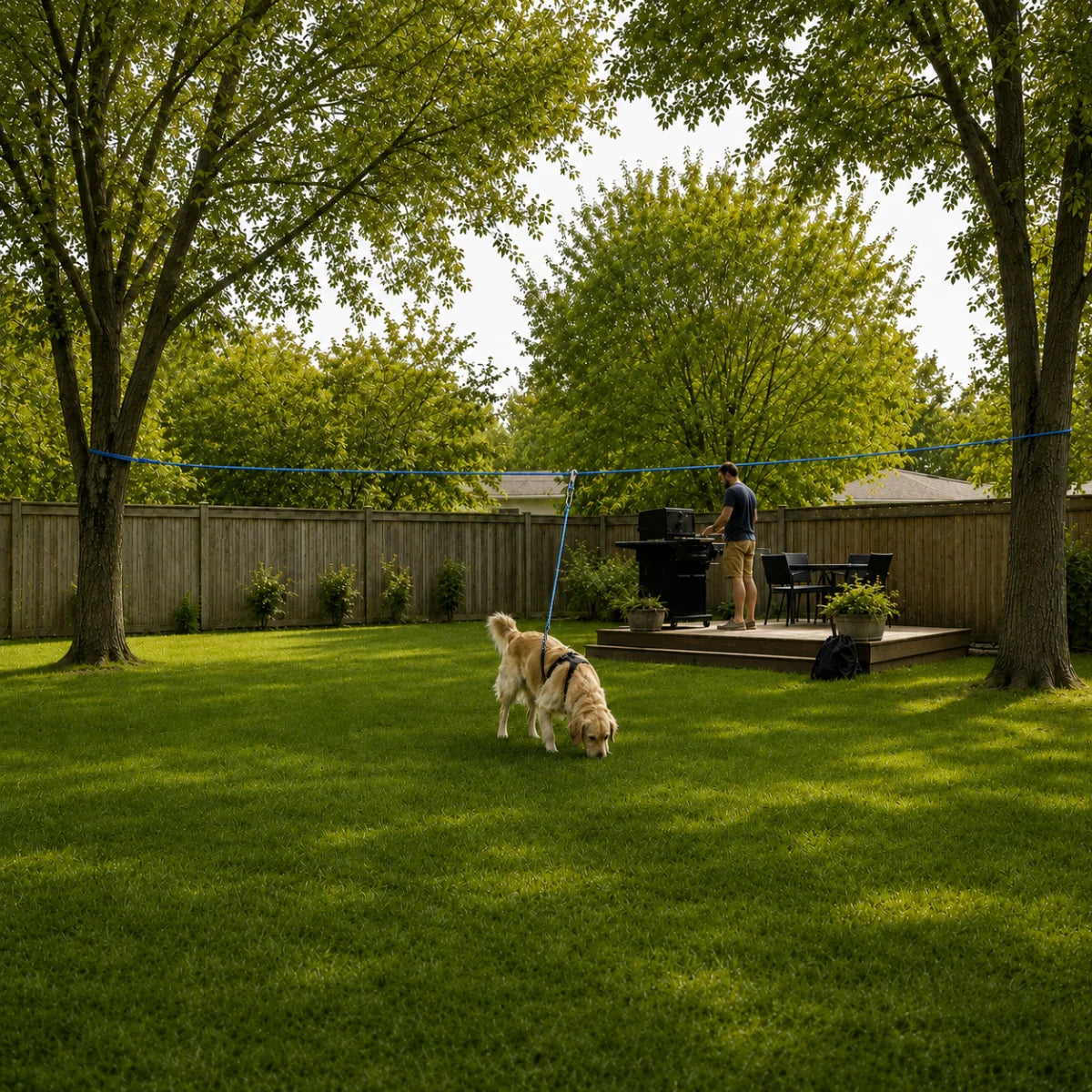
Overhead Outdoor Reflective Dog Tie Out Cable
Please read our FAQs page to find out more.
Large or powerful dogs need a system with hardware and cable ratings that match their weight and pulling strength. Check the manufacturer’s stated capacity and inspect the clips, swivels and anchor before every use.
Use 360-degree swivel hardware, keep the movement area clear and choose an overhead system when the area contains multiple ground-level obstacles. Supervision is still necessary.
A dog tie out can be safe for an active dog if you choose a heavy-duty option that matches their size and strength. You should use a strong cable, secure anchor, and attach it to a harness instead of a collar. Active dogs also require close supervision to reduce the risk of sudden pulling or injury.
An overhead system can reduce ground-level tangling and works well when two secure anchor points are available. A stake is generally faster to install in firm soil and may be more convenient for everyday backyard use.
Choose a length that gives your dog room to move without allowing access to roads, fences, fire pits, stairs or other hazards. The available space and the dog’s activity level are more important than choosing the longest cable.