

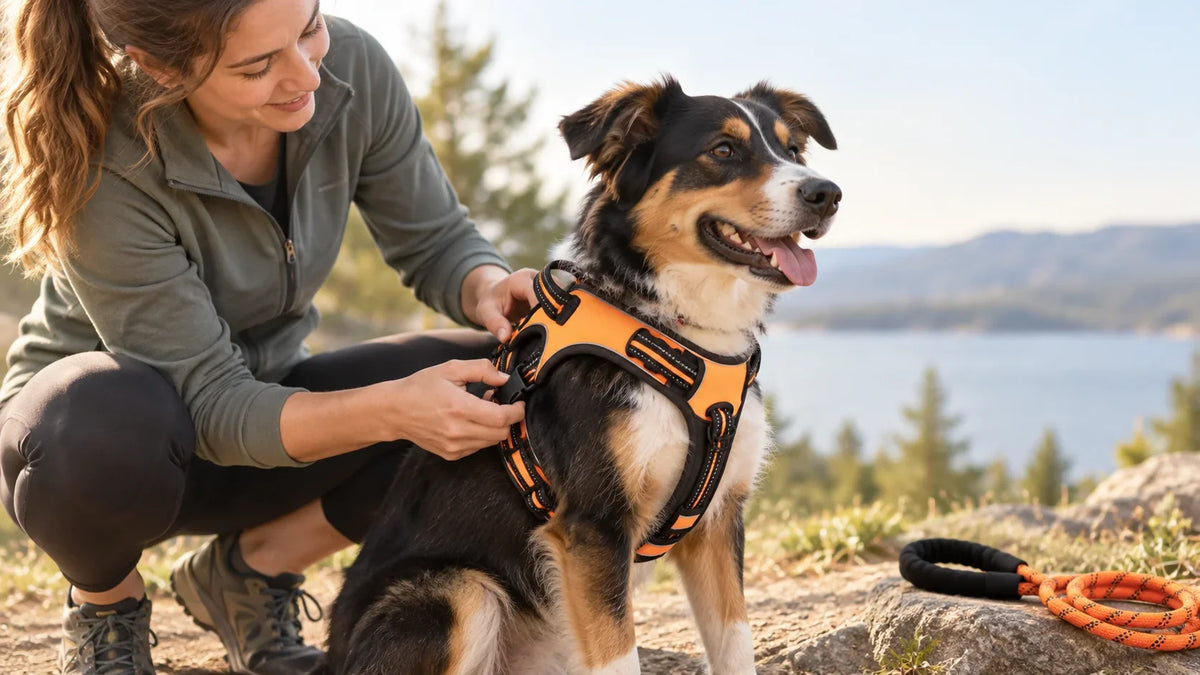
- by HuangMila
How to Put On a Dog Harness Correctly
- by HuangMila
Many dog owners find that putting on a harness is not as simple as it looks. The straps may twist, the chest panel may sit in the wrong position, or the harness may feel too loose or too tight once the dog starts walking. Different harness designs can also make it difficult to know which opening goes where, especially for first-time users.
Wearing a harness incorrectly can affect both comfort and control during walks. That is why learning how to put on a dog harness correctly is just as important as choosing the right size.
In this guide, you’ll learn how to put on and adjust a dog harness step by step, how different harness types are worn, and how to check whether the fit is secure and comfortable before heading outside.

Putting on a dog harness correctly mainly comes down to three things: positioning the harness properly, securing and adjusting the straps, and checking the fit before the walk. Following these steps helps the harness stay comfortable and secure while your dog moves.
Start by identifying how the harness is designed to be worn. An over-the-head harness has a clear neck opening that slides over your dog’s head, while a step-in harness has two openings for the front legs. Vest-style harnesses usually have a wider chest panel that wraps around the body.
Then locate the buckles, adjustment straps, and leash attachment ring so you know which side should face up and which section should sit against the chest.
Before putting the harness on your dog, make sure all straps are lying flat and are not twisted. This will make the harness easier to position and adjust correctly.
Now place the harness on your dog according to its design.
For an overhead harness, gently guide your dog's head through the neck opening and allow the chest section to fall into position. For a step-in harness, place the harness flat and guide each front paw into the correct opening before lifting the sides up around the body.
Do not force a leg, head, or shoulder through an opening that seems too small. Stop and check whether a buckle still needs to be opened or an adjustment strap needs to be loosened.
| Harness Type | Diagram | How It Is Worn | Key Feature |
|---|---|---|---|
| Over-the-Head Harness |  | Slides over the dog’s head first, then buckles around the chest or body. | Has a clear neck opening and usually a chest strap. |
| Step-In Harness |  | Lies flat on the ground and the dog steps into the two front leg openings before fastening. | Easy to identify by the two leg holes. |
| Vest-Style Harness |  | Wraps more closely around the chest and body, then fastens with buckles or Velcro. | Usually has a wider chest panel for more coverage. |
Once the harness is in the correct position, connect the buckles and make sure you hear or feel them click securely into place.
Check that no fur or loose skin has been caught inside the buckle.
Then adjust the straps gradually. Rather than tightening one section as much as possible, make small adjustments around the neck and chest until the harness sits evenly on both sides.
The straps should lie flat against the body instead of twisting or bunching.
Before clipping on the leash, let your dog stand, sit, and take a few steps.
The harness should stay centered rather than rotating noticeably to one side. Your dog should also be able to move the front legs and shoulders naturally.
A quick check before every walk is especially useful because straps can loosen over time or your dog's body and coat can change.
Different dog harnesses are put on in different ways, so the first step is to understand how your harness is designed to sit on the body. Once you know where the neck opening, leg openings, chest panel, and buckles belong, the process becomes much easier.
Below, we’ll look at the most common harness styles and how to put each one on correctly.
An over-the-head harness usually has a neck opening with one or more buckles around the chest.
Open the buckles first and make the neck opening large enough for your dog to comfortably put their head through. Gently guide the harness over the head, then position the chest panel in the center of the chest.
Bring the side or belly straps around the rib cage and fasten the buckles. Finish by adjusting the straps so the harness remains centered and does not sit high against the throat.
If your dog does not like objects passing over their head, avoid pulling the harness on quickly. A treat held near the opening can help your dog voluntarily move their nose and head through it.

A step-in dog harness is a good option for dogs that are uncomfortable with having a harness pulled over their head.
Open the harness fully and position it so the two front-leg spaces are easy to see. Help your dog place one paw on each side, then bring the harness up around the chest and secure the closure on the back.
After fastening, make sure the material sits evenly on both sides and leaves enough space around the armpits for comfortable movement. If your dog is sensitive about having their paws handled, another harness style may be easier to use.

A dog harness vest usually covers more of the chest than a basic strap harness.
Open all Velcro panels, buckles, or clips before starting. Depending on the design, your dog may step into the vest or place their head through an opening.
Once the vest is positioned, make sure the wider section lies flat across the chest. Close the fasteners and check that the edges are not pressing into the armpits when your dog walks.
The extra coverage can be comfortable, but it also makes correct positioning important.

Knowing how to put on a dog harness is only half of the job. After it is on, you also need to make sure it fits properly.
A good fit should feel secure without squeezing your dog. The harness should remain relatively stable when your dog moves, while still allowing natural movement through the shoulders and front legs.
A properly fitted harness should feel secure without pressing tightly against your dog’s body. After adjusting the straps, check that the harness stays in place when your dog stands, turns, and walks.
You should still be able to slide your fingers comfortably under the straps, but the exact amount of space can vary depending on your dog’s coat and body shape. More importantly, the harness should not shift excessively, rub the skin, or restrict shoulder movement.
Look at the harness from the front and side.
The chest section should sit across the chest instead of riding up against the throat. Straps behind the front legs should leave enough space to avoid rubbing the armpits.
Next, have your dog walk several steps. The shoulders should move normally without the harness pulling tightly across them.
If the harness rotates sideways, repeatedly rides up, or leaves noticeable pressure marks, stop and readjust it.
Even with the right harness, a few small mistakes can affect comfort and fit.
Learning how to put on a dog harness correctly becomes much easier once you understand the harness in front of you.
Start by identifying the correct direction, place the harness on according to its style, fasten and adjust the straps, and finish with a fit check before every walk.
The goal is not simply to make the harness tight. It should stay secure while still allowing your dog to walk, turn, sit, and explore comfortably.
Once both you and your dog are familiar with the routine, putting on a harness can become a quick part of getting ready for your next walk or outdoor adventure.
Please read our FAQs page to find out more.
The straps may be too loose or unevenly adjusted. Tighten them gradually and check that the chest section remains centered. If the harness still rotates significantly, the size or design may not match your dog's body shape.
Introduce it slowly. Allow your dog to smell the harness, reward calm interaction, and practice wearing it for short periods indoors. Avoid forcing it on when your dog is frightened or highly stressed.
Check the fit regularly, especially if your dog is still growing, gains or loses weight, or has a thicker seasonal coat. You may not need to readjust it before every walk, but the harness should always stay secure without restricting movement.
Yes, but wearing clothing underneath can change the fit. Loosen the harness slightly if needed and check that it remains secure without compressing the coat or restricting your dog’s movement.
The straps should sit far enough behind the front legs that they do not rub directly against the armpits. Your dog should be able to extend the front legs naturally without the harness cutting into the skin.


