

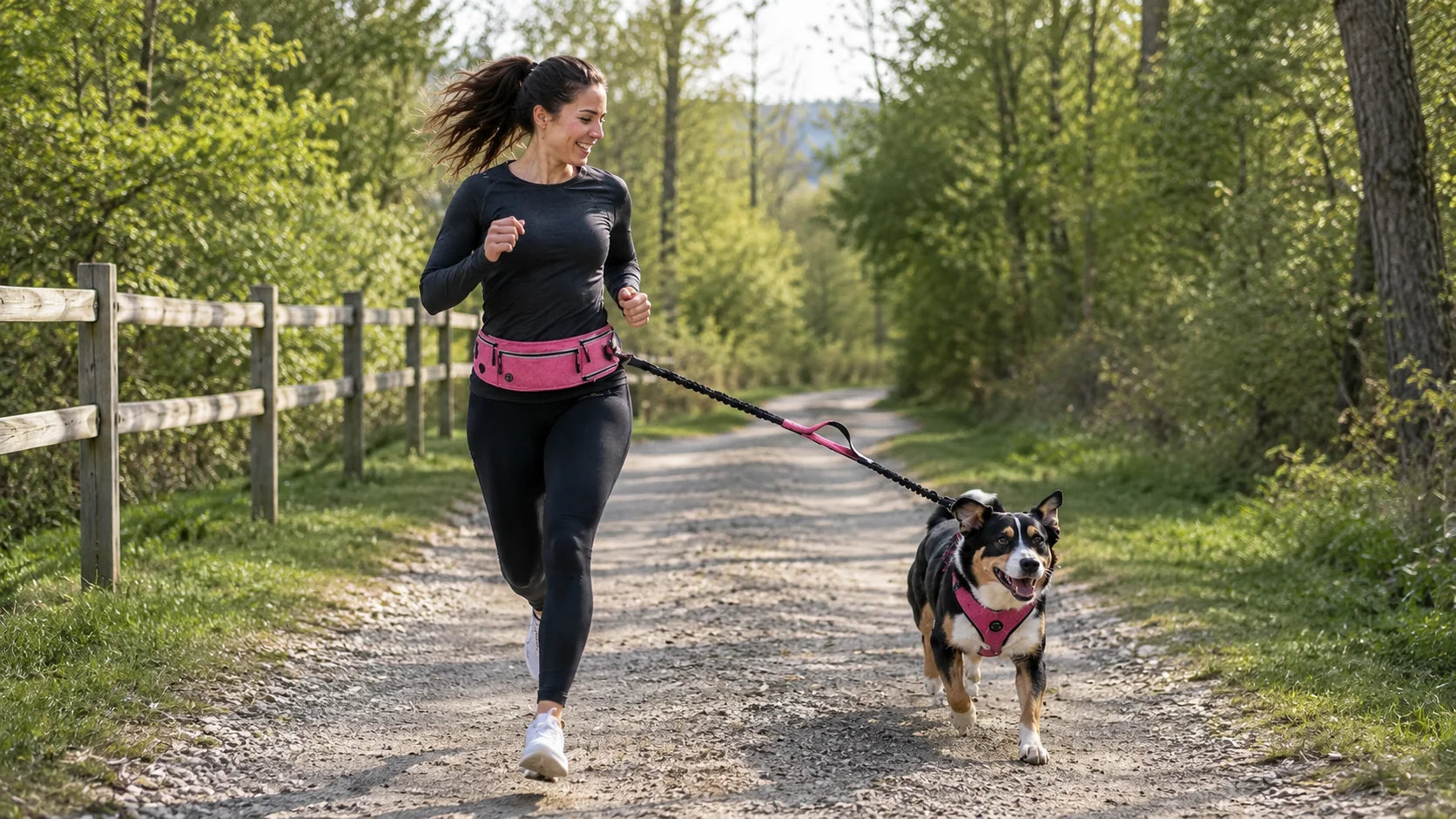
Running with dogs can turn a regular workout into a more enjoyable outdoor routine for both you and your dog. It provides physical exercise, mental stimulation, and another way to spend quality time together. However, running creates different challenges than a normal walk. Your pace is faster, your dog may change direction suddenly, and even a small pull can affect your balance.
That is why choosing the right running dog leash matters. A leash designed for running can provide better control while allowing your dog to move comfortably beside you. Features such as hands-free attachment, shock-absorbing sections, and adjustable length can also make longer runs easier to manage.
If you are wondering how to find the best dog leash for running, this guide explains what to look for, how running leashes differ from regular leashes, and how to stay safer when running with dogs.
A normal walking leash may work well for short neighborhood walks, but running places more movement and force on the connection between you and your dog. Your leash needs to respond to changes in speed while still giving you enough control.
Dogs do not always maintain the same pace as their owners. They may speed up after seeing another dog, slow down to investigate a smell, or suddenly move to one side.
During a walk, these movements are usually easier to correct. When running, however, sudden changes happen much faster.
A good running dog leash gives you enough space for natural movement without allowing your dog to move too far away. This helps you keep your dog closer when passing pedestrians, cyclists, other dogs, or traffic.
Some running leashes also include secondary handles near the clip. These handles allow you to shorten the leash temporarily when you need more control without stopping your run completely.
Even dogs that normally walk politely may pull more while running. Increased excitement and speed can make them more likely to accelerate ahead of you.
With a traditional fixed leash, a sudden pull can transfer directly to your arm and shoulder. It can also create an abrupt force on your dog's harness or collar.
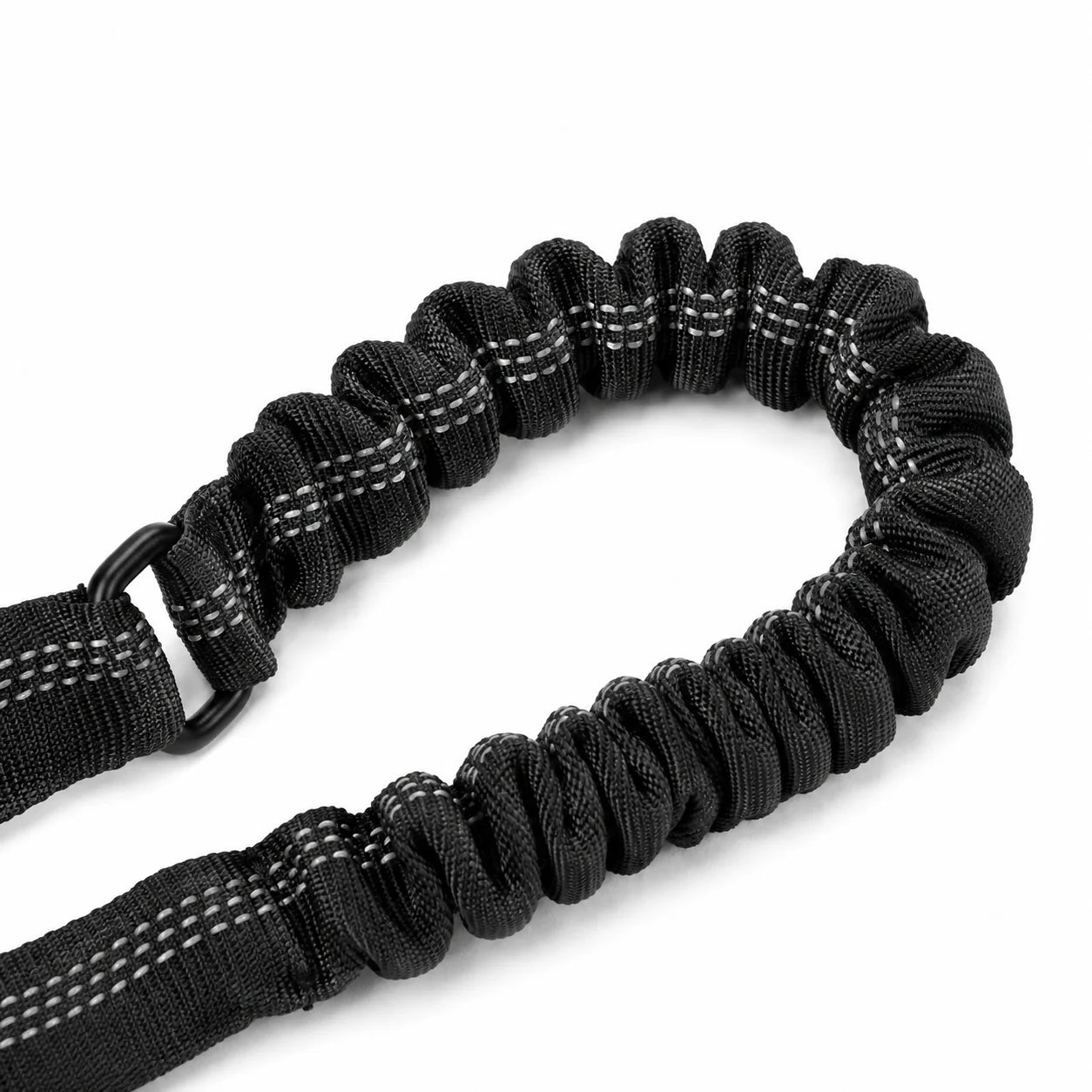
Many running leashes use a bungee or elastic section that stretches slightly when your dog pulls forward. This helps absorb part of the sudden movement instead of transferring all of the force immediately.
Shock absorption does not replace leash training, but it can make occasional changes in speed feel smoother for both the runner and the dog.
Comfort shapes the whole running experience. If your leash rubs, jerks, or sits awkwardly, you will notice it quickly. A running leash with shock absorption, adjustable length, and a padded handle can reduce that strain for both of you.
For runners, an adjustable waist belt or padded waist belt can help keep pressure lower around the hips and center of gravity. That often feels more stable than holding tension in one hand for longer runs. A running belt setup can also leave your hands open for a more natural stride.
For dogs, comfort starts with fit. The best dog harness and leash combinations for running are the ones that stay secure, allow movement, and do not rub. Options like the Ruffwear Front Range harness or the Saker Canine setup stand out because they are adjustable, comfortable, and made for active use. Reflective stitching is a useful bonus.
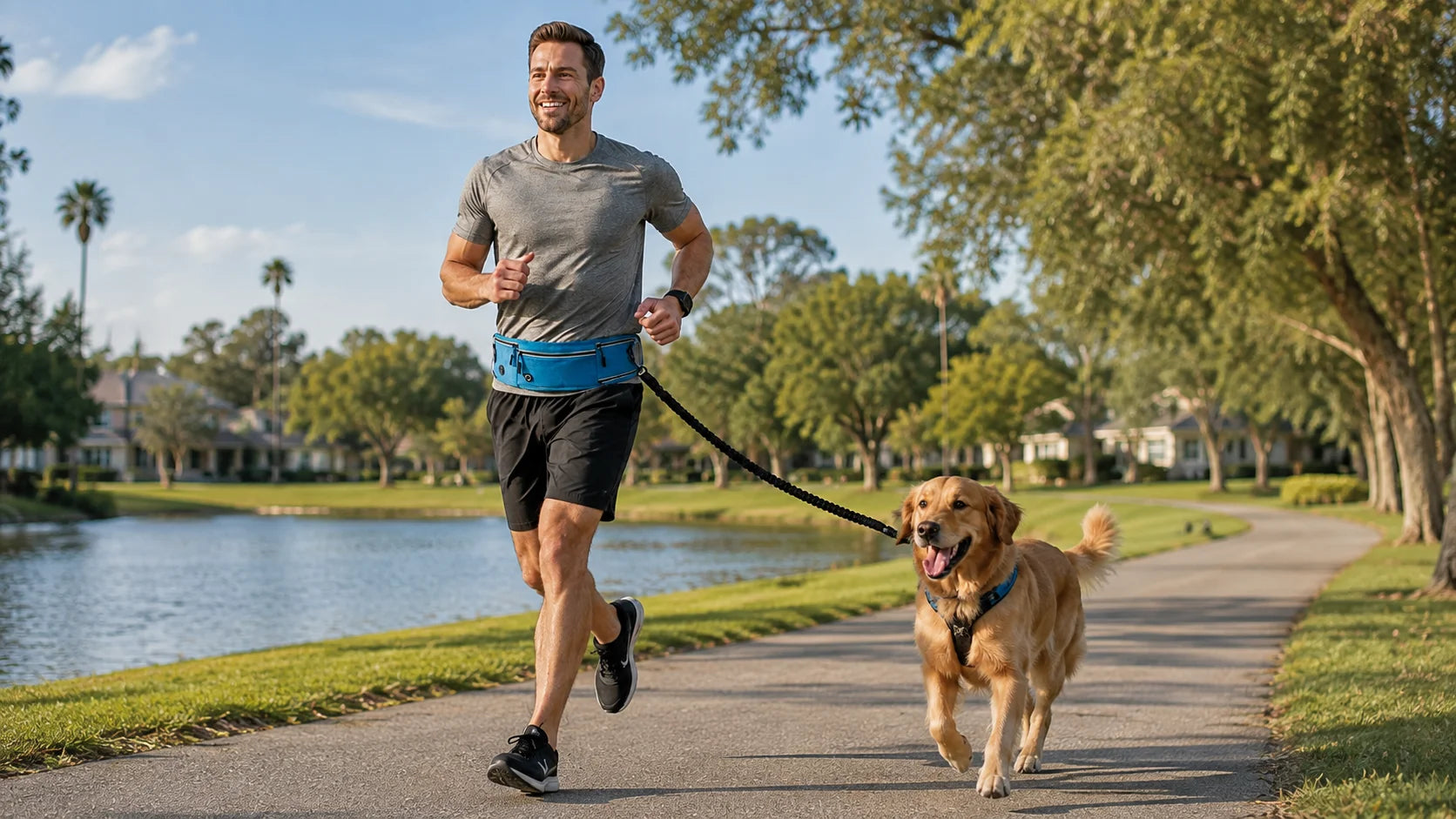
A running leash and a regular leash both keep your dog connected, but they serve different purposes. A standard leash is designed for everyday walks, while a running dog leash may include a hands-free waist attachment, shock-absorbing bungee section, adjustable length, reflective details, and rotating clips. These features improve comfort, flexibility, and control during movement.
| Comparison Item | Regular Dog Leash | Running Dog Leash |
|---|---|---|
| Main Purpose | Daily walks | Jogging, trail running, and long-distance exercise |
| Wearing Method | Usually held by hand | Can attach around the waist for hands-free use |
| Movement Flexibility | Keeps one hand occupied | Allows the arms to swing naturally |
| Shock Absorption | Usually has no elastic cushioning | Often includes elastic or shock-absorbing features |
| Length Adjustment | Usually fixed length | Typically adjustable |
| Reflective Design | May not include reflective details | Often includes reflective details |
| Control Method | Mainly controlled by hand | Can be controlled through the waist attachment and auxiliary handle |
| Suitable Uses | Short daily walks | Regular jogging, trail running, and longer workouts |
There is no single leash that works perfectly for every runner and every dog. The best dog leash for running should match your dog's size, pulling strength, training level, and the environment where you usually run.
Several features are especially useful.
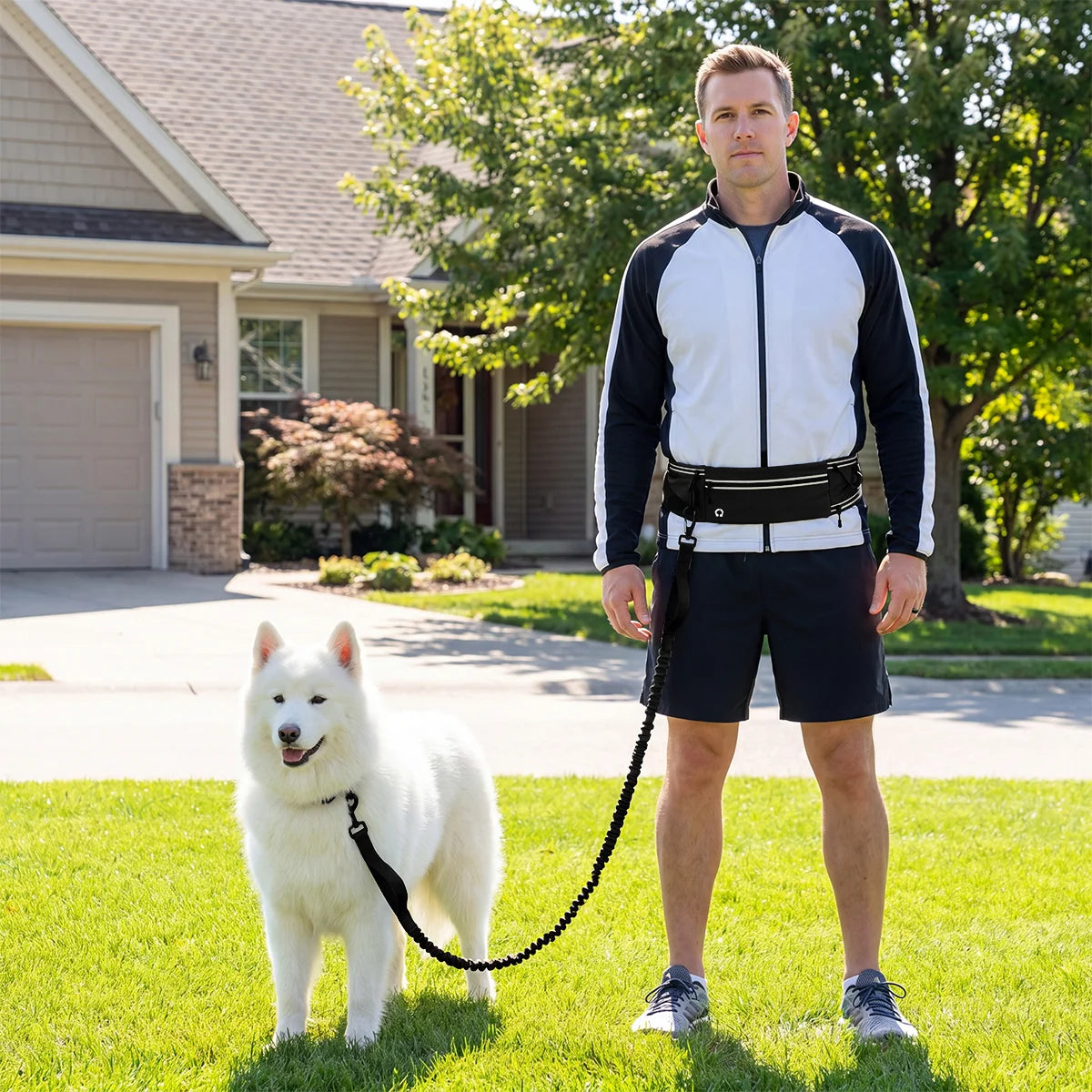
A hands free dog leash attaches to a waist belt, allowing you to run without holding the leash. It keeps your arms free for natural movement, carrying water, adjusting gear, or maintaining balance.
Hands-free leashes are useful for:
Choose an adjustable, secure waist belt that does not dig into your body. A smooth-moving attachment point can also help the leash follow your dog without pulling the belt sideways.
Running creates more sudden force than walking, especially when your dog changes speed. A bungee section absorbs some of this movement, helping reduce abrupt pulling when your dog accelerates, slows down, changes direction, or runs at a different pace.
The leash should still provide control. Too much stretch can make it harder to keep your dog close, especially near roads or in crowded areas.
The ideal leash length depends on your running environment. Use a shorter leash for roads, crowded parks, intersections, and passing other dogs; choose a longer one for open trails and quiet parks. An adjustable running dog leash makes these changes easy.
Also check that the clip is secure, durable, and suitable for your dog’s size. A rotating connection can help prevent twisting as your dog moves.
Choosing a leash based only on appearance can lead to problems later. Instead, consider how your dog behaves, where you run, and how much control you need.
A lightweight leash designed for a small dog may not provide enough strength for a large, powerful dog. On the other hand, an unnecessarily heavy leash and clip can be uncomfortable for a smaller dog.
Consider three factors:
If your dog is still learning leash manners, prioritize control before trying to increase running distance.
A hands-free system can be convenient, but you should still be able to quickly control your dog when necessary.
Longer is not always better.
For most dogs, a running leash of 1.2–1.5 meters is a practical starting point. Leashes shorter than 1 meter may restrict movement, while those longer than 2 meters can create slack and increase the risk of tangling.
For city running and busy sidewalks, choose a shorter leash of about 1.0–1.2 meters. On open parks and trails, 1.5–2.0 meters may give your dog more room while maintaining control.
Adjustable leashes offer flexibility, allowing you to shorten the leash in crowded areas and extend it on open paths. Whatever length you choose, keep loose loops away from your feet and your dog's legs to prevent tripping or tangling.
For longer distance running, comfort becomes more important. A padded waist belt and shock-absorbing section can reduce repeated strain.
For trail running, look for durable materials, secure hardware, and good control on uneven ground.
For early morning or evening runs, reflective details can make you and your dog more visible in low-light conditions.
If you regularly switch between walking and running, look for a leash that works well in both situations. A design with hands-free attachment plus an additional handle can make transitioning between activities easier.
Ultimately, the best dog leash for running is the one that fits both your running habits and your dog's behavior.
If you are new to running with dogs, start simple. Use a running leash that matches your route, and do not assume more freedom is always better. Hands-free can work well, but only if your running buddy is predictable and your route is safe. Reflective elements and reflective stitching matter for early morning or low light outings, especially if you run near roads or shared paths.
For beginners, these practical steps can improve the running experience:
In summary, choosing the right running dog leash can significantly enhance your running experience with your furry companion. A well-suited leash not only provides better control but also ensures comfort for both you and your dog. By considering key features such as hands-free design, shock-absorbing materials, and the appropriate length, you can make informed decisions that cater to your unique running style and your dog's needs. Remember, a happy and safe run starts with the right equipment. So, take the time to select a leash that complements your adventures together. Happy running!
Please read our FAQs page to find out more.
A well-fitted harness is usually better for running because it distributes pressure across the chest instead of the neck. Use a collar for identification and attach the running dog leash to the harness.
It depends on the leash and your dog’s pulling strength. A hands free dog leash with bungee support can reduce sudden jolts, but training is still necessary.
Keep your dog on a short leash near roads and train them to stop at curbs. A running dog leash with a close-control handle helps keep your dog beside you near traffic.
Most dogs should wait until their bones and joints are fully developed before running long distances. Smaller breeds may be ready around 12 months, while larger breeds may need 12–18 months. Ask your veterinarian before starting.