
- by serviceHowoll
What Is a Dog Tie Out Stake ?
- by serviceHowoll
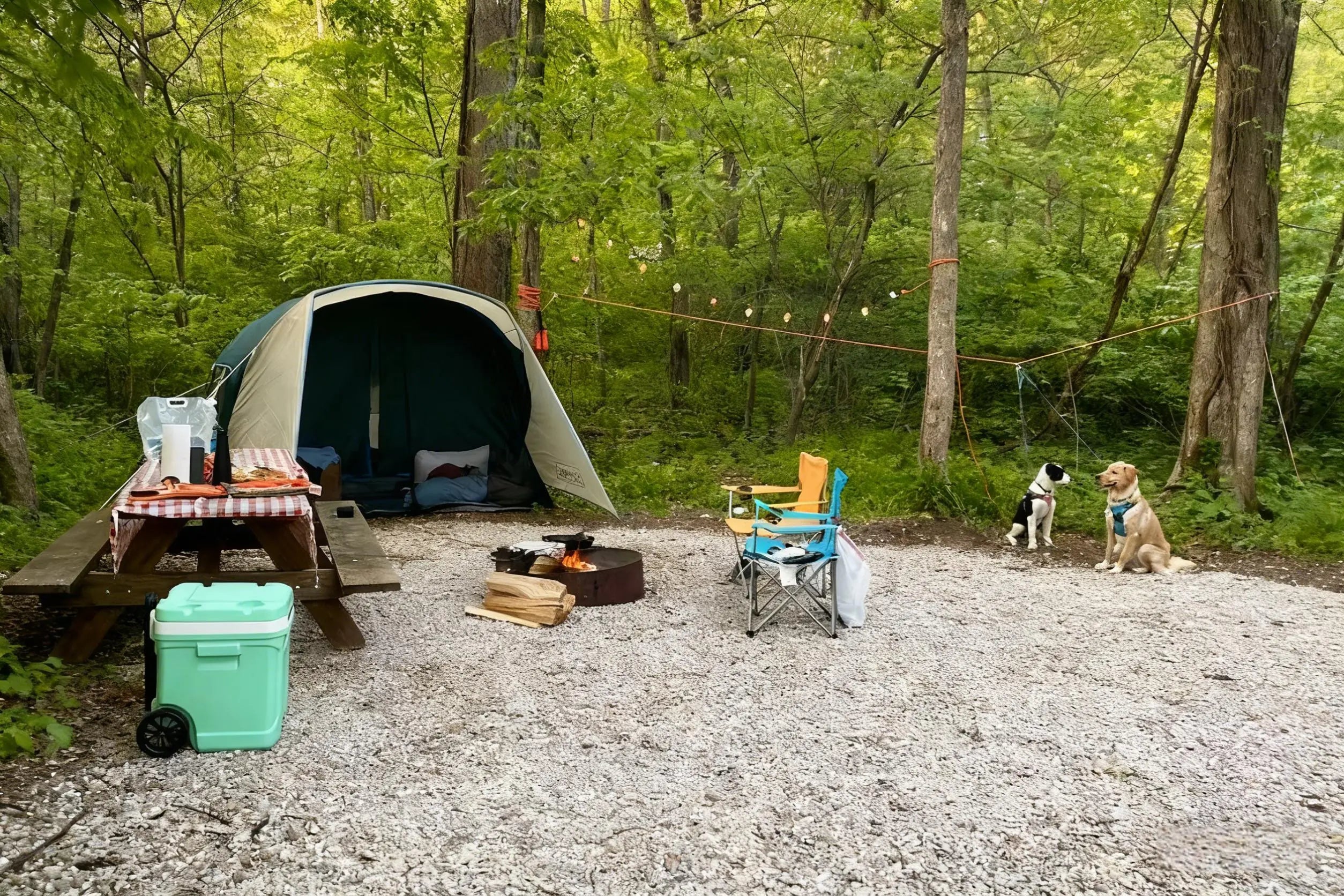
Imagine this: You’re grilling in the backyard, relaxing by a campfire at a scenic campsite, or quietly reading on the patio. Meanwhile, your energetic dog is eager to investigate every squirrel trail and unfamiliar scent. Without the security of a fence, that curiosity can quickly become a source of stress. It’s a common challenge for pet parents — wanting to offer their dogs the freedom to enjoy the outdoors, while still ensuring they remain safe and close to home.
A reliable dog tie out system gives your dog freedom to move while keeping them safely contained. It’s one of the simplest tools for outdoor safety — yet many dog owners aren’t fully sure how it works or how to use it correctly.
In this article, we’ll clearly explain what a dog tie out stake is, review the main types available, guide you in choosing the right one. By the end, you’ll have the knowledge to decide whether a tie-out system is the right fit for your dog.
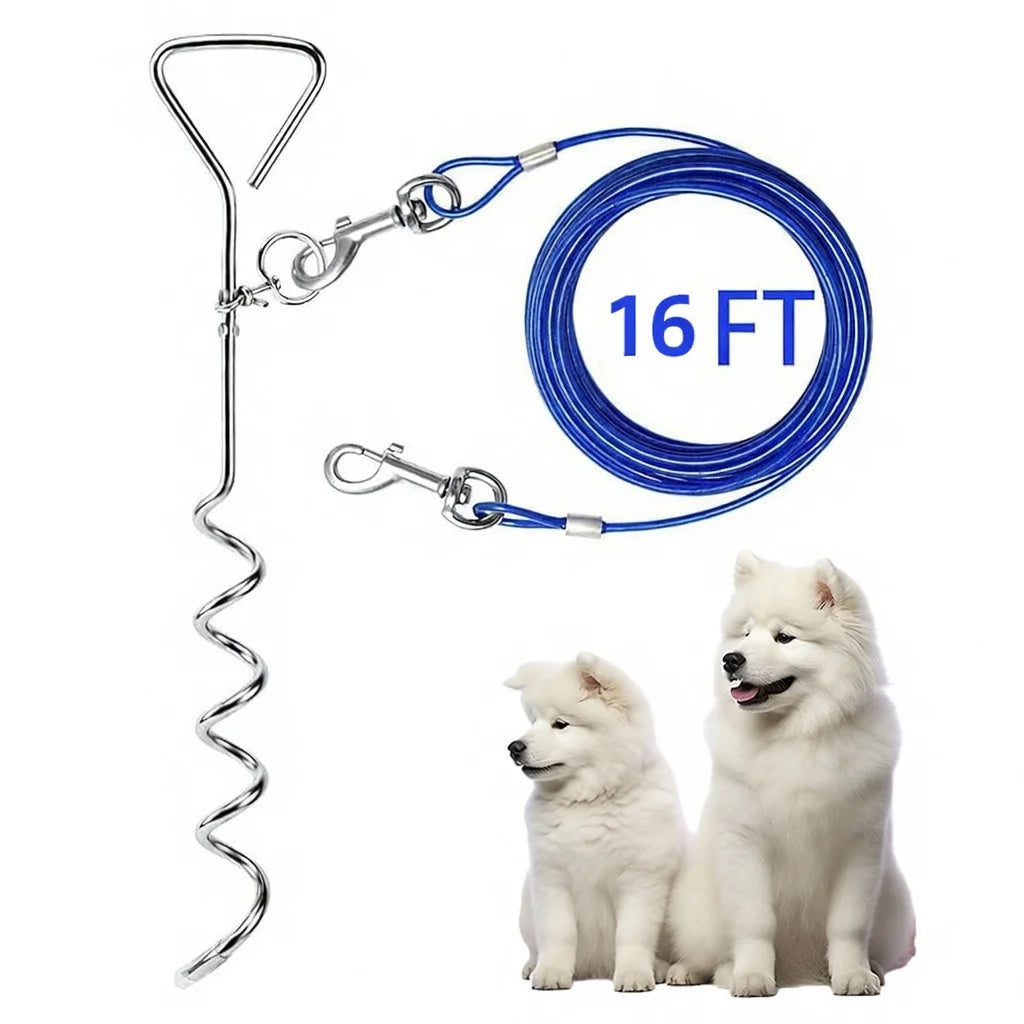
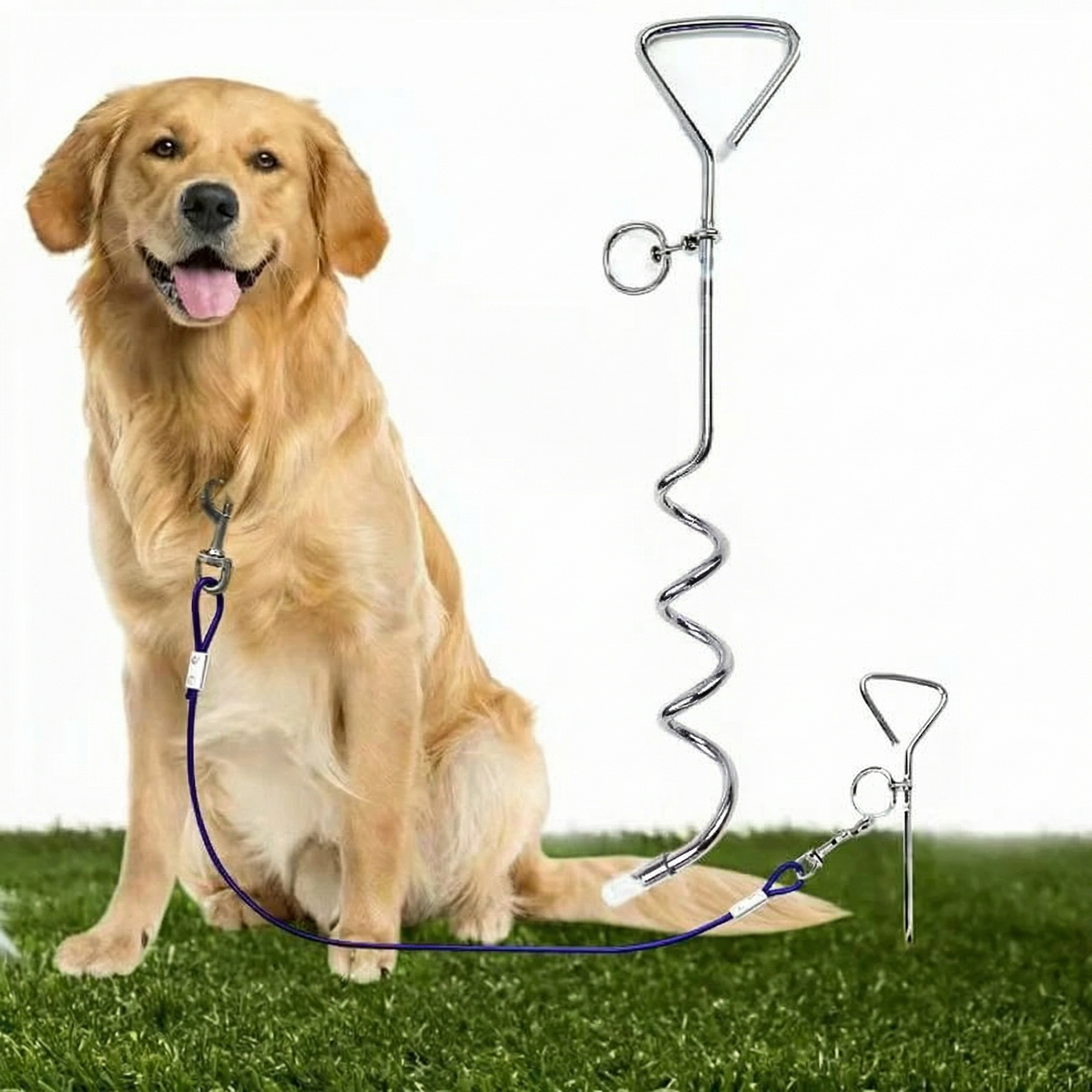
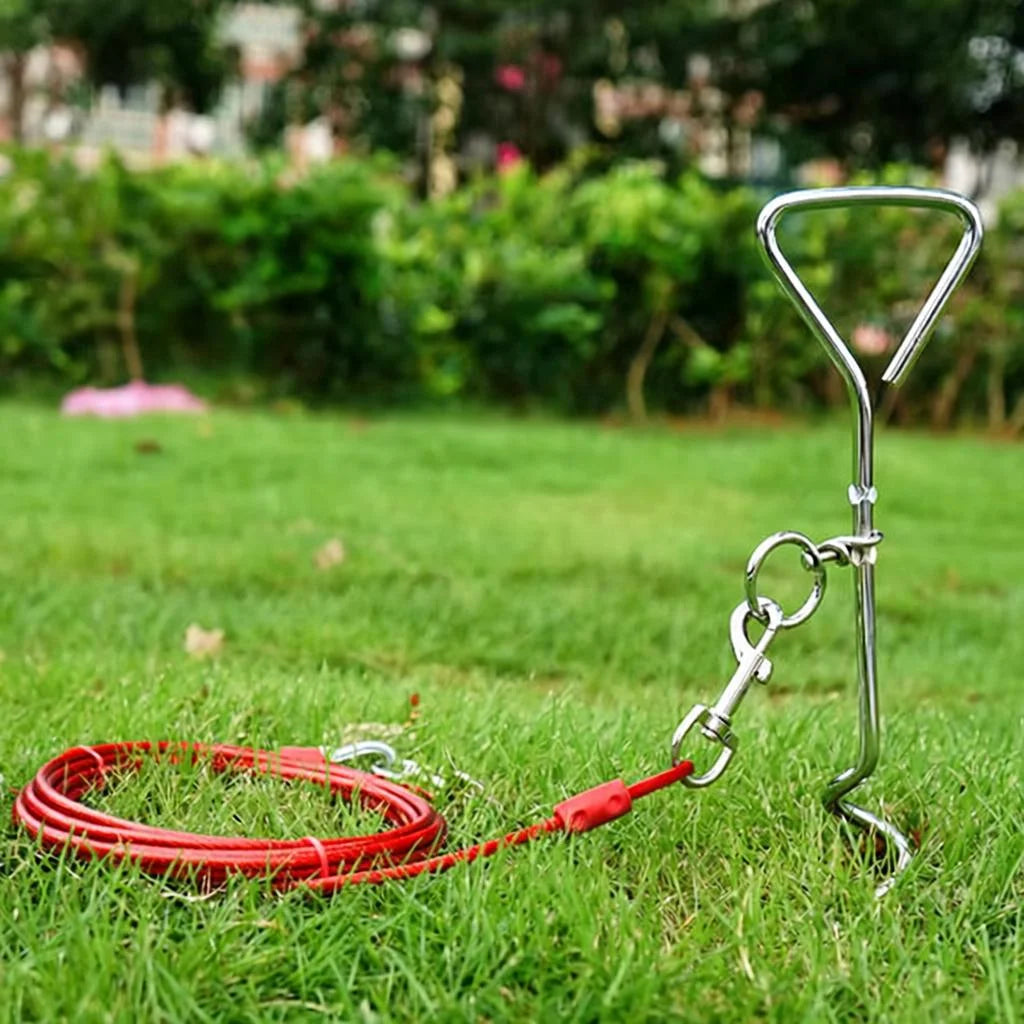
At its most basic level, a dog tie out stake is a ground anchor that secures one end of a dog’s tether or cable. Once installed, it allows a dog to move freely within a defined radius while preventing them from straying beyond a safe boundary. In essence, it offers a practical balance between freedom of movement and controlled restraint.
That said, a dog tie out stake is not a one-size-fits-all solution. Designs, materials, and holding strength can vary significantly. Understanding the different types available — and how each performs under specific conditions — is an important first step toward using a dog tie out system responsibly and effectively.
This is the most common and widely recognized type of dog tie out stake. It features a spiral, corkscrew-style design that twists securely into the ground, providing strong holding power in soft to moderately firm soil, grass, or even sand. Typically made from rust-resistant steel, this style of dog tie out stake is designed to withstand outdoor conditions and is often rated for dogs up to around 100 pounds, depending on the specific model.
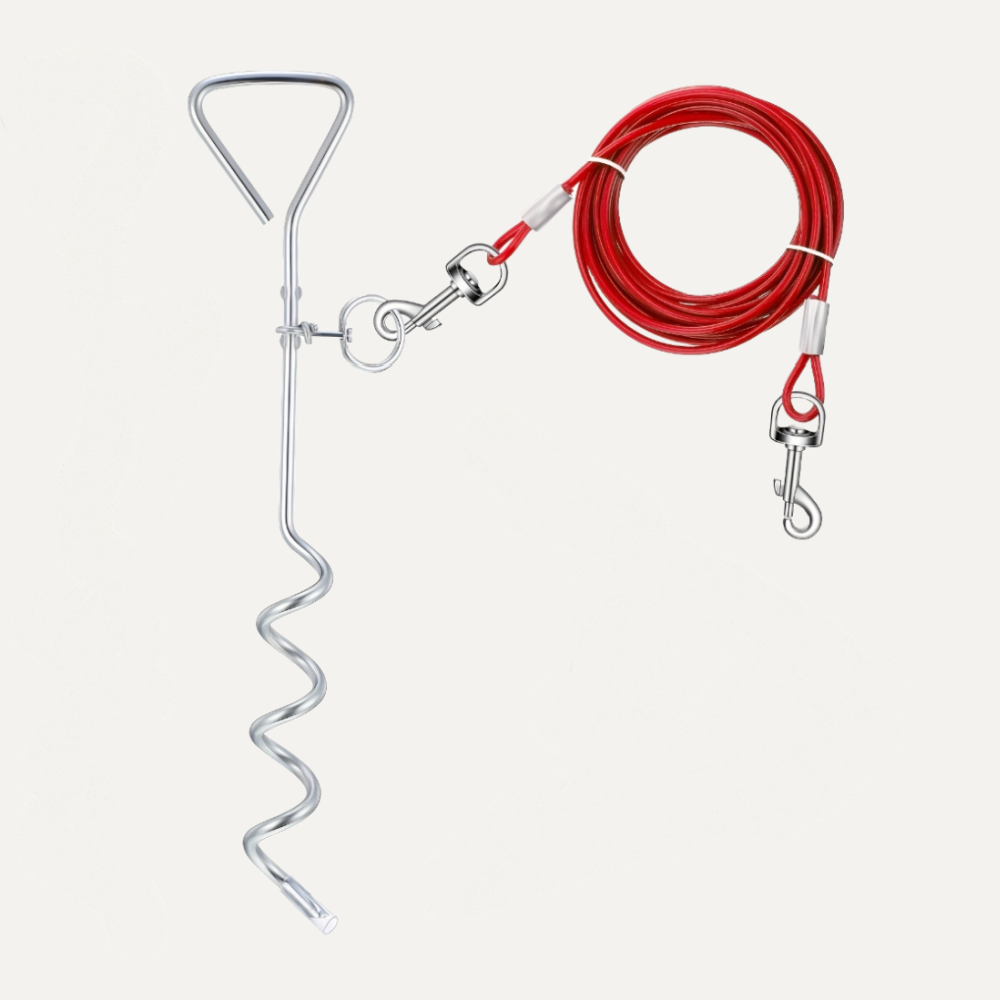
Unlike spiral designs that screw into the ground, a dome-style dog tie out stake rests on the surface and is secured by driving multiple spikes or pins into the soil. Its wide base helps distribute pulling force more evenly, which can make it a practical option for stronger dogs. However, its overall holding strength largely depends on how firmly and properly the pins are anchored into the ground.

For large, powerful, or especially determined dogs, a standard stake may not provide adequate security. In these cases, a heavy-duty dog tie out stake is a safer and more reliable choice. These stakes are typically built with thicker and longer shafts, reinforced anchoring blades for stronger ground grip—even in dense or rocky soil—and are often made from high-grade alloys or stainless steel for added durability. Some extra-heavy-duty models are rated to hold dogs weighing up to 250 pounds, offering maximum stability and peace of mind in demanding outdoor conditions.

Although not a stake in the traditional sense, a trolley system is often considered a more flexible alternative to a standard dog tie out stake. It consists of a cable suspended between two fixed anchor points, such as trees or posts, with a lead connecting the dog to a მოძრable pulley on the overhead line. This setup allows for a wider, more natural range of motion while reducing the risk of tangling that can occur with a ground-based dog tie out. In this configuration, the fixed anchor points function much like a dog tie out stake, providing secure containment while offering greater freedom of movement.
If you’d like to learn more about trolley systems and how they compare to a traditional dog tie out stake, be sure to read our related guide: What Is a Dog Tie Out Cable?
A dog tie out stake offers several practical benefits for dog owners. It provides supervised freedom, allowing your dog to enjoy the outdoors safely while you keep an eye on them, giving them space to explore, sniff, and get fresh air without the risk of running into traffic or chasing other animals. Compared to installing a traditional fence, a tie out stake and cable system is far more cost-effective, making it an accessible option for both renters and homeowners who may not want to invest in permanent fencing. Its portability and convenience are also major advantages, as most stakes can be easily installed and removed, making them ideal for travel, camping, or visits to pet-friendly locations where you want to create a familiar and safe space for your dog. Additionally, a tie out can help prevent destructive behavior by keeping dogs contained in a controlled area, limiting their access to hazards like digging under fences or chewing on outdoor furniture when left unattended.
Despite these benefits, tie-out stakes have notable limitations. They carry a risk of tangling, which can lead to restricted movement, panic, or injury, so constant supervision is necessary. A tie out does not replace a fully fenced yard and restricts a dog’s natural running patterns, which can cause frustration. There’s also potential for escape: determined or strong dogs may pull the stake out of the ground, especially in soft soil, or damage the cable or hardware over time. Tie-outs are not suitable for dogs with high prey drive, severe separation anxiety, or a history of aggression, as being tethered may increase frustration or lead to attempts to break free. Finally, tie-outs are meant for short-term, supervised use; leaving a dog tethered for long periods can result in loneliness, boredom, and behavioral issues.
Selecting the right dog tie out stake is not a one-size-fits-all decision. The wrong choice can increase the risk of escape, equipment failure, or even injury. Because dogs vary widely in size, strength, and behavior, it’s important to evaluate your specific situation before making a purchase. Below are the key factors you should consider to ensure your dog tie out stake is both secure and appropriate for your dog.
Always review the manufacturer’s stated weight limit, as a stake designed for a small 15-pound puppy is unlikely to withstand the force of a 70-pound dog. Even if your dog falls within the recommended range, strong pullers or highly energetic dogs may generate sudden force that exceeds expectations. In those cases, choosing a heavy-duty dog tie out stake designed for more powerful or determined dogs provides an added margin of safety and stability.
The type of soil in your yard plays an important role in determining which stake will provide the most reliable hold.
In soft soil or sandy ground, spiral stakes are usually a good choice because they can be twisted deeper into the earth, creating stronger stability and better resistance to pulling force.
For hard or rocky surfaces, installing a spiral stake can be difficult and may even cause the stake to bend. In these conditions, a heavy-duty stake with a pointed end that can be driven into the ground, or a dome-style stake designed to rest more securely on the surface, may be more practical options.
When selecting a stake, it is important to consider materials that can endure outdoor environmental exposure. Stainless steel is often regarded as the most reliable choice because of its excellent resistance to rust and corrosion, which helps ensure long-term durability. Galvanized or coated steel offers a good balance of strength and rust protection while remaining more affordable for many users. Aluminum stakes are lighter and easier to carry, providing adequate durability for general use, though they may not be the best option for dogs that exert strong pulling force or for situations requiring maximum structural strength.
A quality dog tie out stake should have features that protect your dog.

A dog tie out stake is a practical solution for giving your dog controlled outdoor freedom while keeping safety in mind. If you’re looking for reliable quality and thoughtful design, explore our store’s tie out stake collection and choose a product that helps your dog enjoy the outdoors with confidence and comfort.
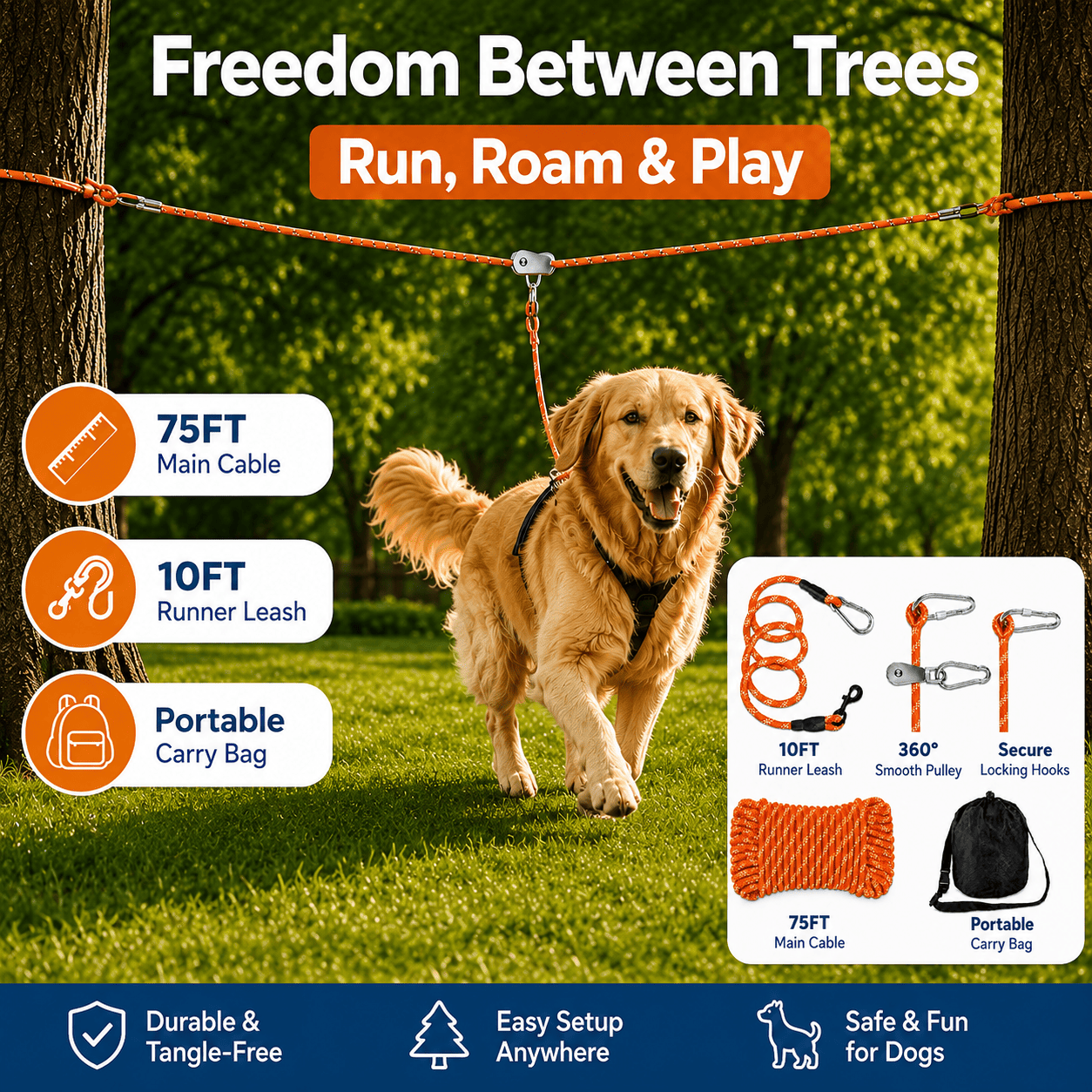
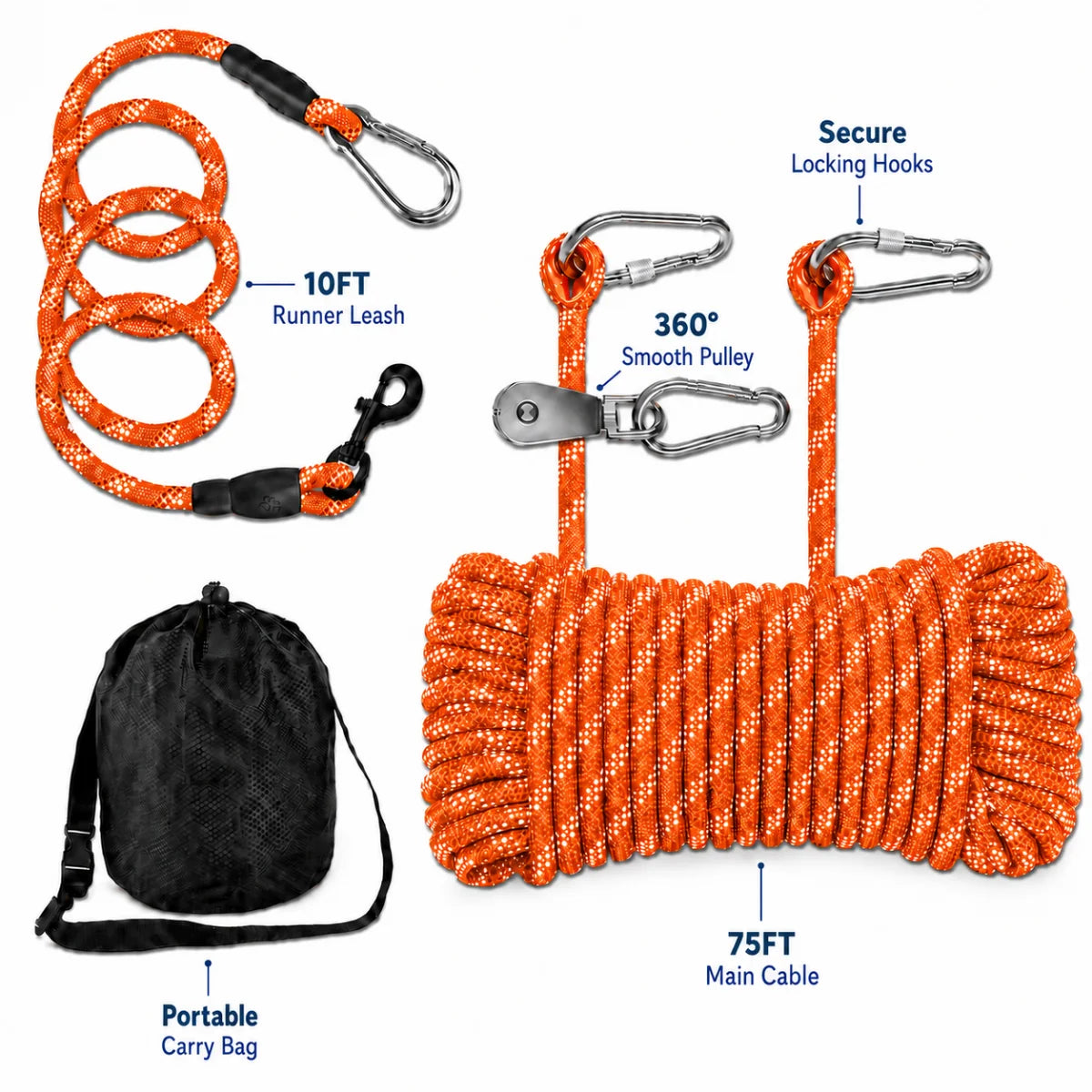
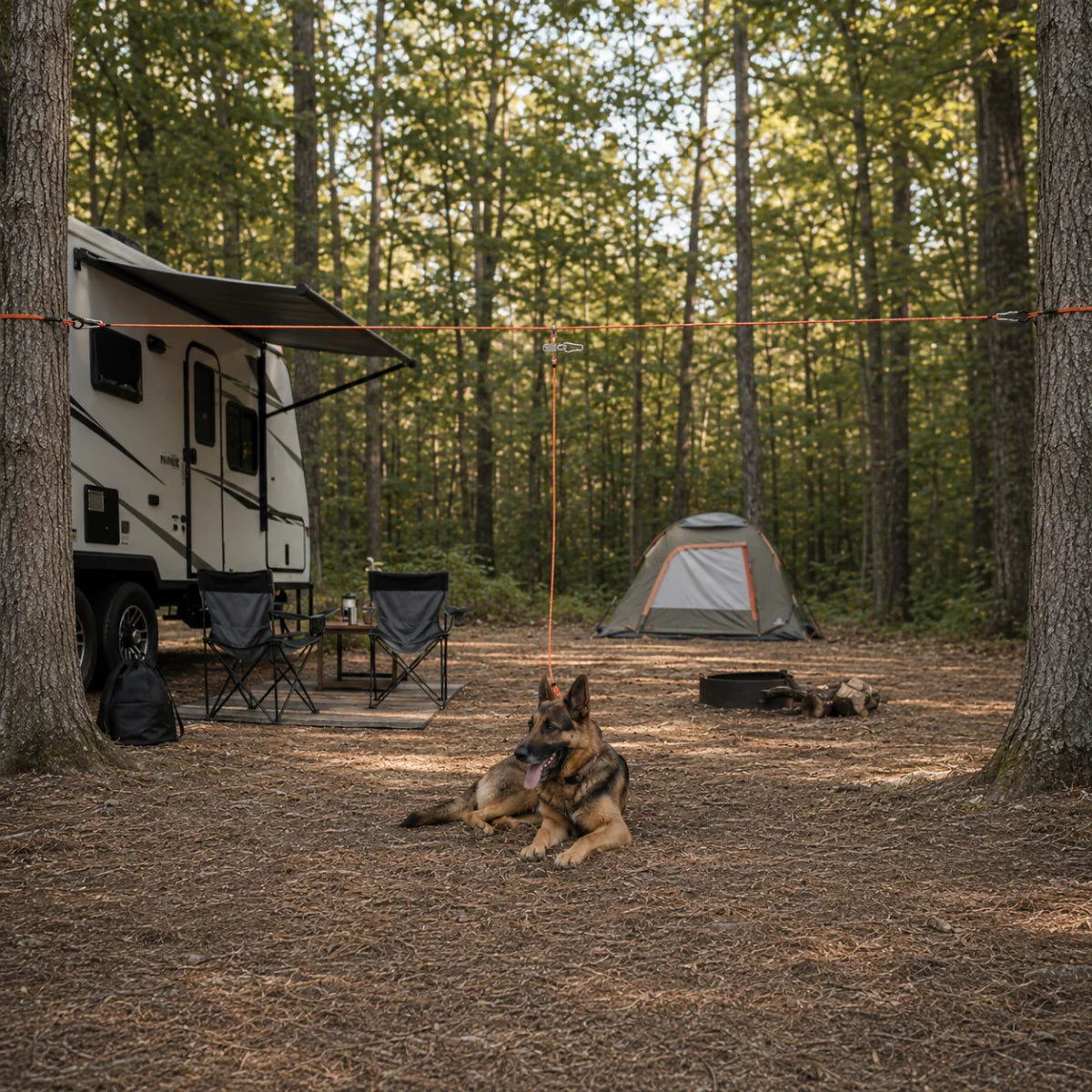
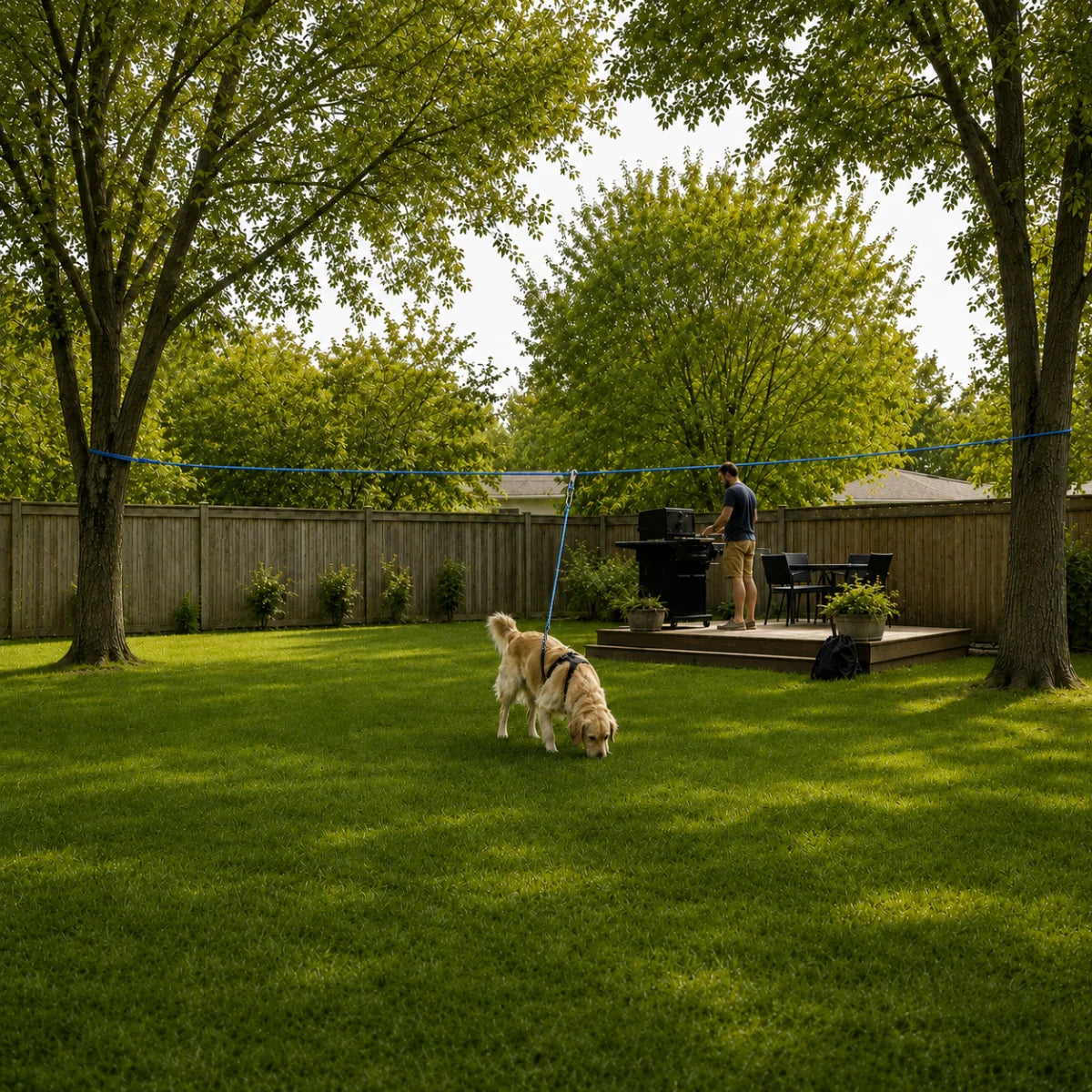
Overhead Outdoor Reflective Dog Tie Out Cable
Please read our FAQs page to find out more.
A dog should only stay on a dog tie out for short, supervised periods — typically no more than 30 minutes to an hour at a time, depending on the dog and conditions. A dog tie out stake is meant for temporary outdoor use, not long-term confinement. Always supervise your dog and avoid leaving them tethered for extended periods.
Choose a dog tie out stake based on your dog’s weight and strength. Always check the manufacturer’s weight rating and select a stake rated above your dog’s actual weight. For large or strong pullers, a heavy-duty dog tie out stake provides added security.
You should attach a dog tie out to a harness, not a collar. A harness distributes pressure across the chest and shoulders, reducing the risk of neck injury if your dog pulls suddenly against the tether.
Soft to moderately firm soil works best for a dog tie out stake. Grass, packed dirt, and slightly sandy ground allow spiral stakes to anchor securely. Very loose sand, muddy soil, or hard, rocky ground may reduce holding strength and require a heavy-duty or alternative anchoring solution.