
Imagine this: It’s a sunny Saturday morning, and you want your dog to enjoy the fresh air in the backyard while you garden nearby. The problem? You don’t have a fence. You also don’t want to stand there holding the leash for an hour. What do you do?
This is exactly where a dog tie out cable comes into play. It’s a simple, reliable tool that allows your furry friend to roam within a set boundary while you relax, garden, or simply watch from the porch.
In this comprehensive guide, we will explain exactly what a dog tie out is, how it works, the different types available, and the critical safety steps you must follow to ensure your pet stays happy and secure.
A tie-out line (dog tie out cable) is a tool used to temporarily secure a dog outdoors, allowing it to move freely within a limited area while still being attached to a fixed anchor point.
According to pet care resources, a dog tie out is essentially a longer leash or cable system that attaches a dog to a secure stake, post, or fixed object, giving the dog some outdoor freedom without being fully off-leash.

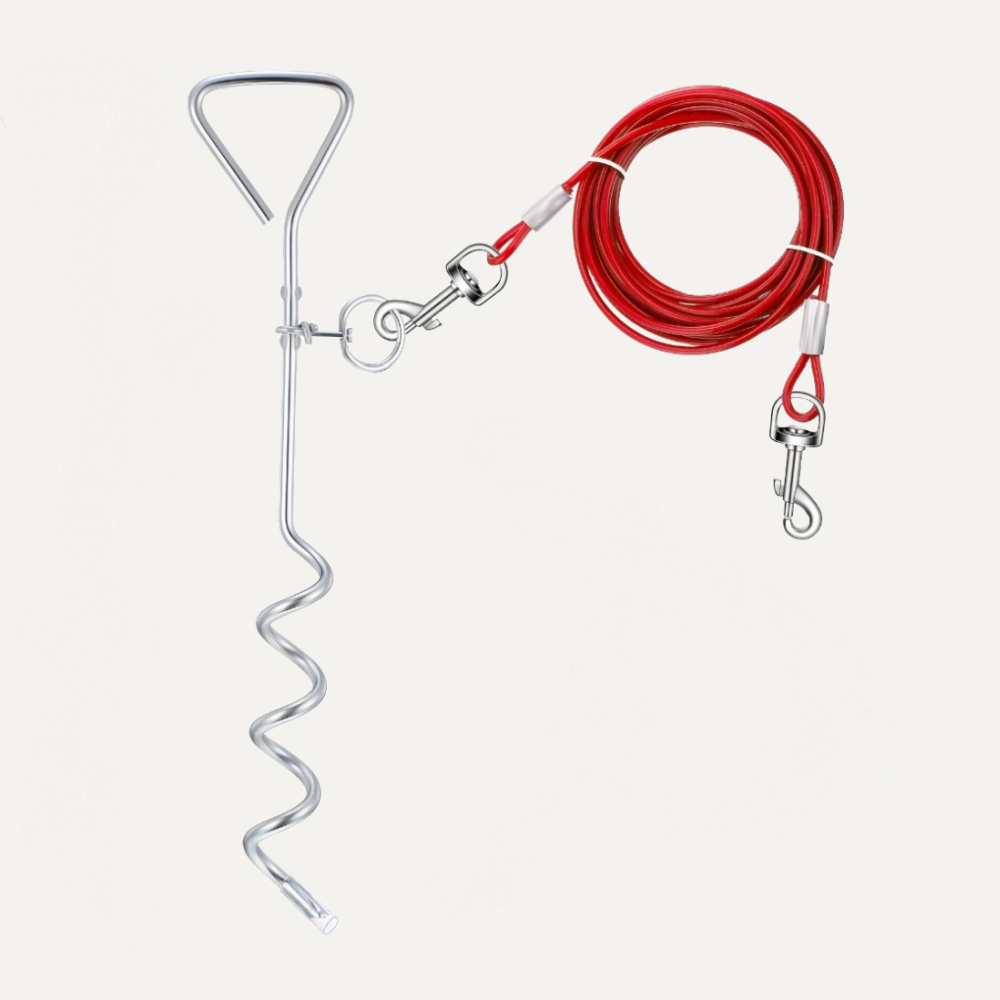
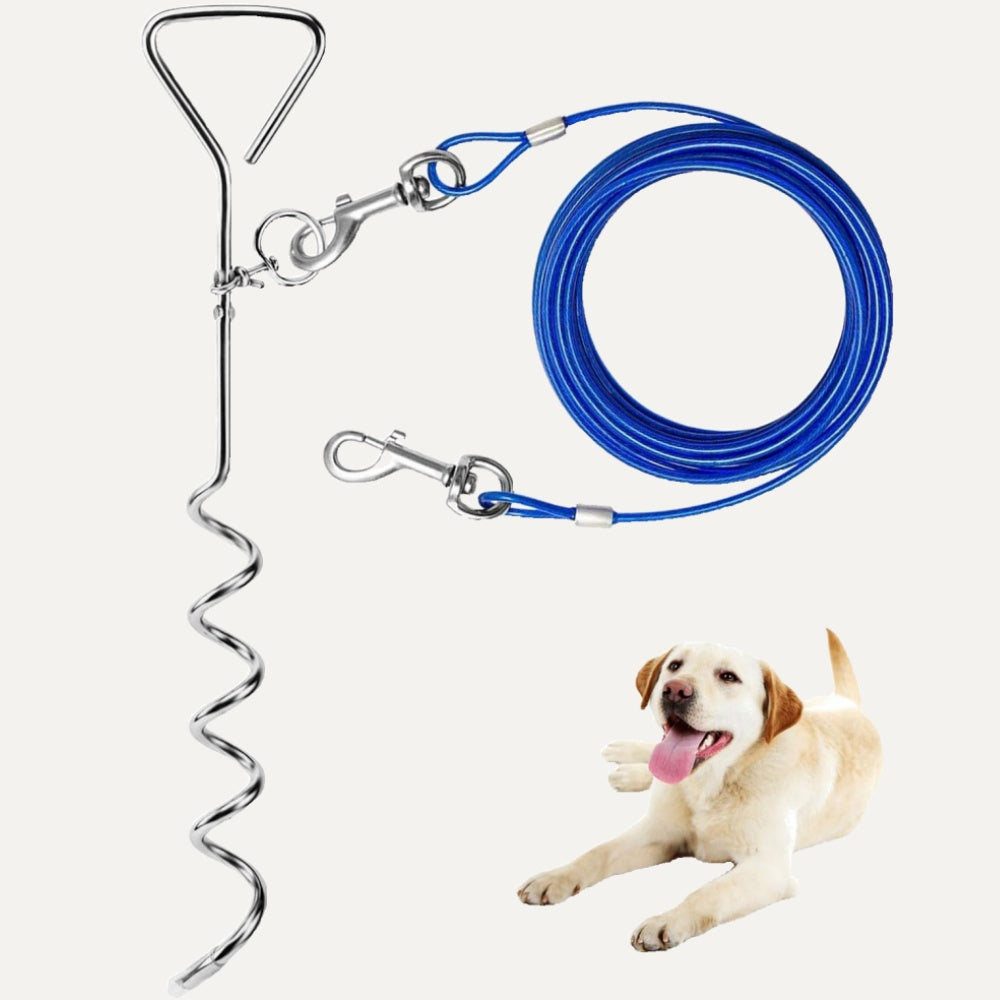
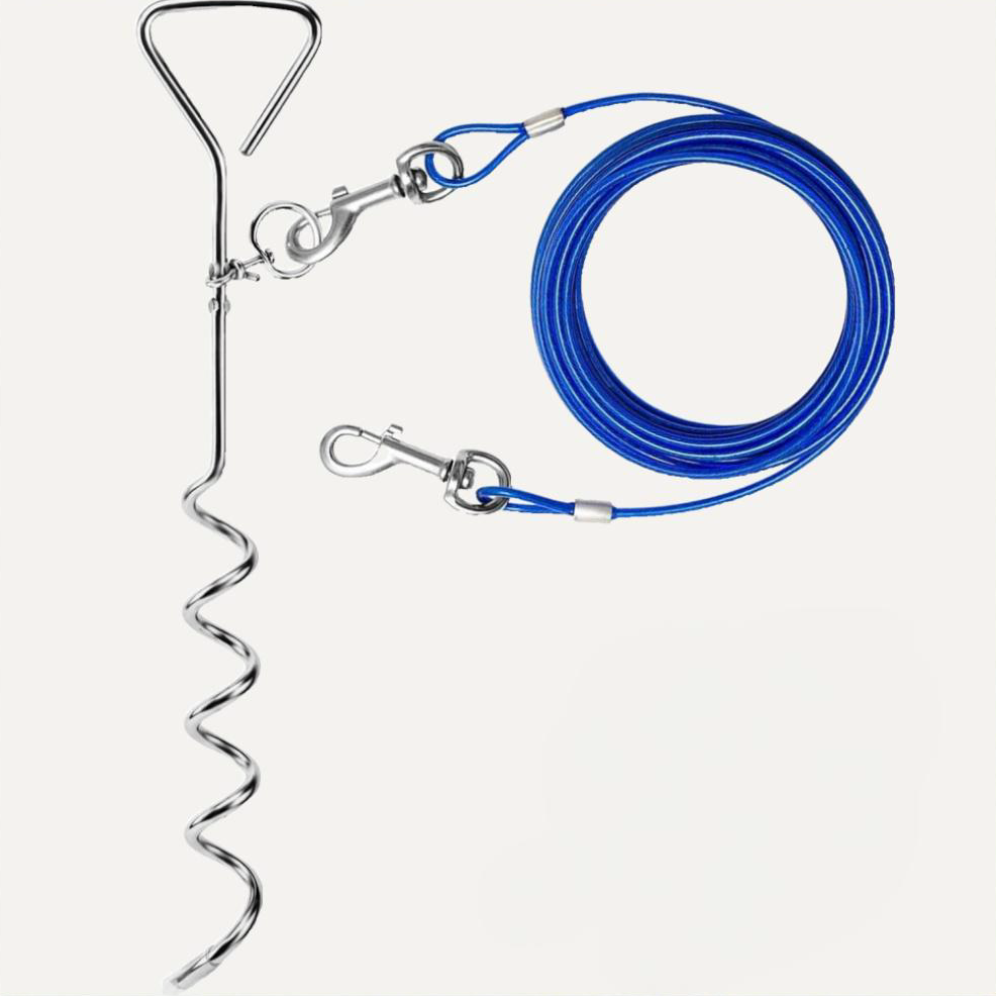
Most dog tie out cable systems include:
The main dog tie out cable is the backbone of the entire system. Most high-quality cables are made from galvanized steel for rust resistance and coated with vinyl for added weather protection and durability. This outer coating isn’t just for appearance — it helps reduce moisture damage, prevents fraying, and minimizes the risk of sharp edges that could cause skin abrasion.
When choosing a dog tie out cable, the strength rating should always match your dog’s weight and pulling power. A cable that’s too light can fail under sudden lunging force, especially with strong or high-energy breeds. For larger or more active dogs, higher tensile strength is essential to ensure safety and long-term reliability.
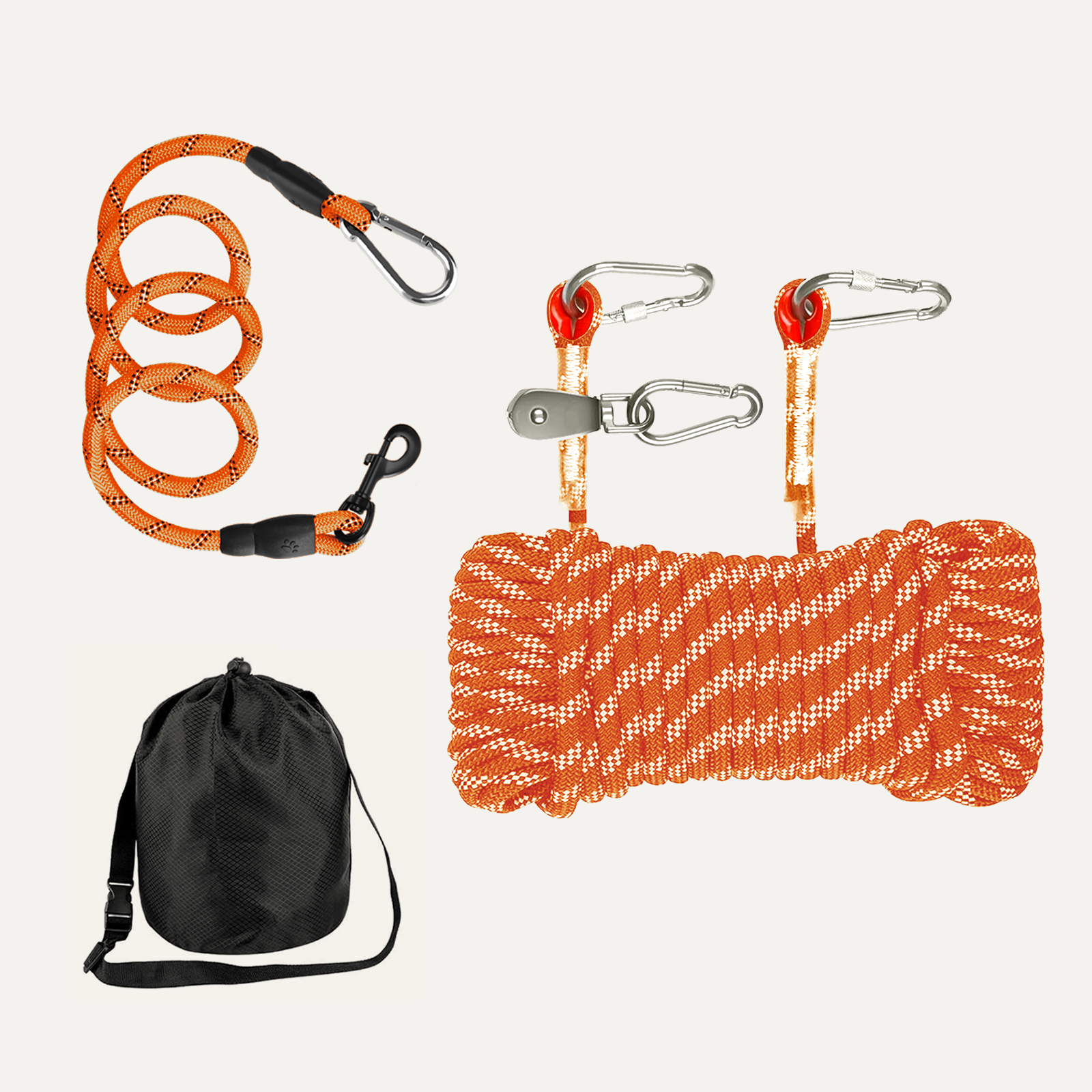
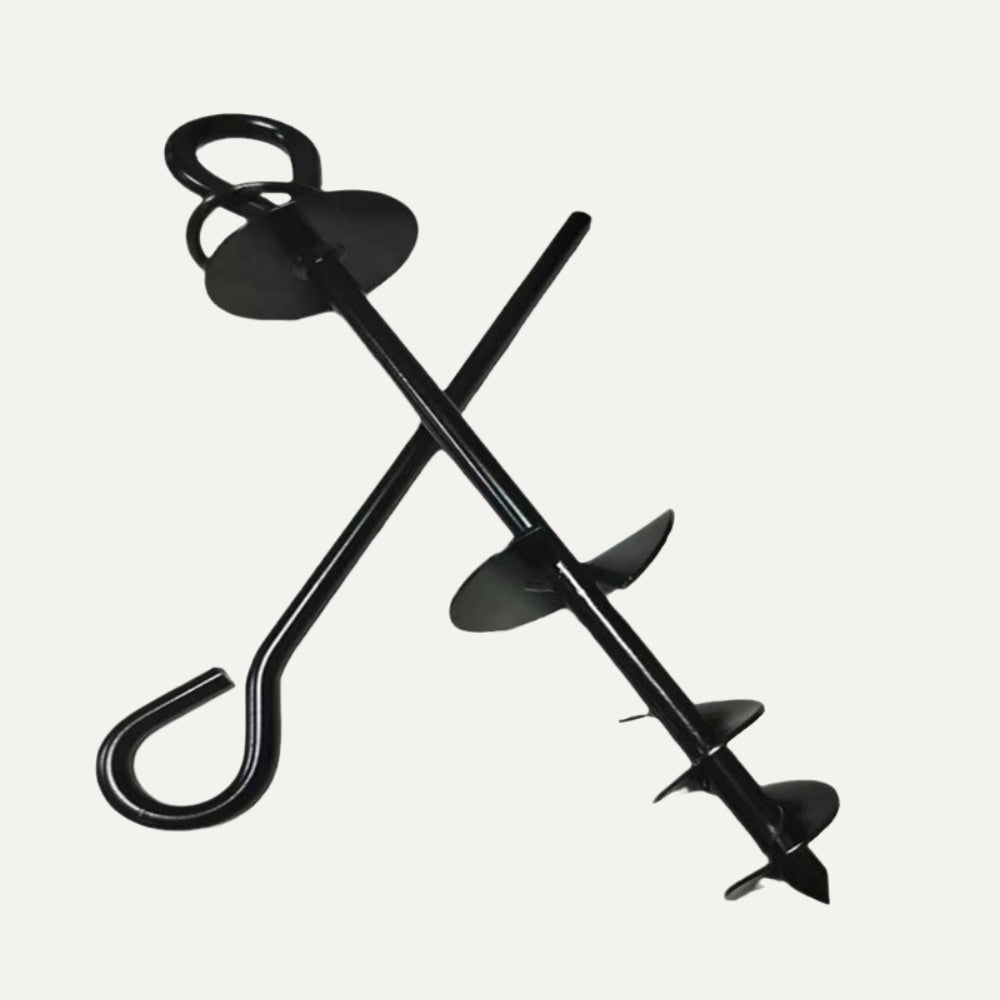
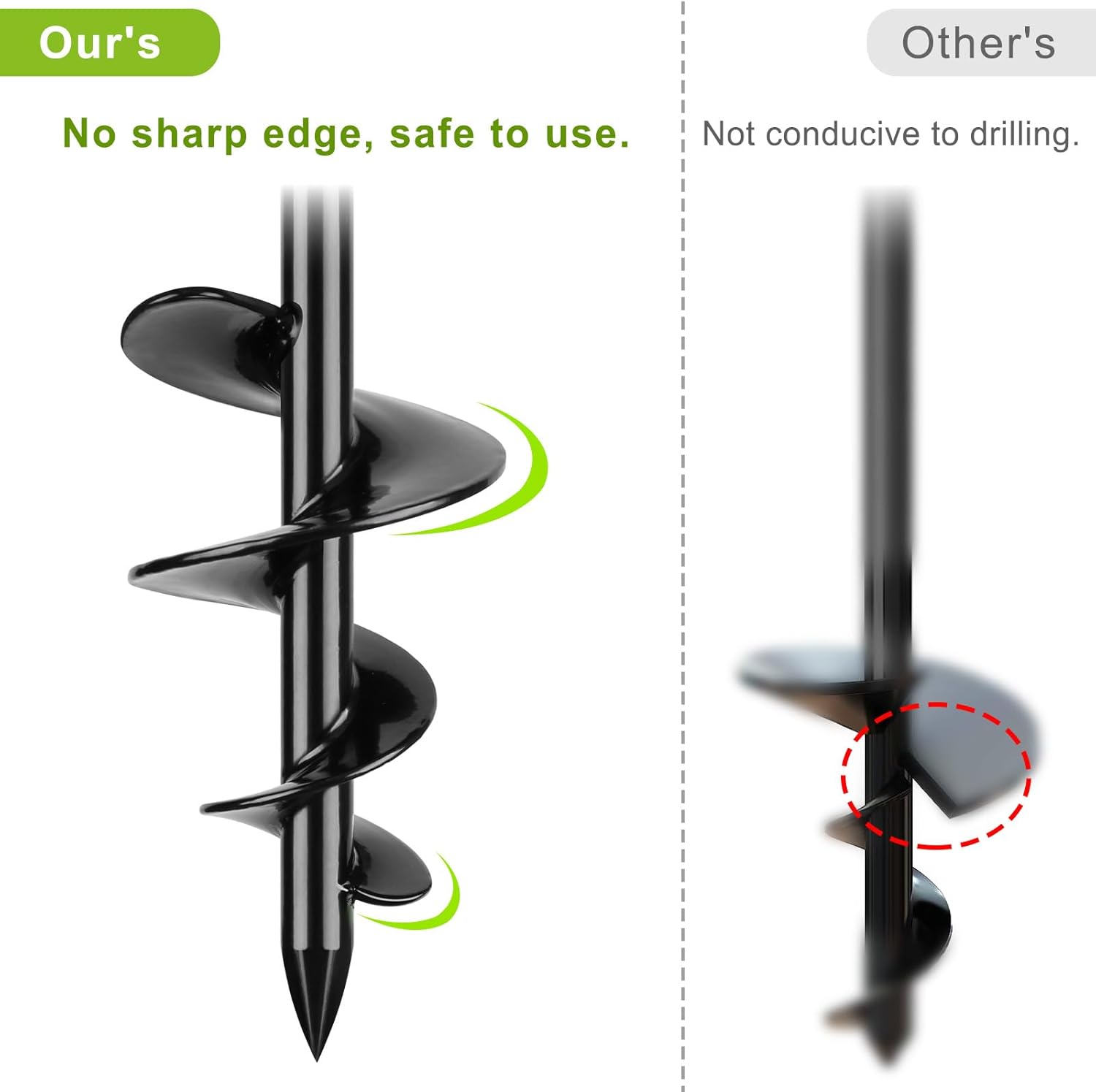
Every dog tie out depends on a secure anchor, as this is what ultimately determines the safety of the entire system. The anchor must be stronger than your dog’s pulling force, properly secured, and resistant to shifting or loosening over time. In many cases, anchor failure — not the dog tie out cable itself — is the most common cause of system breakdown.
In an overhead dog tie out cable system, the sliding ring or trolley allows your dog to move smoothly back and forth along the length of the cable rather than being limited to a fixed circular radius. This creates a more natural, linear movement pattern and gives your dog greater usable space. High-quality trolleys are typically built with heavy-duty metal rollers, smooth-glide pulleys, and 360° swivel mechanisms to minimize friction and resistance. A well-designed trolley reduces tangling, absorbs minor movement shock, and prevents abrupt stops. Without a properly functioning trolley, an overhead dog tie out cable system can create drag, increase strain on hardware, and restrict your dog’s motion instead of enhancing it.
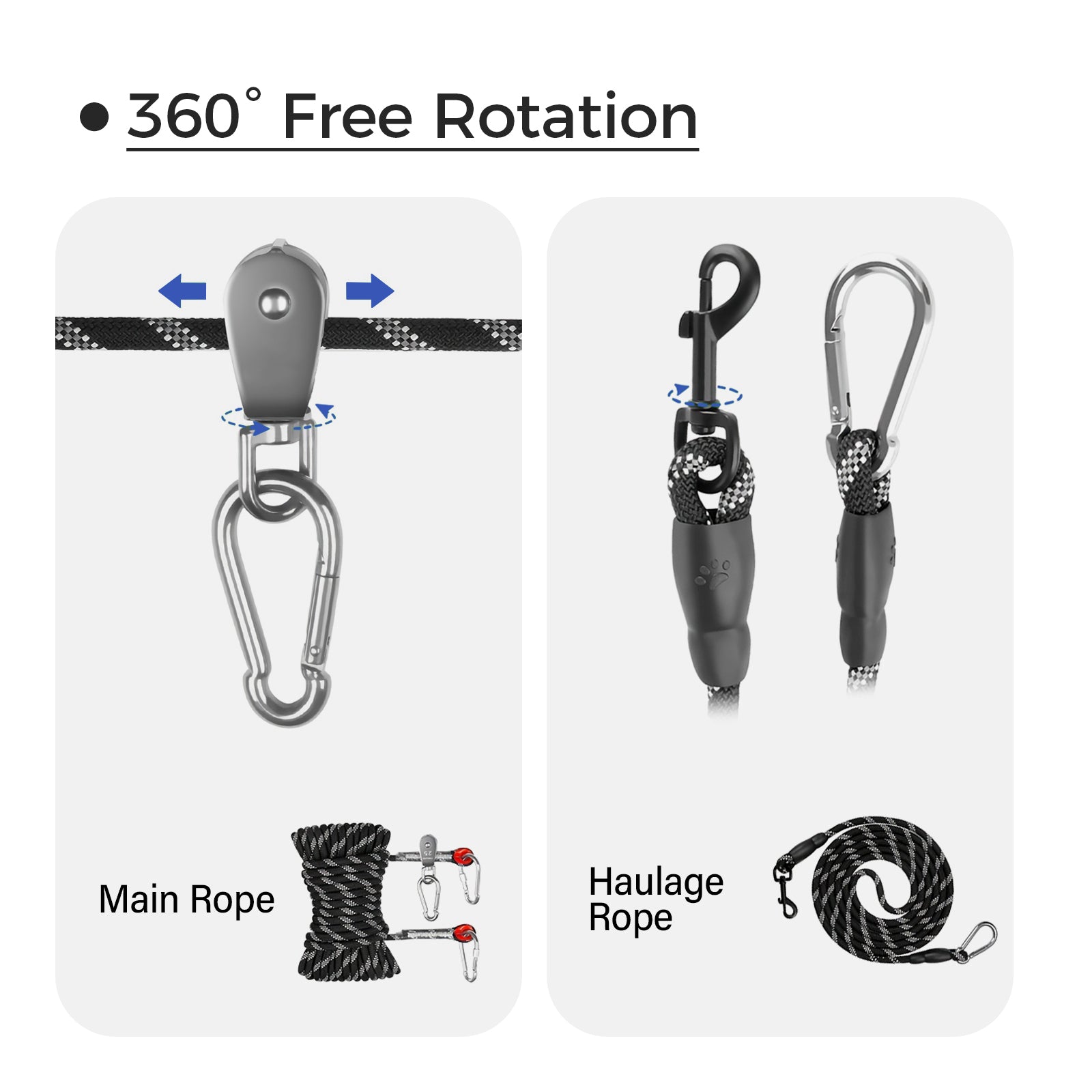
The dropline connects the main dog tie out cable (or sliding trolley in an overhead system) directly to your dog’s harness, making it one of the most important safety components of a dog tie out setup. This section absorbs sudden force if your dog lunges or runs to the end of the line, which is why higher-quality droplines often include built-in shock absorbers and swivel connectors to reduce strain and prevent twisting. Proper length is essential — a dropline that is too long increases the risk of tangling, while one that is too short can restrict natural movement. Most importantly, a dog tie out should always attach to a well-fitted harness, never a collar, since collar attachment can place dangerous pressure on the neck and increase the risk of injury during sudden pulls.
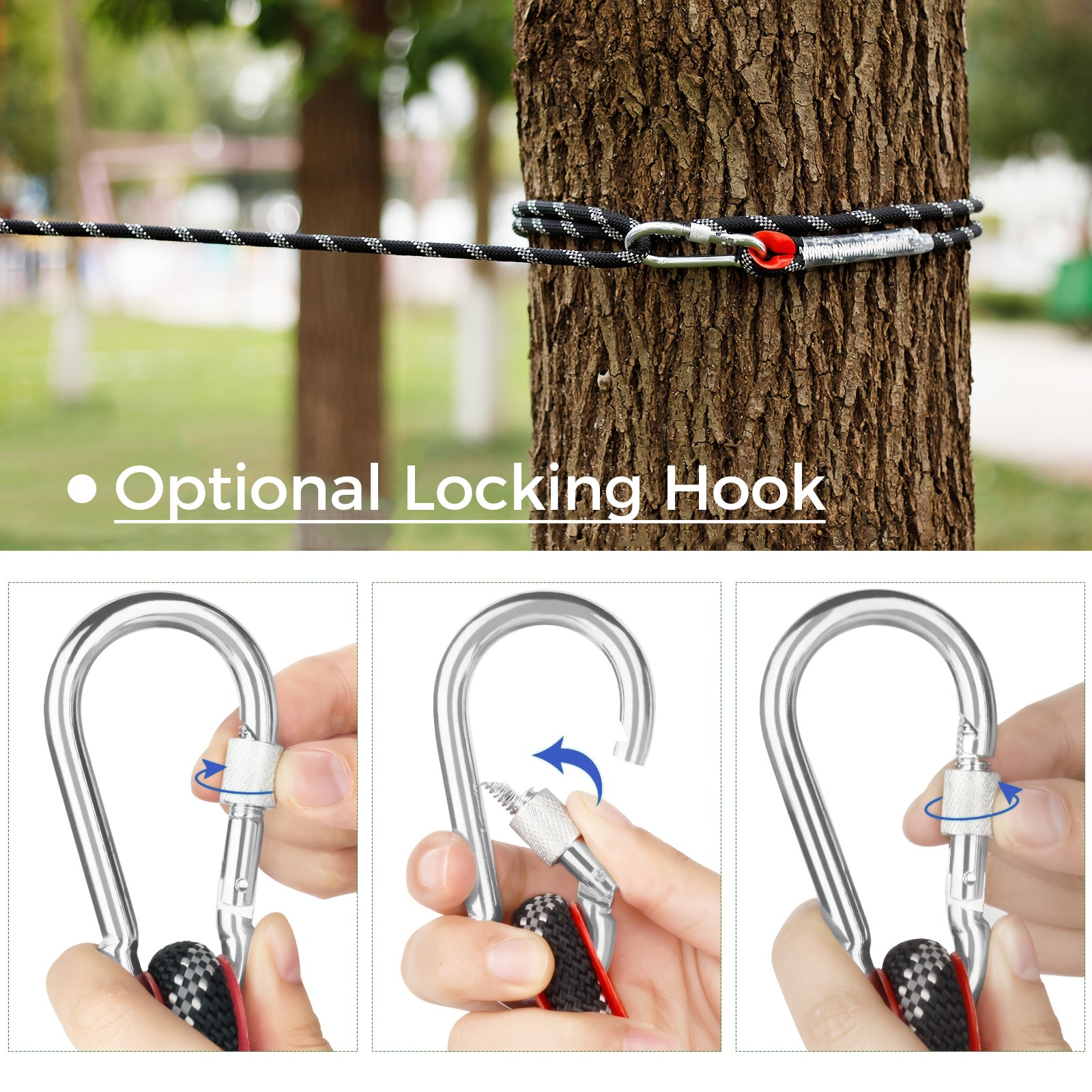
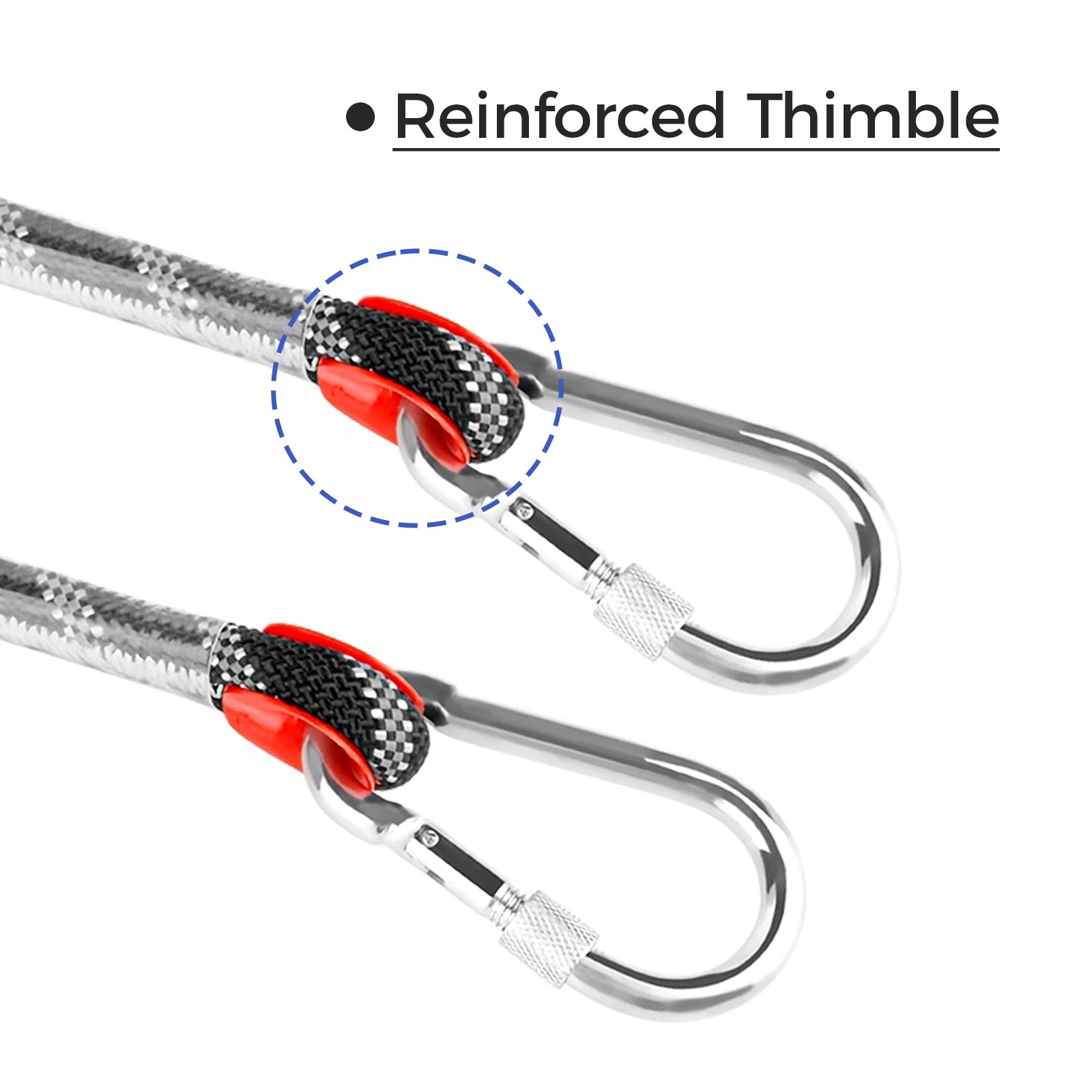
Swivel clips may be small, but they play a critical role in the safety and durability of a dog tie out cable system. These connectors are designed to rotate freely, preventing the cable from twisting and reducing torque on your dog’s body when they move, turn, or lunge. High-quality swivel hardware helps extend the lifespan of the entire dog tie out setup by minimizing stress on connection points. When choosing a system, look for rust-resistant metal construction, smooth 360-degree rotation, and sturdy spring-loaded clips. Even the strongest dog tie out cable can fail prematurely if the hardware components are poorly made.
Selecting the proper location is critical to the safety and effectiveness of your dog tie out setup. Choose a flat, open area that gives your dog enough space to move comfortably without creating tripping or tangling hazards. Avoid placing a dog tie out cable near roads, driveways, or high-traffic areas where distractions could trigger sudden lunging.
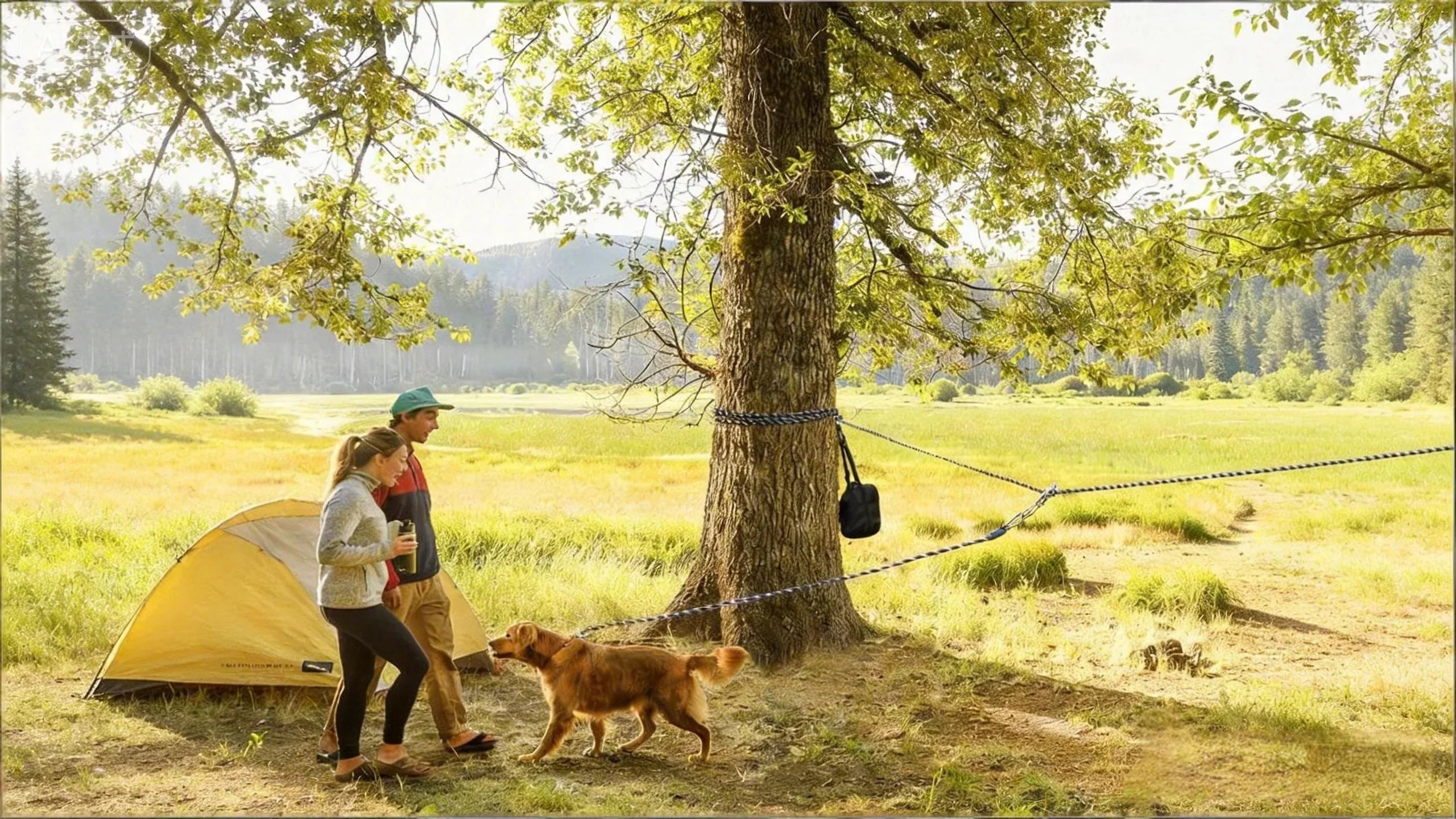
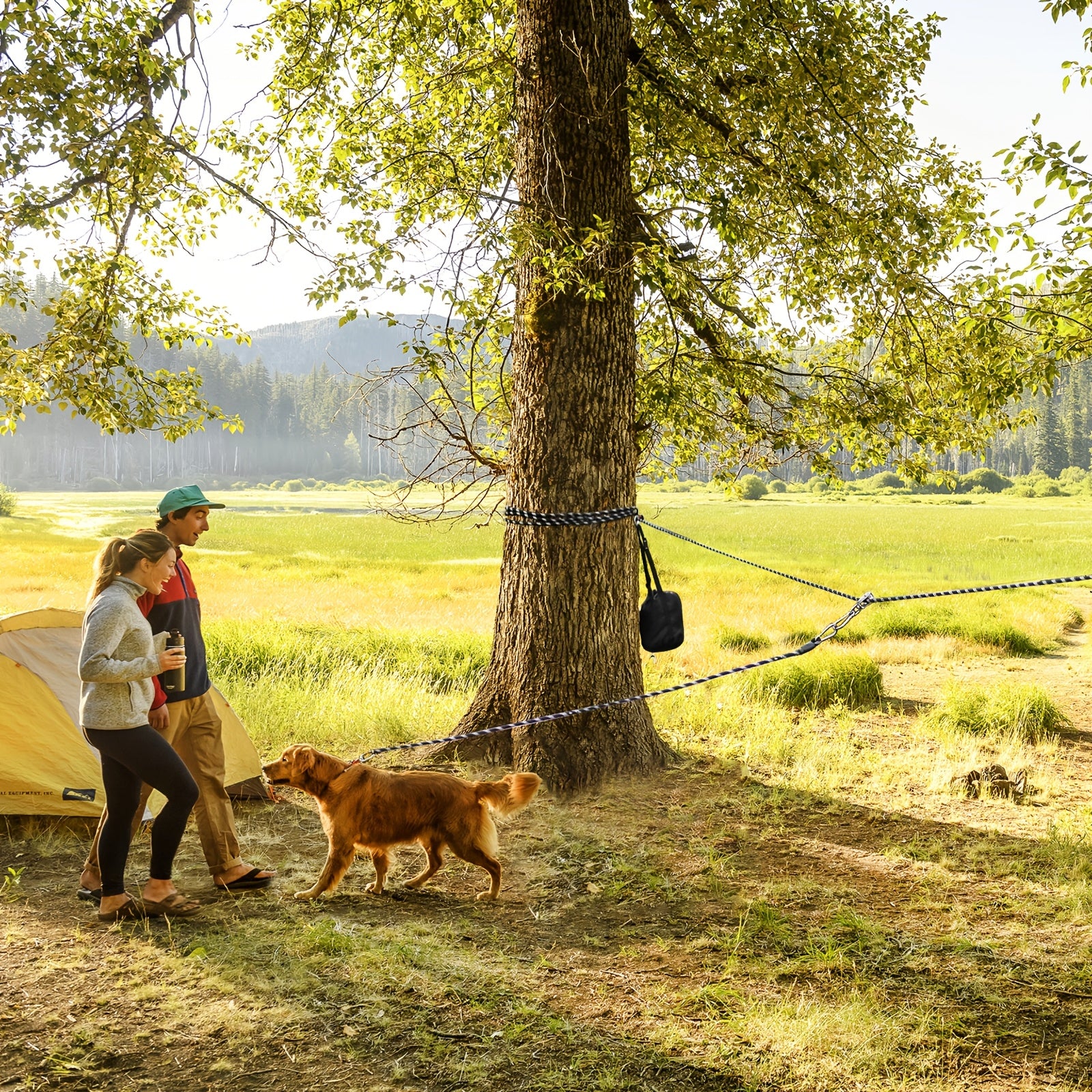
If you’re attaching your dog tie out cable to a tree, always use a tree protection strap and never wrap the bare cable directly around the bark, as this can cause long-term damage. Proper tree protection not only preserves the health of the tree but also improves the overall stability and safety of your dog tie out system.
For overhead systems, secure the dog tie out cable tightly between two strong anchor points, keep proper tension without sagging, follow the manufacturer’s weight limits, and position the cable high enough to reduce tripping hazards while still low enough to function safely and effectively.
Clip the trolley onto the main cable, attach the dropline, and connect it to a well-fitted harness — not a collar. Always use a harness when using a dog tie out cable, as collars can increase the risk of neck injury.
Before letting your dog roam, check all clips and anchors, make sure the swivels rotate freely, and pull-test every connection to confirm everything is secure. Supervise your dog during initial use, and never leave your dog unattended for extended periods on a dog tie out.

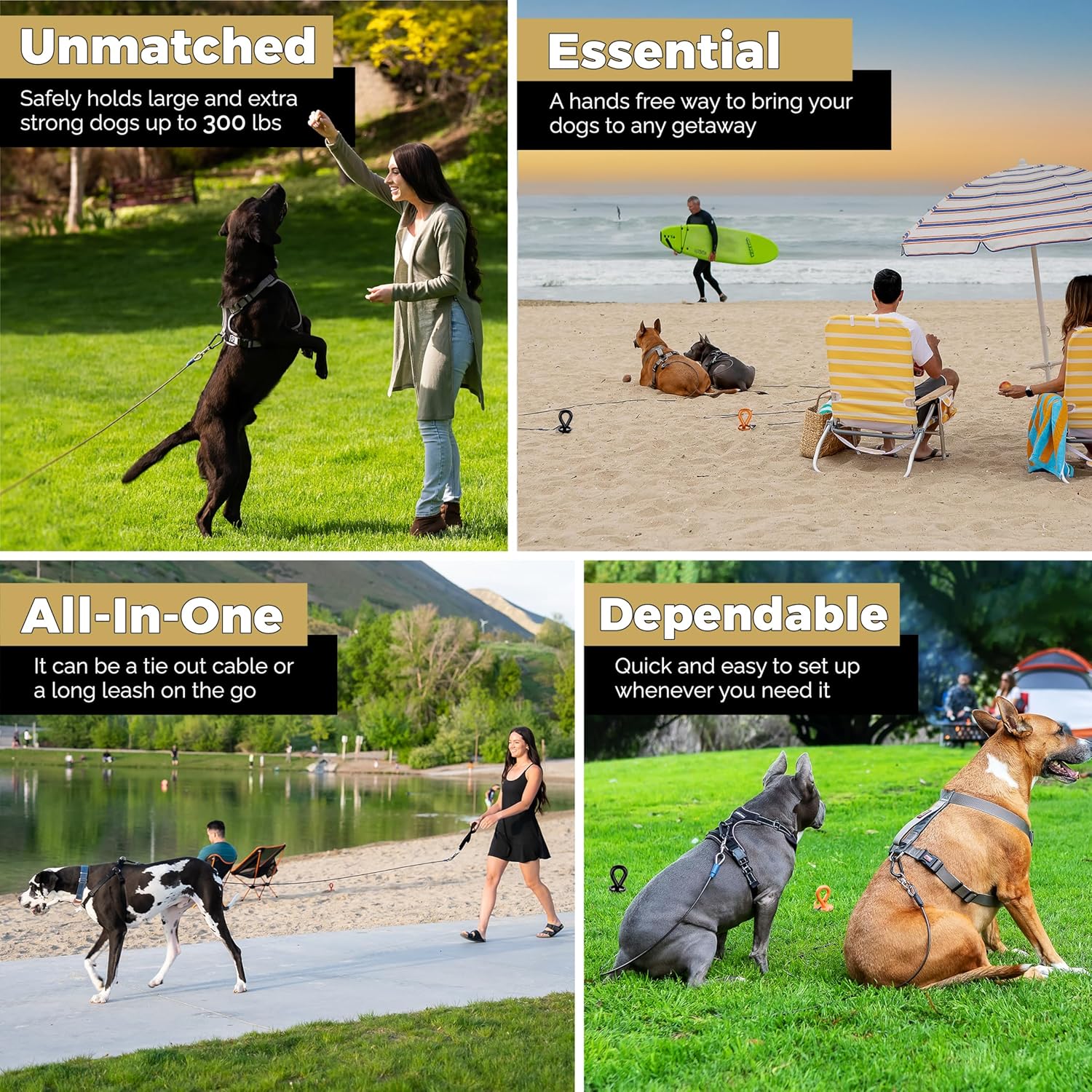
One of the biggest advantages of a dog tie out is that it provides controlled outdoor freedom. Your dog can enjoy fresh air, sunlight, and space to move without being fully off-leash. For homes without a fenced yard, a properly installed dog tie out cable creates a defined roaming boundary that prevents wandering or escape.
Another major benefit is affordability. Installing a physical fence can cost thousands of dollars and may not even be permitted in rental properties. In contrast, a heavy-duty dog tie out cable system is relatively inexpensive and can be set up in a matter of minutes.
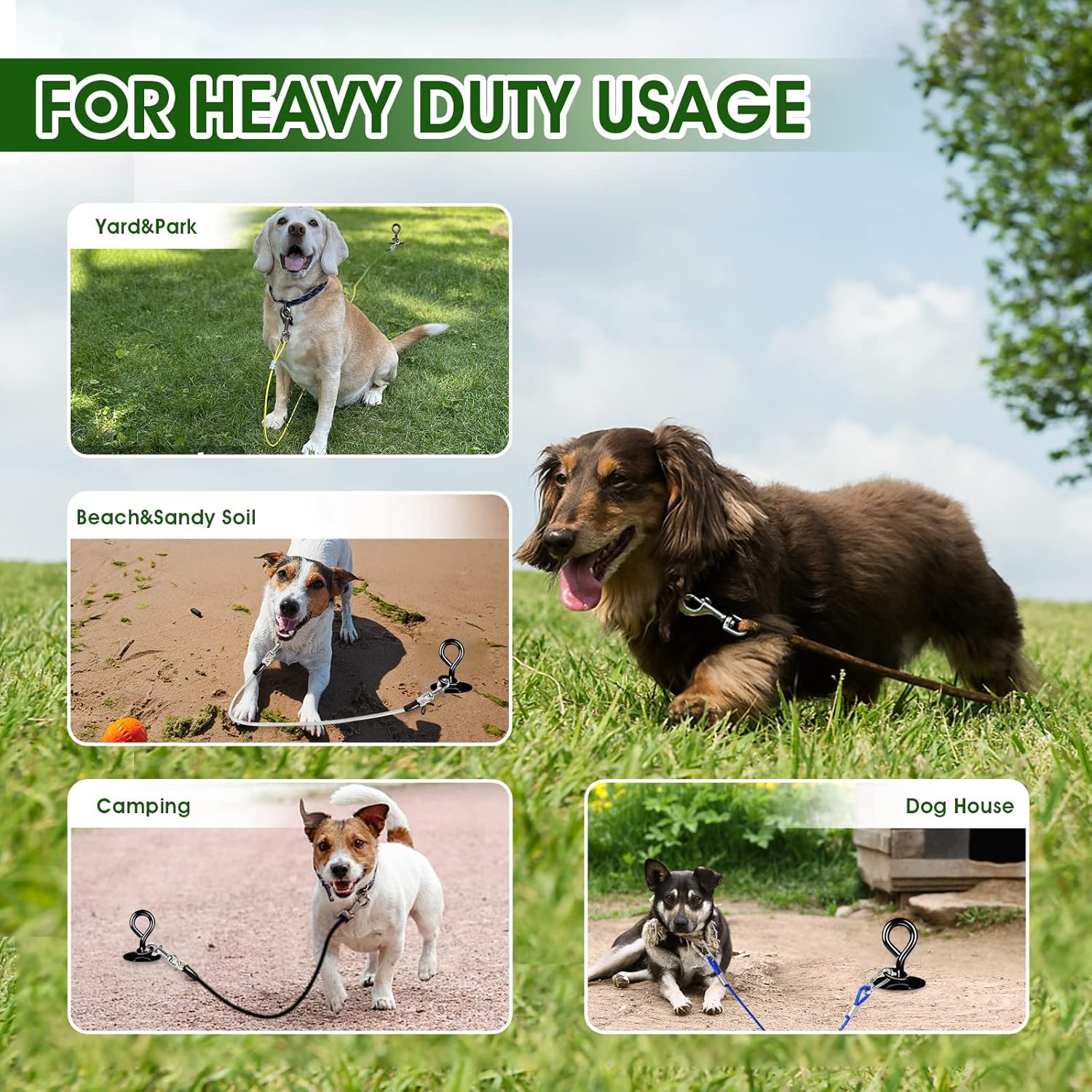
Portability is another strong advantage. A dog tie out can be used in multiple environments — your backyard, a campsite, a park picnic area, or even while traveling in an RV. Unlike permanent fencing, it’s flexible and easy to relocate.
Quick setup is especially appealing for pet owners who need a temporary containment solution. Whether you’re hosting guests, doing yard work, or setting up camp, a dog tie out cable offers a fast way to manage your dog’s movement safely.
Despite its convenience, a dog tie out cable is not without risks.
Supervision is always required. A dog should never be left unattended for long periods while attached to a tie out. Unexpected situations — such as wildlife, neighborhood dogs, or sudden loud noises — can trigger pulling or panic reactions.
Improper installation increases the risk of tangling. If the cable sags too low, if obstacles are nearby, or if the dropline is too long, the system can wrap around objects or even around your dog’s legs.
A dog tie out cable may also be unsuitable for reactive dogs or dogs with strong prey drives. If your dog tends to lunge aggressively at squirrels, passing animals, or people, the sudden force placed on the cable can lead to hardware failure or physical strain.
There is also a potential for injury if the system is misused. Attaching a dog tie out directly to a collar instead of a harness can cause neck or tracheal injuries during sudden pulls. Low-quality hardware or weak anchors can fail under pressure, creating safety hazards.
If you’re ready to set up a safer outdoor space, we welcome you to explore the high-quality dog tie out cable options available in our store — thoughtfully designed for strength, safety, and real-world use.
Please read our FAQs page to find out more.
A dog tie out cable is a temporary outdoor restraint system that attaches your dog to a secure anchor point, allowing controlled movement within a limited area without being fully off-leash.
A dog tie out cable is the line that connects your dog to a fixed point, allowing limited movement. A stake is the anchor that goes into the ground and holds the cable in place.
Yes, a dog tie out can be very secure when properly installed. The strength depends on the cable rating, anchor point, and hardware quality. Always choose a tie out rated for your dog’s weight and use a sturdy anchor to ensure safety.
A dog tie out cable is suitable for most dogs, as long as you choose one rated for your dog’s weight and strength. It works well for medium to large breeds and dogs that are calm or moderately active outdoors.