

- by serviceHowoll
Common Dog Coats Sizing Mistakes
- by serviceHowoll
You finally get a new dog coat, slip it on your pup, and… something feels off. Maybe your dog walks stiffly like a little robot because the coat is too tight. Or maybe the coat drags along the ground like a superhero cape because it’s way too big. We've probably all encountered this situation. In this guide, we’ll break down the most common dog coat sizing mistakes, why size matters more than you think, and how to make sure your dog’s next coat fits the way it’s supposed to.
According to guidance from the American Kennel Club (AKC), dog coats should never interfere with a dog’s natural gait or joint movement. This is especially critical for active dogs or breeds with deep chests and strong shoulders. A properly sized dog coat allows your dog to run, jump, play, and relieve themselves naturally.
The primary job of a winter dog coat is insulation. A coat that’s too loose lets cold air in, defeating its purpose. One that’s too tight compresses your dog’s natural fur and reduces its ability to trap warm air. Veterinary resources like PetMD emphasize that proper fit is essential for thermal efficiency, especially in cold or wet weather.
Loose or oversized dog coats may catch on branches, fences, or other obstacles during walks, while coats with tight neck openings can put unnecessary pressure on the throat and restrict normal breathing. Poorly aligned leg holes may also cause tripping, rubbing, or painful chafing around the shoulders and underarms. Veterinary experts at VCA Animal Hospitals emphasize that pet clothing should never create pressure on sensitive areas or increase the risk of entanglement, reinforcing why choosing the correct dog coat size is essential for both comfort and safety.
Mistake #1: Choosing Size Based Only on Weight. Weight is not a reliable sizing metric. Two dogs with the same weight can have completely different chest depth, back length, and body shape. Dog coat size should always be based on measurements, not just pounds.
Mistake #2: Inaccurate Measurements. Skipping precise measurements or relying on estimates often leads to poorly fitting dog coats. Measurements should always be taken while your dog is standing naturally, not sitting or lying down. To reduce errors, it’s best to measure twice and confirm the numbers before choosing a dog coat size.
Mistake #3: Ignoring Chest Girth. The chest (girth) is the most critical measurement for dog coats. A coat that fits the back but squeezes the chest will restrict breathing and movement. Many sizing issues happen because owners prioritize back length and overlook chest width.
Mistake #4: Not Accounting for Breed Shape. Dogs aren’t built the same. Greyhounds and Whippets have narrow chests, Bulldogs and Pugs have broad shoulders, while Huskies and Retrievers carry more muscle and thick fur. Ignoring these breed-specific proportions is a common reason dog coats fail to fit properly.
Mistake #5: Relying Only on the “S/M/L” Label. Sizes vary dramatically between brands. A “Large” in one brand could be a “Medium” in another. Always check the brand’s specific size chart.
Dogs change shape with age, muscle, and weight. Always re-measure:
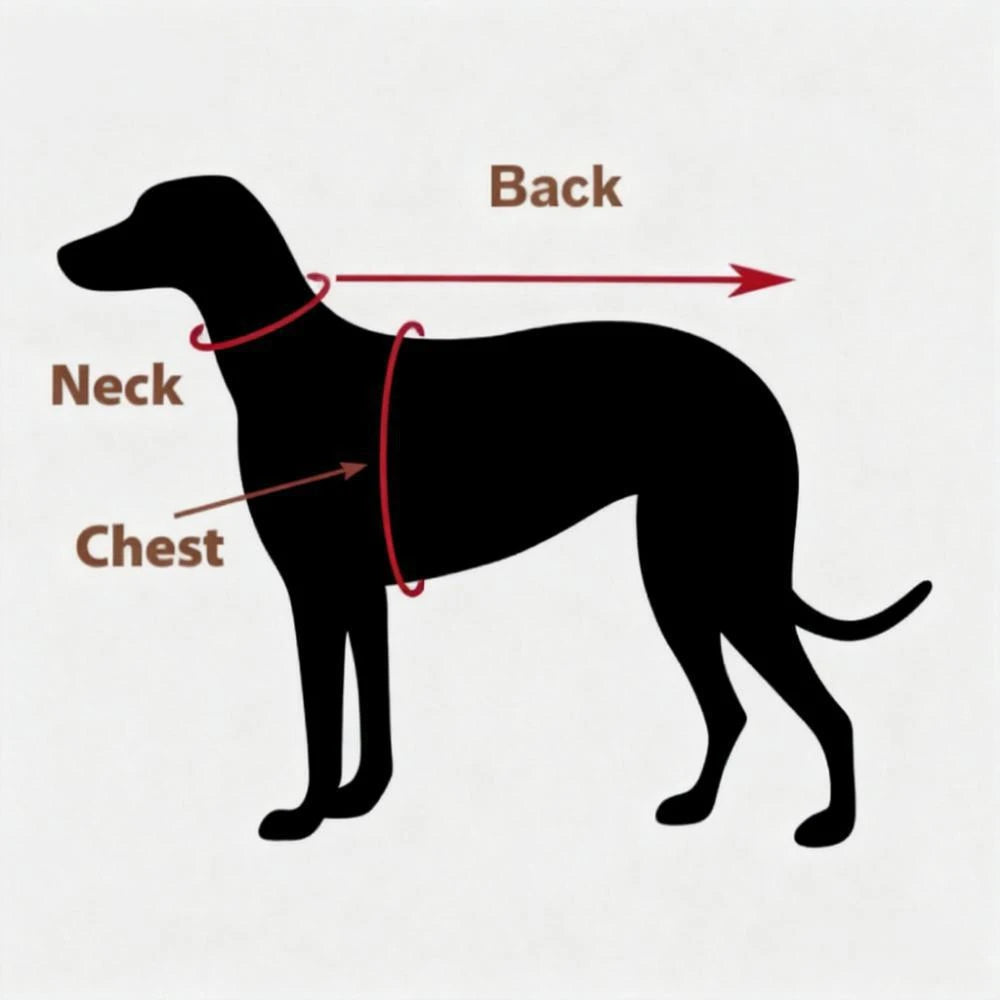
Use a soft measuring tape and measure while your dog is standing. Here are more details on measuring your puppy's size. And this is an instructional video that provides a detailed explanation of how to perform the measurement.

Choose brands that provide detailed size charts with specific measurements, not just weight ranges. A size chart based only on weight is a sign of an unprofessional or unreliable fit system, since weight alone cannot reflect chest shape or body proportions.
If your dog’s measurements fall between two sizes, prioritize the size that best fits the chest girth. And if the brand’s size chart recommends sizing up for dogs between sizes, follow that guidance—they likely base it on common customer fit issues and return data.
Look for dog coats with Velcro, buckles, or elastic straps. These features allow for a more customized fit, especially for dogs with unique body shapes.
Customer reviews often reveal whether a dog coat runs large, small, or true to size—especially helpful for first-time buyers.
Here’s a simple checklist to confirm the dog coat size is right:
If your dog freezes, resists walking, or constantly tries to shake the coat off, the issue is likely fit—not attitude.
Dog coats should enhance your dog’s comfort—not limit it.
When chosen correctly, the right dog coat size improves warmth, mobility, and safety. Most sizing problems are easy to avoid with proper measurements, attention to chest fit, and an understanding of your dog’s body type.
Remember:
Dogs don’t dislike dog coats.
They dislike dog coats that don’t fit.
When you’re ready to shop, here’s a selection of the best winter dog coats designed to fit most breeds comfortably.
Please read our FAQs page to find out more.
No. Weight alone is not a reliable indicator of dog coat size. Dogs with the same weight can have very different chest widths, body lengths, and proportions. Accurate measurements are far more important than weight-based sizing.
Different breeds have different body shapes. For example, Greyhounds have narrow chests, Bulldogs have broad shoulders, and Huskies have thick fur and muscle. Ignoring these breed-specific proportions is a common reason dog coats fail to fit properly.
You should measure your dog every time you plan to buy a new coat, even if your dog has worn the same size before. Dogs change shape over time due to age, muscle development, seasonal weight changes, or coat thickness. Re-measuring ensures you choose the correct dog coat size and helps avoid common fit issues with dog coats.
If your dog falls between sizes, choose the size that best fits the chest girth. If the brand recommends sizing up for dogs between sizes, follow that advice—it’s usually based on real customer fit and return data.