

- by serviceHowoll
Dog Coats Selection for Active vs. Less Active Dogs
- by serviceHowoll
Choosing the right dog coat is not just about style or weather—it starts with understanding your dog’s activity level. Dogs that love running, hiking, or exploring outdoors have very different needs compared to dogs that enjoy calm walks or spend more time resting. Making the right dog coats selection helps ensure comfort, safety, and performance in every season.
In this guide, we’ll break down how to choose the best dog coats for active dogs versus less active dogs, highlight key differences, and help you avoid common mistakes when shopping for dog coats.
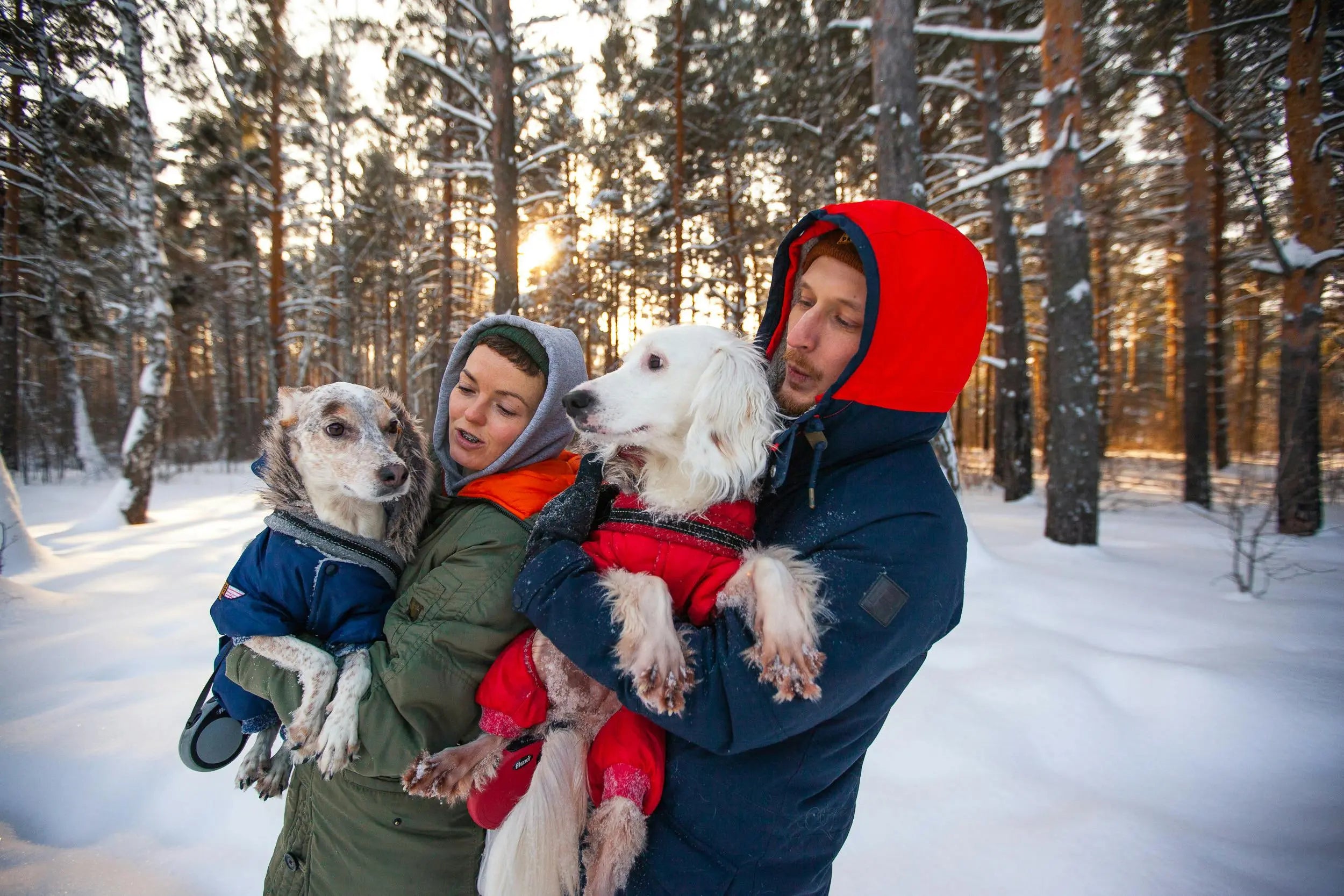
A dog’s activity level plays a key role in how much warmth it needs from outerwear because body heat is largely generated through movement. As noted by pet care experts, During high-energy activities such as running, hiking, or training, dogs naturally produce significant internal heat, which can reduce the need for heavy insulation. In these situations, overly thick or poorly breathable dog coats may trap excess heat and moisture, increasing the risk of discomfort or overheating. In contrast, dogs that move slowly, remain stationary or or experience periods when activity stops—such as during rest breaks, leash training, or standing outdoors—generate far less body heat and lose warmth more quickly, even if they are normally energetic. For these dogs, added insulation becomes essential to maintain thermal comfort in cold conditions, making activity level a critical factor in effective dog coats selection.
Active dogs are dogs that spend a significant amount of time moving outdoors and engaging in high-energy activities such as hiking, running, training, or outdoor sports. Because continuous movement allows them to generate body heat quickly, these dogs rely less on heavy insulation and more on freedom of movement and effective temperature regulation. They are also often exposed to changing weather conditions for longer periods, which makes flexibility and adaptability essential. For this reason, dog coats for active dogs must strike a careful balance between weather protection and breathability, providing coverage without restricting mobility or causing overheating.
Less active dogs tend to move at a slower pace or spend shorter periods of time outdoors, often preferring leisurely walks rather than sustained physical activity. Because they spend more time standing still, sitting, or resting outdoors, they generate less internal body heat and lose warmth more easily, especially in cold conditions. As a result, these dogs are generally more sensitive to low temperatures and rely more heavily on external insulation to stay comfortable. For less active dogs, effective dog coats selection should prioritize warmth and insulation over ventilation, helping to maintain body temperature even when movement is minimal.
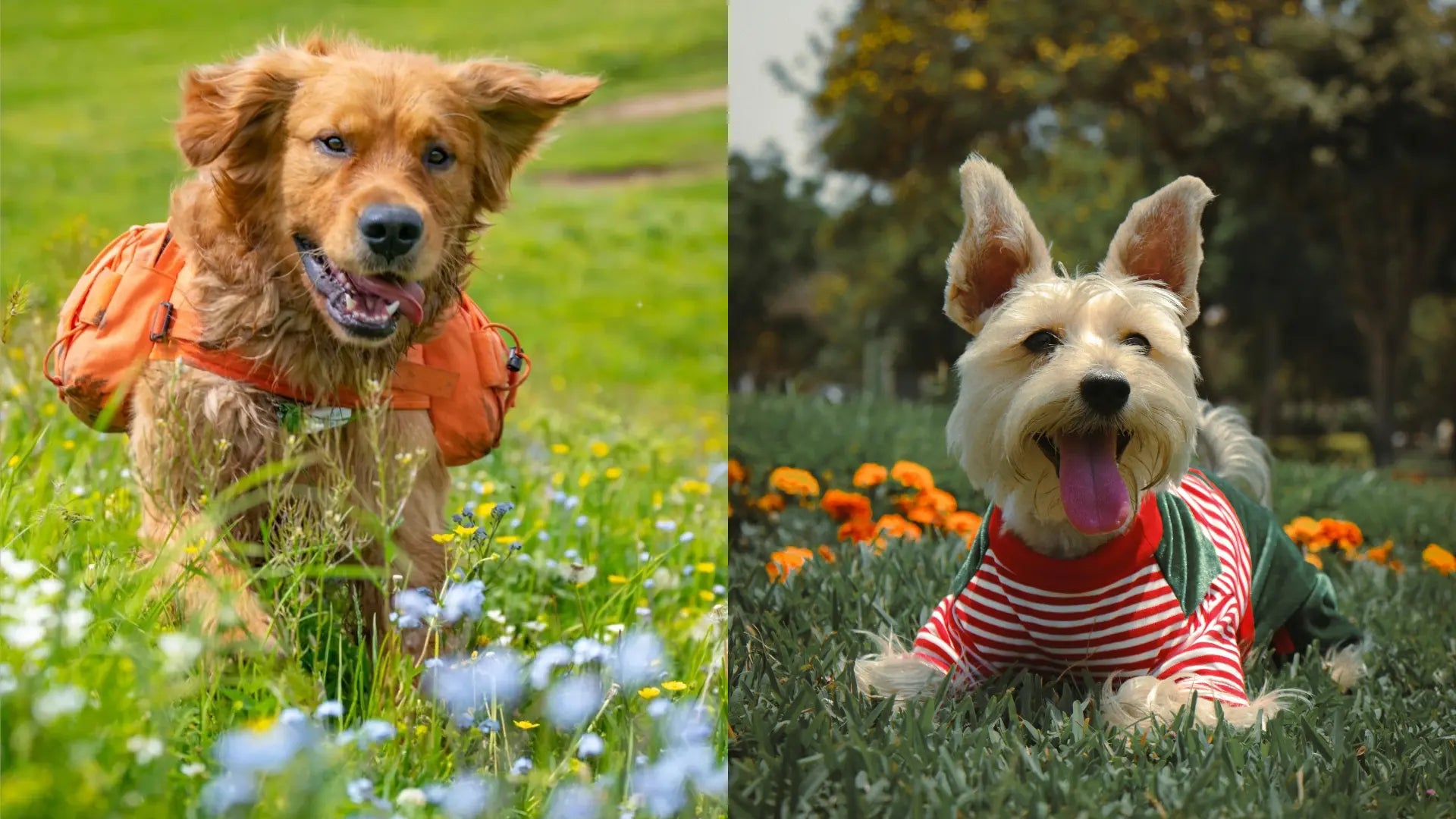
Dog coats for active dogs should be designed to support constant movement while regulating body temperature. Since active dogs generate heat quickly through running, hiking, or training, their coats should use lightweight and breathable materials that allow excess heat and moisture to escape. A streamlined, athletic fit is crucial to prevent restriction around the shoulders and chest, ensuring full range of motion. Weather protection such as wind or light rain resistance should be balanced rather than heavy, helping active dogs stay comfortable without increasing the risk of overheating during exercise.
For dogs that love hiking, running, or high-energy outdoor play, mobility and breathability matter just as much as warmth. Our jacket collection is designed around real movement — using lightweight materials, flexible paneling, and weather-resistant fabrics to keep dogs protected without restricting motion or causing overheating.
Dog coats for less active dogs should prioritize warmth and insulation over ventilation. Dogs that move slowly or spend extended time standing still lose body heat more rapidly and depend more on external insulation to maintain comfort. These dog coats benefit from thicker linings, improved heat retention, and extended coverage across the chest and belly. While breathability remains important, it is secondary to consistent warmth, especially during short walks or low-activity outdoor exposure in cold weather.
For dogs that love hiking, running, or high-energy outdoor play, mobility and breathability matter just as much as warmth. Our warm coat collection is designed around real movement — using lightweight materials, flexible paneling, and weather-resistant fabrics to keep dogs protected without restricting motion or causing overheating.
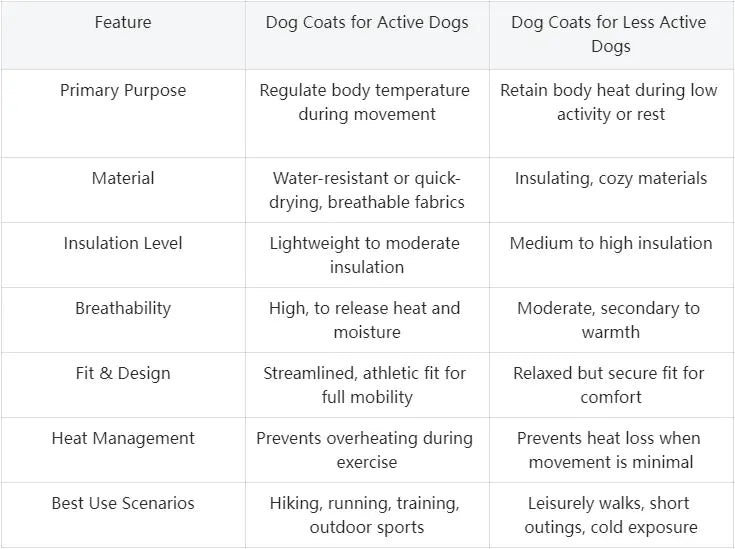
This comparison helps simplify dog coats selection based on real outdoor needs.
Even experienced dog owners can make mistakes when choosing dog coats. Understanding these common issues can help improve dog coats selection and ensure better comfort and performance.
A well-chosen dog coat should work with your dog’s lifestyle rather than against it. Focusing on practical fit, comfort, and real outdoor use helps ensure the coat performs as intended in everyday situations. By choosing thoughtfully and paying attention to key details, dog owners can select dog coats that offer lasting comfort and reliable protection.
Please read our FAQs page to find out more.
A dog is generally considered active if they spend extended time running, hiking, or training outdoors. Dogs that prefer short walks, move slowly, or spend more time resting outside are typically less active and need more insulation to stay warm.
Not always. While breathable materials are important during movement, active dogs can still lose body heat quickly when activity slows or stops. During rest breaks or low-motion moments, additional insulation helps maintain warmt.
Yes. Different outdoor activities place different demands on a dog coat. For example, hiking, running, or camping often require different levels of insulation, protection, and mobility. We explore this in more detail in our article Outdoor Adventures: Selecting the Right Dog Coats.
Yes, in many cases. A well-balanced dog coat with moderate insulation and a comfortable fit can work for daily walks and general outdoor use.
Look for a dog coat designed for temperature regulation, combining moderate insulation with effective breathability. This allows excess heat to escape during high activity while maintaining warmth when movement decreases, making it suitable for variable outdoor conditions.