

- by HuangMila
Dog Tie Out vs Leash: What’s the Difference
- by HuangMila
Dog owners often wonder whether a regular leash can be attached to a stake, whether a tie out can be used for walking, or which option works better in a yard or at a campsite. The names can make the products seem interchangeable, but a dog tie out and a leash are designed for different purposes and provide different levels of control.
This guide compares a dog tie out vs leash, including how each one works, where it should be used, and whether a stake is necessary. By understanding their differences, you can choose the more suitable setup for walking, training, supervised yard time, or camping while avoiding common equipment and setup mistakes.
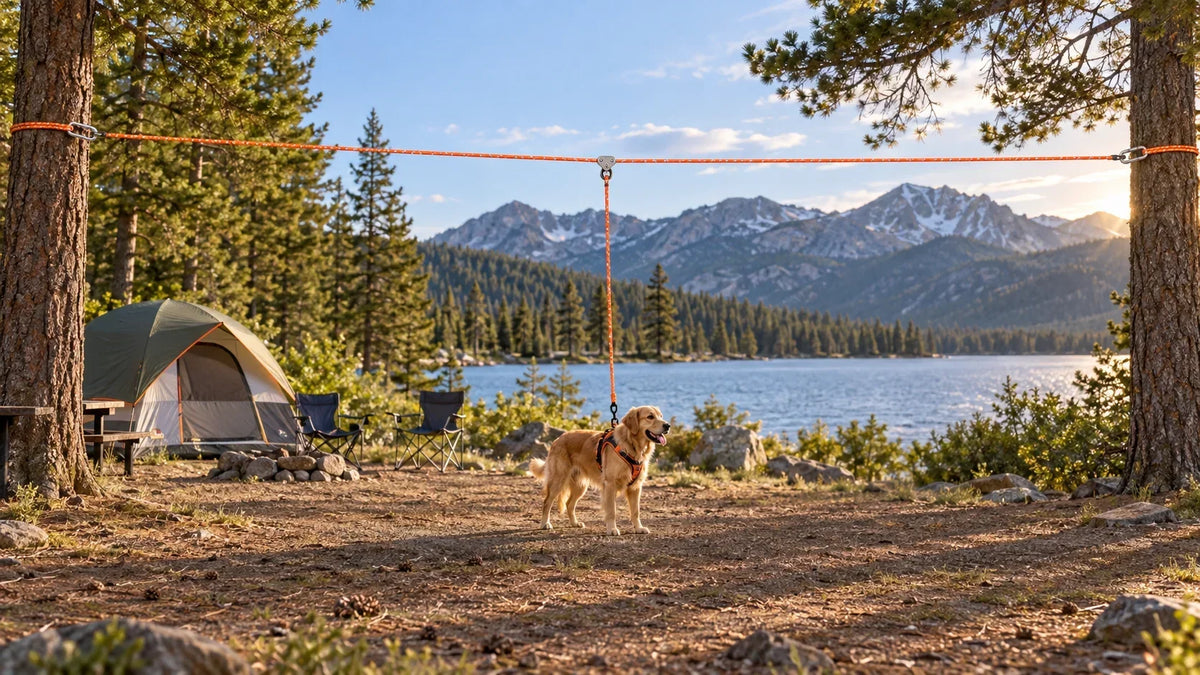
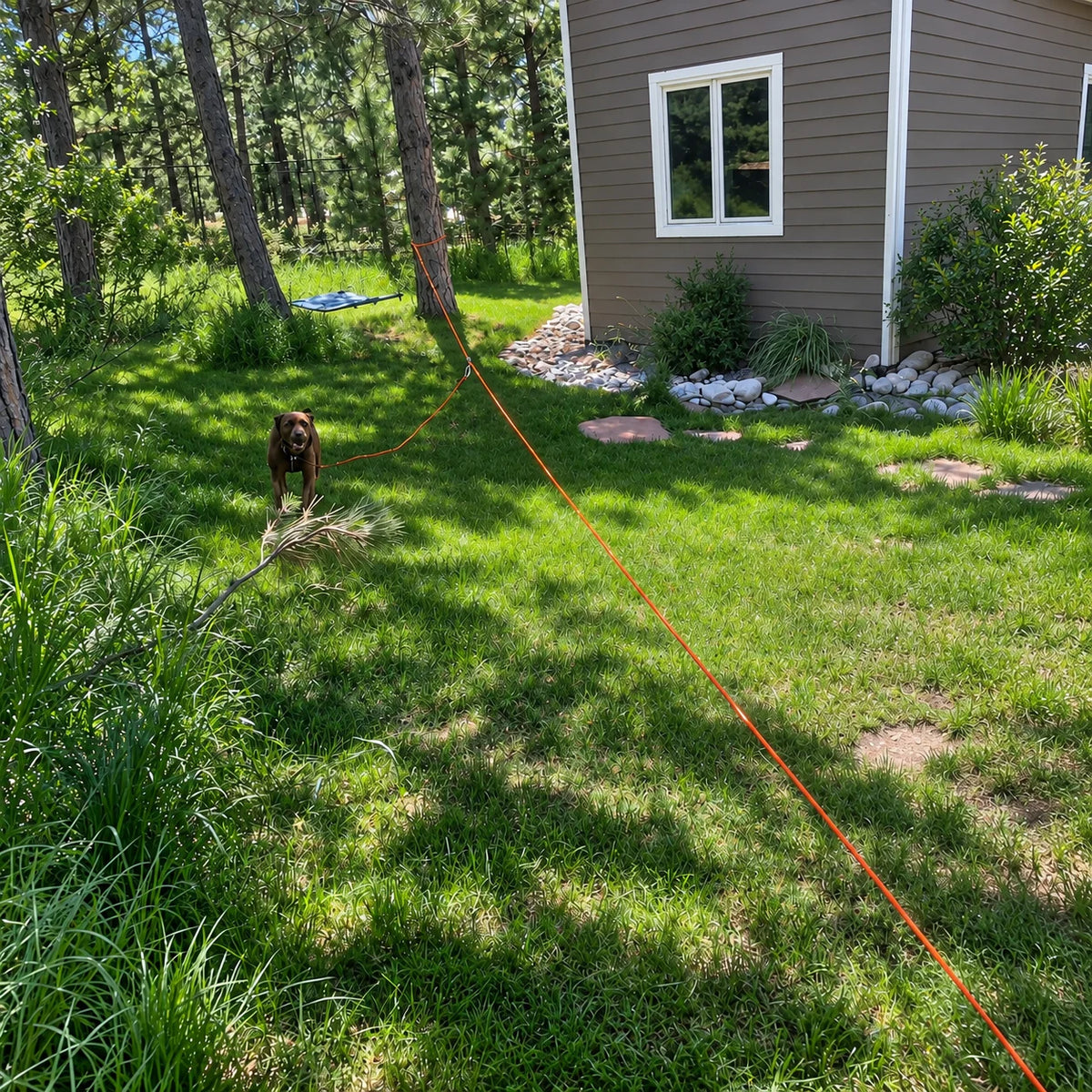
A dog tie out is a system designed to give a dog temporary access to a limited outdoor area. One end connects to the dog, while the other connects to a secure anchor point.
A typical setup may include a dog tie out cable, strong clips, swivels, and a ground stake or another compatible anchoring system. The cable length and anchor location determine the area the dog can reach.
A tie out is intended for stationary use. It is not designed to replace a walking leash, a secure fence, regular exercise, or interaction with the owner.
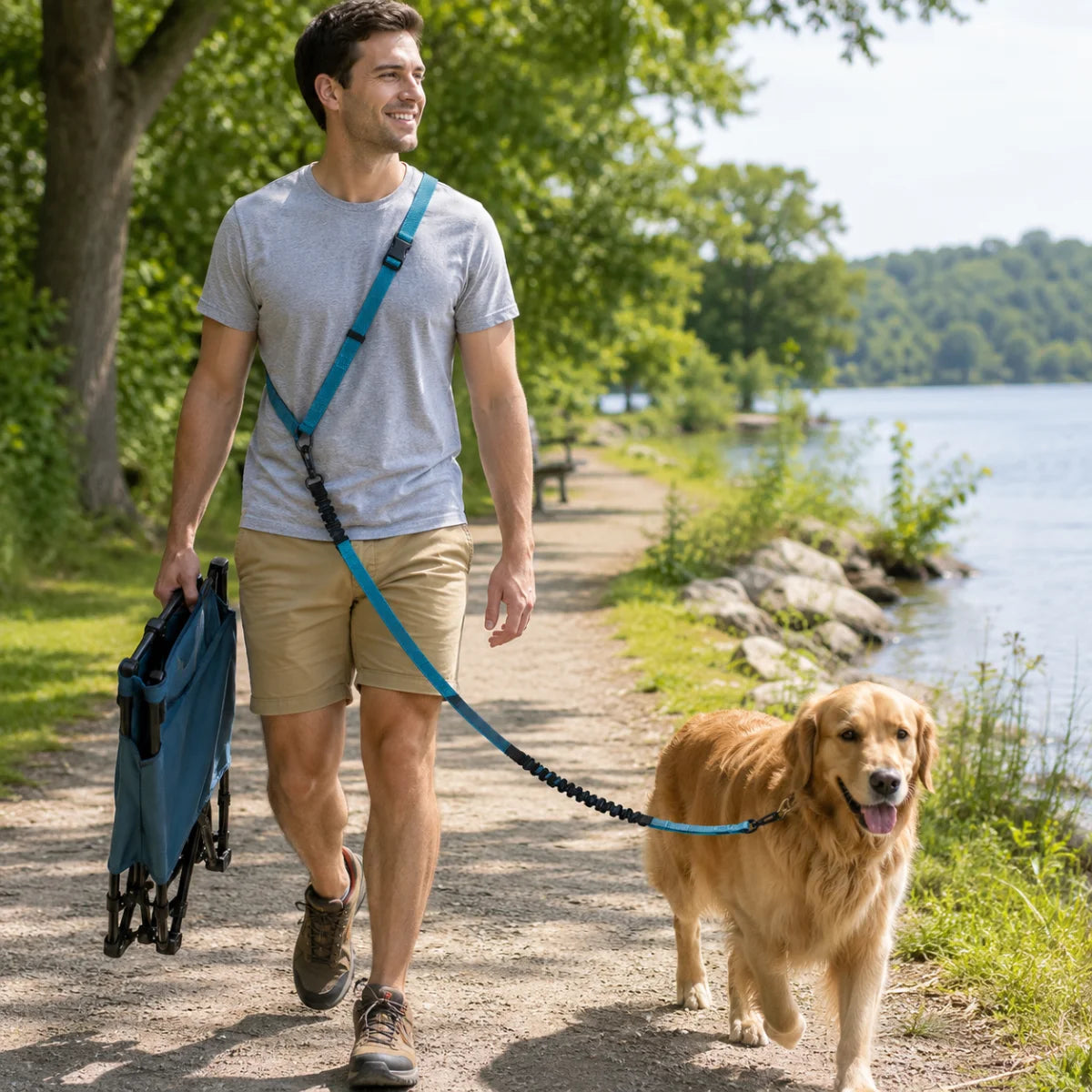
A dog leash is designed to keep the dog connected to its owner. During use, the owner normally holds the leash and actively controls the dog’s direction, speed, and distance.
Common types include standard walking leashes, hands-free leashes, adjustable leashes, and long training lines. Each type serves a slightly different purpose, but they all allow the owner to remain directly involved in the dog’s movement.
Unlike a tie out, a leash usually moves with the dog and owner rather than remaining attached to one location.
The main difference between a dog tie out and a leash is how the equipment controls the dog.
A tie out limits movement through a fixed anchor and a defined cable length. A leash gives the owner active control over the dog’s direction and distance.
| Feature | Dog Tie Out | Dog Leash |
|---|---|---|
| Connection | Attached to a fixed anchor | Usually held by the owner |
| Main purpose | Temporary access to a limited outdoor area | Walking, training and active handling |
| Owner’s role | Supervises from nearby | Actively controls the leash |
| Movement range | Based on cable length and anchor location | Based on leash length and the handler |
| Common locations | Yard or campsite | Sidewalk, park, trail or public space |
| Suitable for walking | No | Yes |
| Fixed installation | Usually required | Usually not required |
| Portability | Depends on the cable and anchor | Generally easy to carry |
| Supervision | Always required | Owner remains directly involved |
With a tie out, the anchor location and cable length create a defined activity area. The dog can move within that area, but the owner cannot control every change in direction as directly as with a handheld leash.
With a leash, the owner can shorten the distance, change direction, slow the dog down, or move away from a potential hazard. This makes a leash more appropriate when active control is necessary.
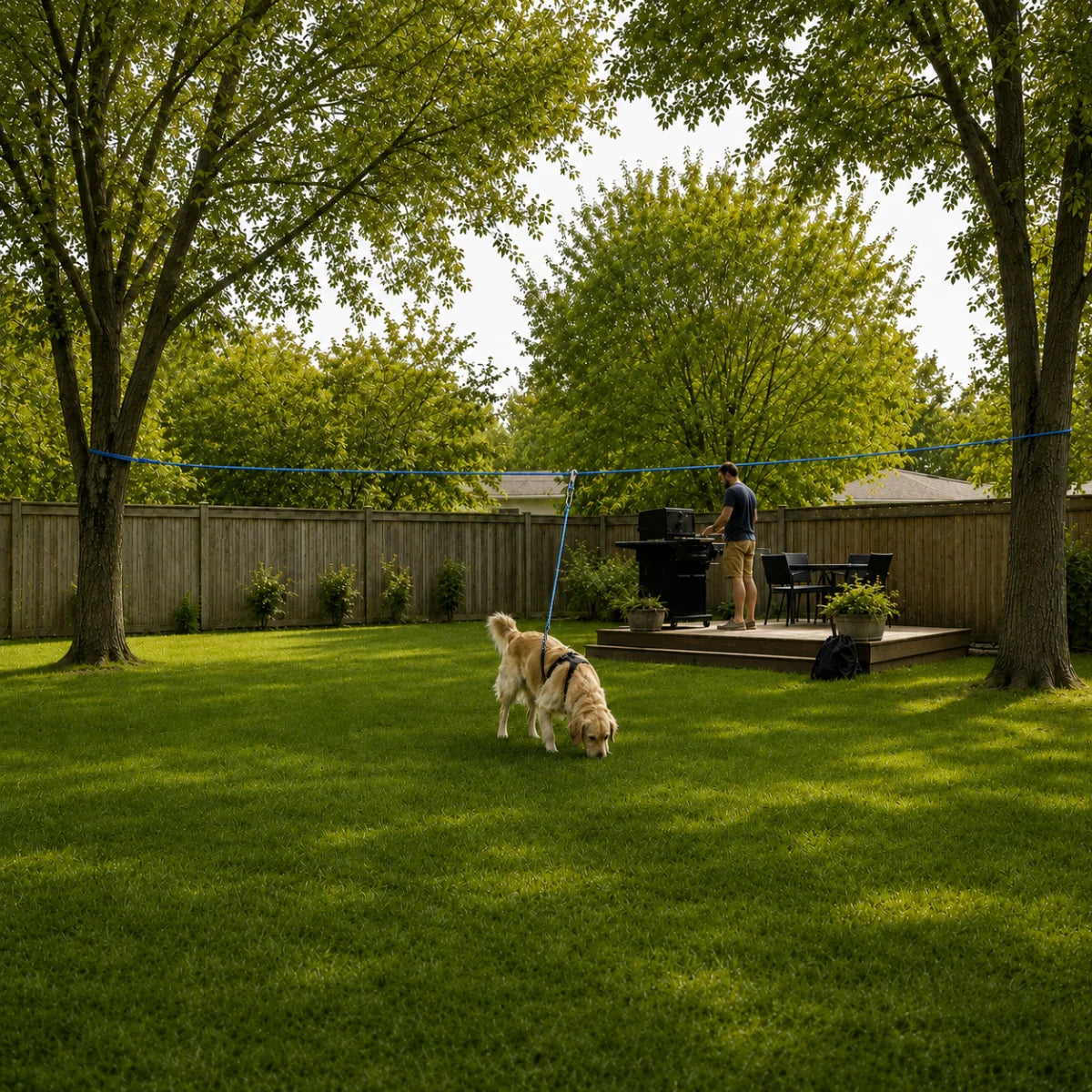
A dog tie out is mainly intended for supervised time in one location. For example, it may allow a dog to rest near its owner at a campsite or spend some time outside in an unfenced yard.
A leash is designed for activities in which the dog and owner move together. It is the more appropriate option for walking, hiking, training, and navigating public areas.
Using a leash requires the owner to remain physically connected to the dog. The owner continuously manages the leash and responds to changes in the environment.
A tie out may allow the owner to sit, prepare food, or organize camping equipment nearby. However, this does not mean the dog can be left unattended. The owner must continue monitoring the dog, the cable, the anchor, and the surrounding area.
A tie out may be useful when your dog needs a temporary, clearly defined outdoor area and you can stay close enough to supervise.
A dog tie out for yard use may provide an option for a dog to relax, sniff, or spend time outside when a secure fence is unavailable.
Before using one, check the entire reach of the cable. The dog should not be able to access:
Remember that the dog’s reachable area extends in every direction around the anchor. A longer cable is not automatically safer or more suitable.
A portable tie out can give a dog a defined place to rest while the owner remains at the campsite. It may be useful while setting up a tent, preparing a meal, or sitting near the fire area.
The tie out should be positioned away from:
When you leave the campsite to walk or hike, switch to a suitable leash. A fixed tie out is not intended for walking.
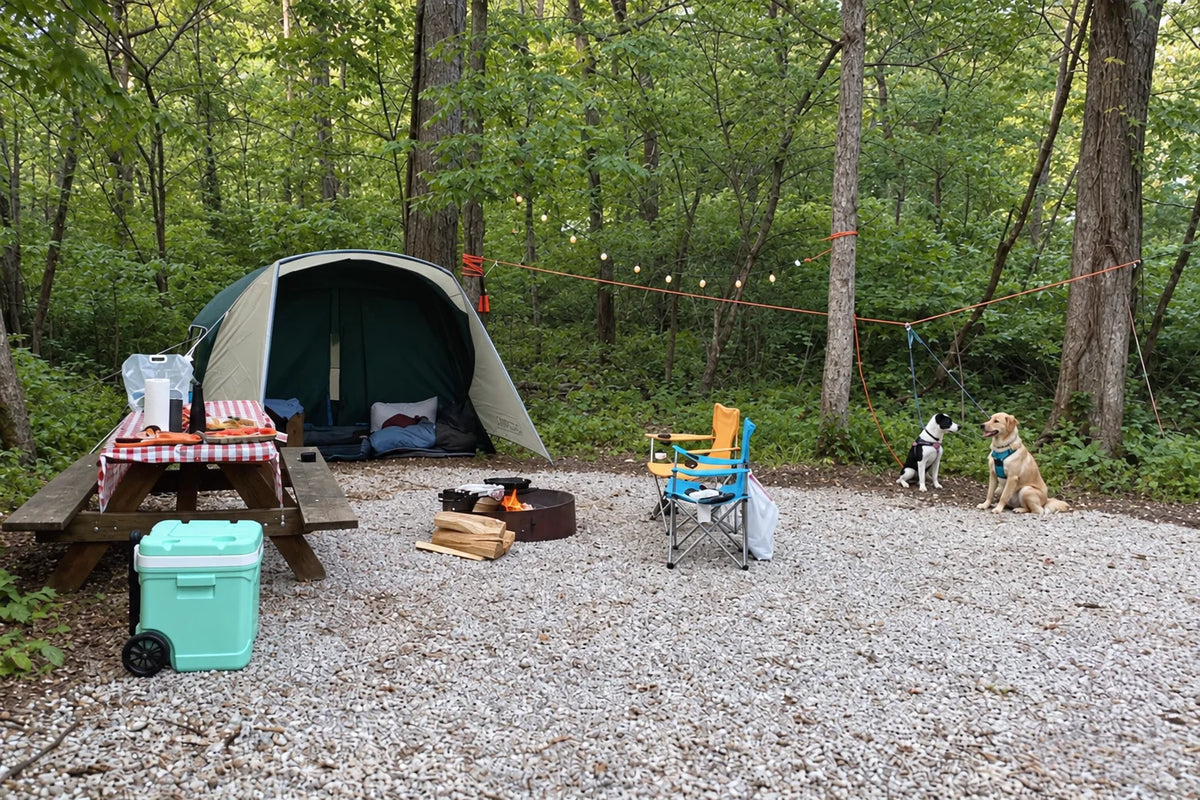
A tie out may also help establish a temporary boundary in an open area. Its usefulness depends on careful placement, the correct cable length, a secure anchor, and continuous supervision.
It should not be used as a substitute for regular walks, training, enrichment, or time with the owner.
A leash is the better option whenever you and your dog are moving together or when direct control is required.
During a walk, a leash helps you guide your dog around pedestrians, vehicles, other animals, and unexpected obstacles. You can adjust the distance as the environment changes.
A tie-out cable cannot provide this type of active, directional control.
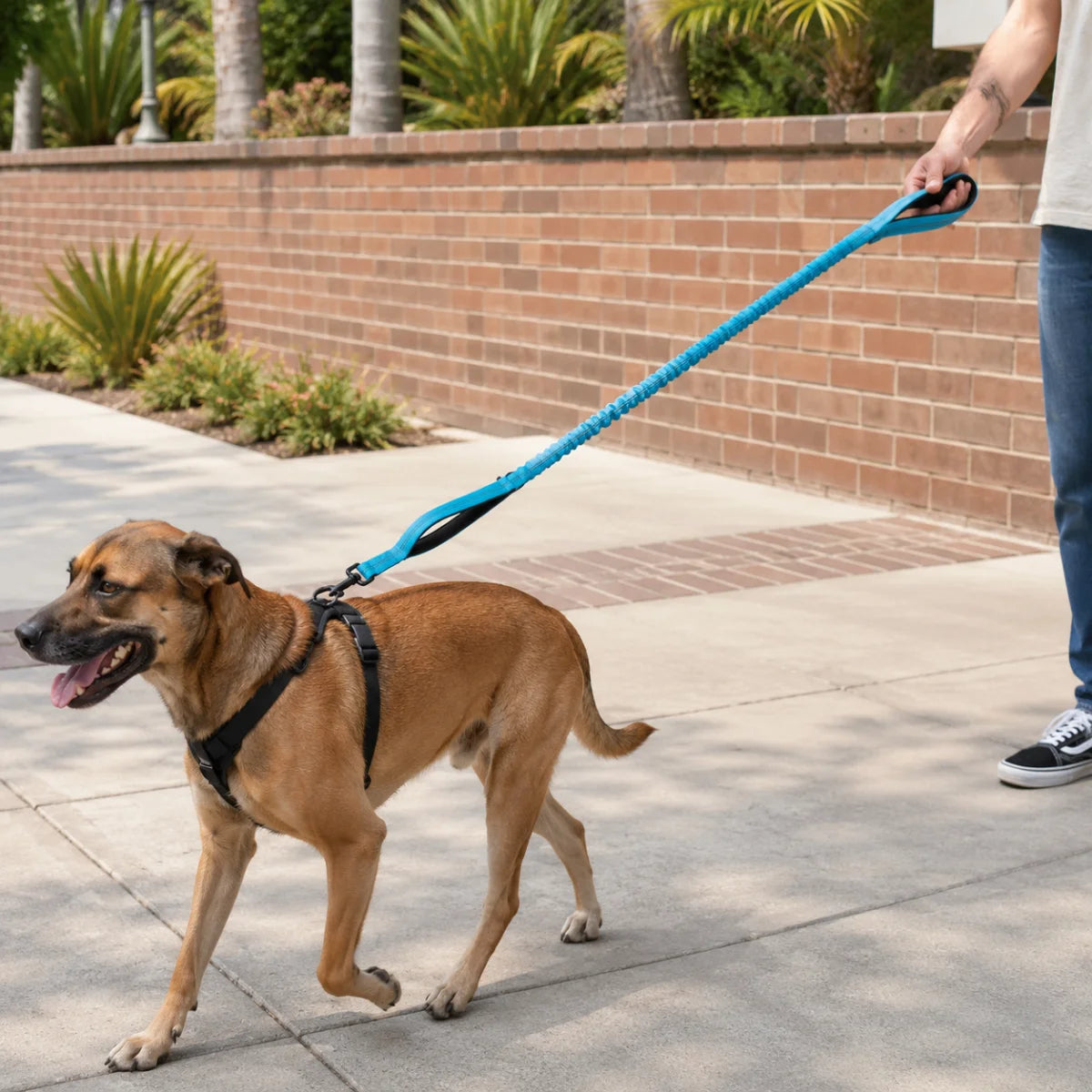
A leash is more suitable for hiking because both the dog and owner are moving. Depending on the setting, you might use a standard leash, hands-free leash, or another design intended for outdoor activities.
Choose a length that provides enough freedom without making it difficult to manage your dog on narrow trails or in busy areas.

Training requires communication between the dog and handler. A standard leash or long line allows the owner to manage distance, reinforce cues, and bring the dog back under control when necessary.
A tie out only creates a movement boundary. It does not offer the same handling or communication needed for recall practice.
A leash is generally the more appropriate choice for sidewalks, parks, stores that allow dogs, and other public spaces. It keeps the dog close to the owner and makes it easier to respond to people, traffic, and other animals.
Always check and follow the rules for the specific location.
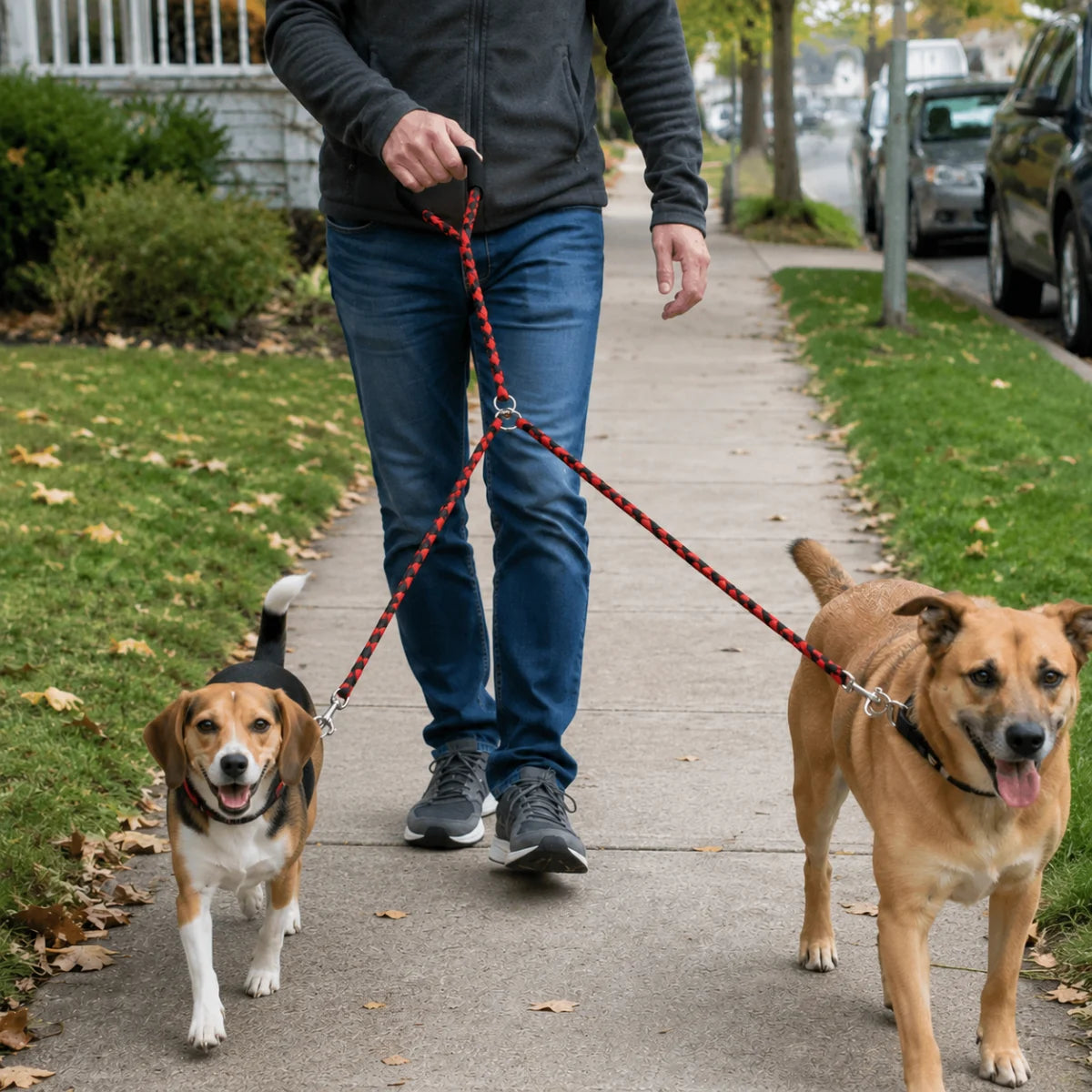
Whether you choose a dog tie out vs leash, the equipment must fit the dog, the activity, and the environment.
Consider your dog’s weight, strength, activity level, and tendency to pull. Check the product’s specifications rather than choosing based only on cable or leash length.
A longer line gives the dog more room, but it may also increase the distance over which the dog can gain speed. Select a length that fits the available space and keeps the dog away from hazards.
Before every use, check:
Replace damaged equipment rather than waiting for it to fail.
Follow the instructions provided with the tie out, leash, collar, or harness. The attachment setup should fit the dog correctly and should not restrict normal movement.
Avoid setups that can tighten unexpectedly or create uncontrolled pressure when the dog reaches the end of the line.
Before using a tie out, inspect the entire movement area. Remove or avoid objects that could trap or wrap the cable, including:
Continue checking the area while the dog is using the tie out. The cable can move objects or become tangled even if the space appeared clear at first.
Please read our FAQs page to find out more.
Neither option is better for every situation. A tie out may be useful for supervised time in a yard or campsite. A leash is better for walking, training, hiking, and public spaces.
No. A stake is one type of anchor. Some tie-outs use another compatible fixed point or an overhead system. Whatever anchor you use must be appropriate for the product and secure enough for the situation.
No. A dog on a tie out should remain under close supervision. Cables can become tangled, anchors can loosen, and unexpected hazards can enter the dog’s activity area.
A tie-out cable is designed for fixed use and is generally not suitable as a walking leash. Use a leash designed for walking so you can comfortably control your dog’s direction and distance.