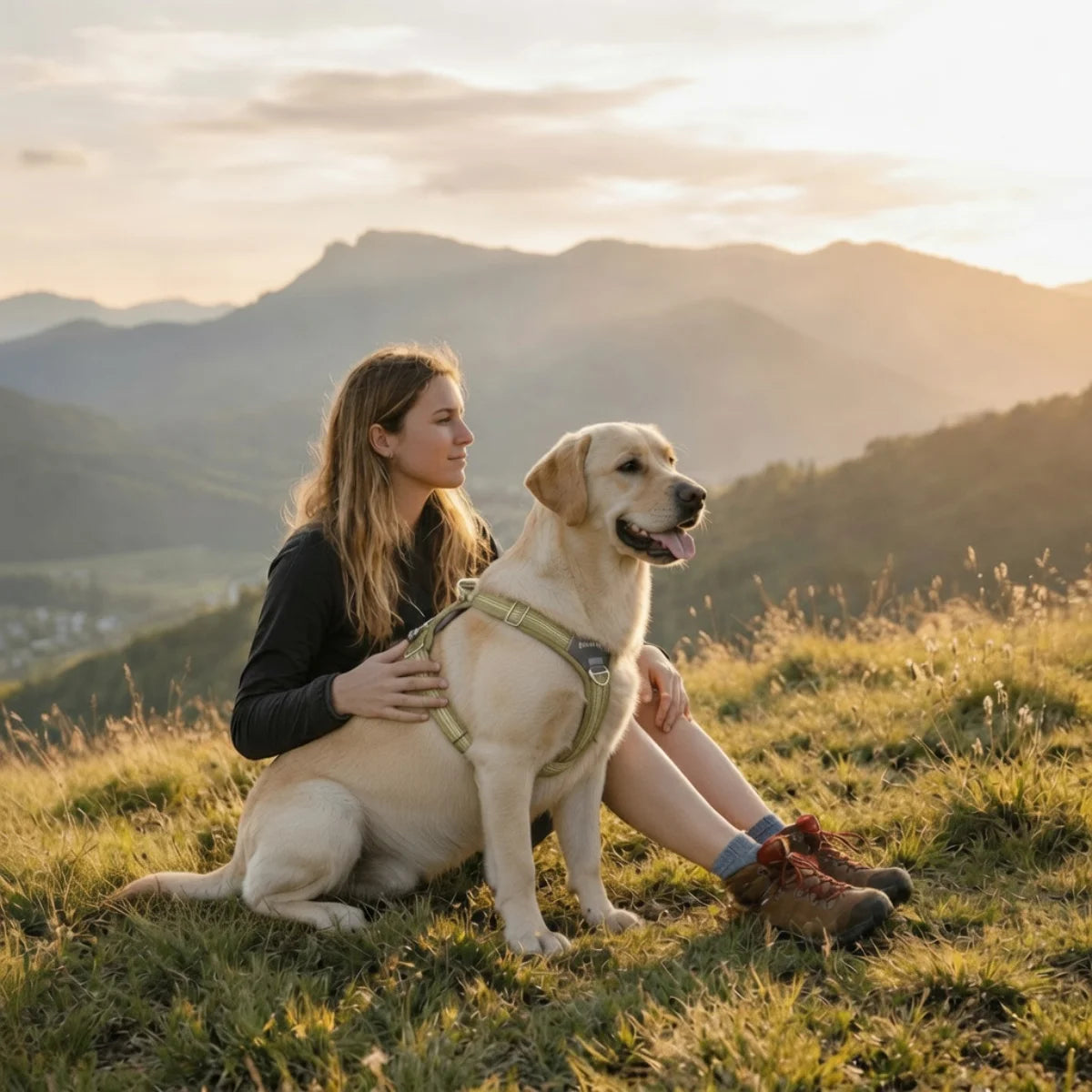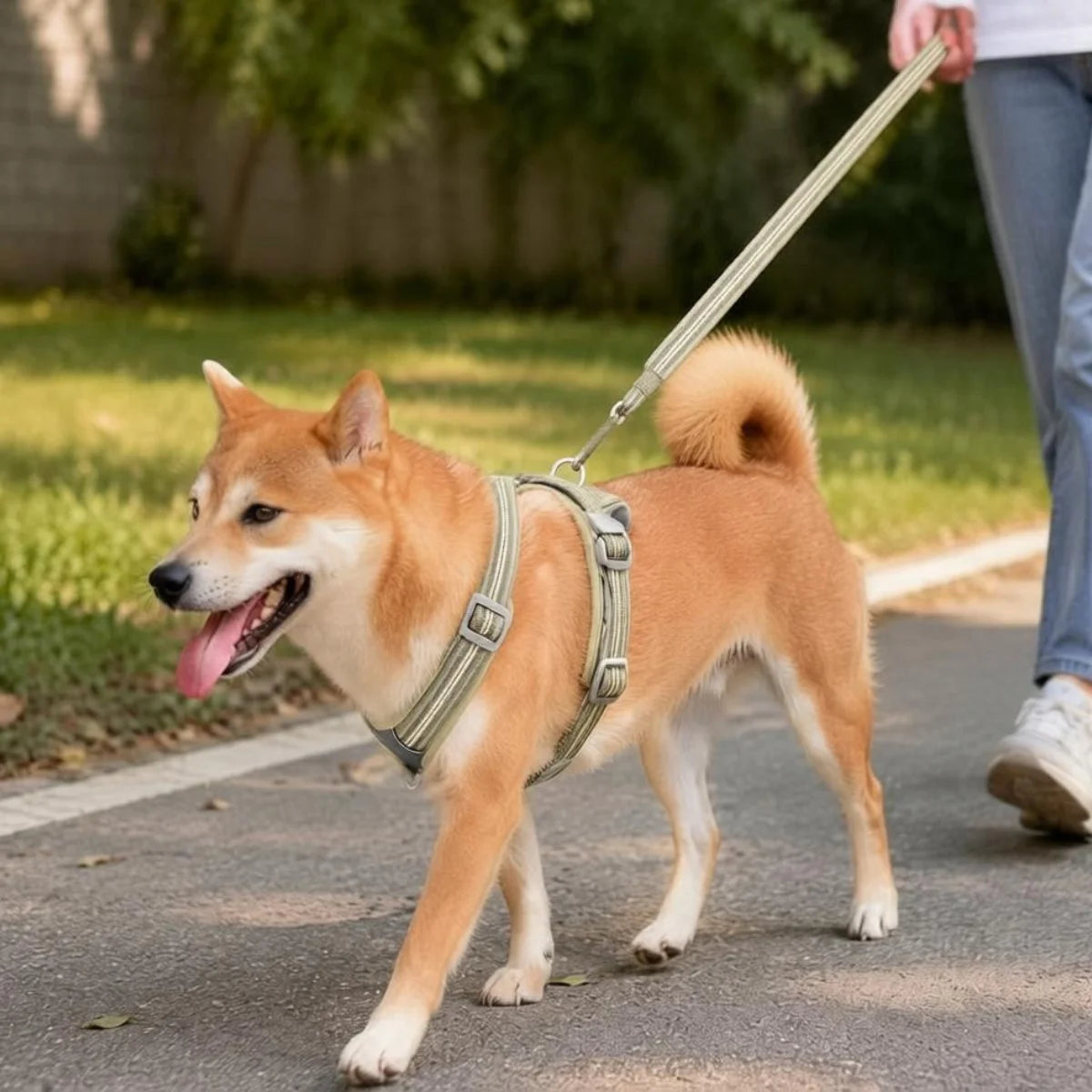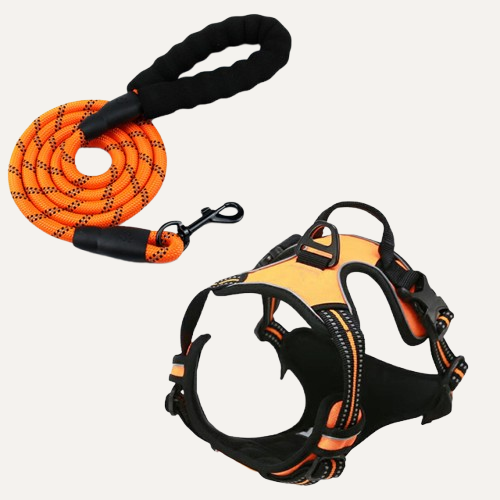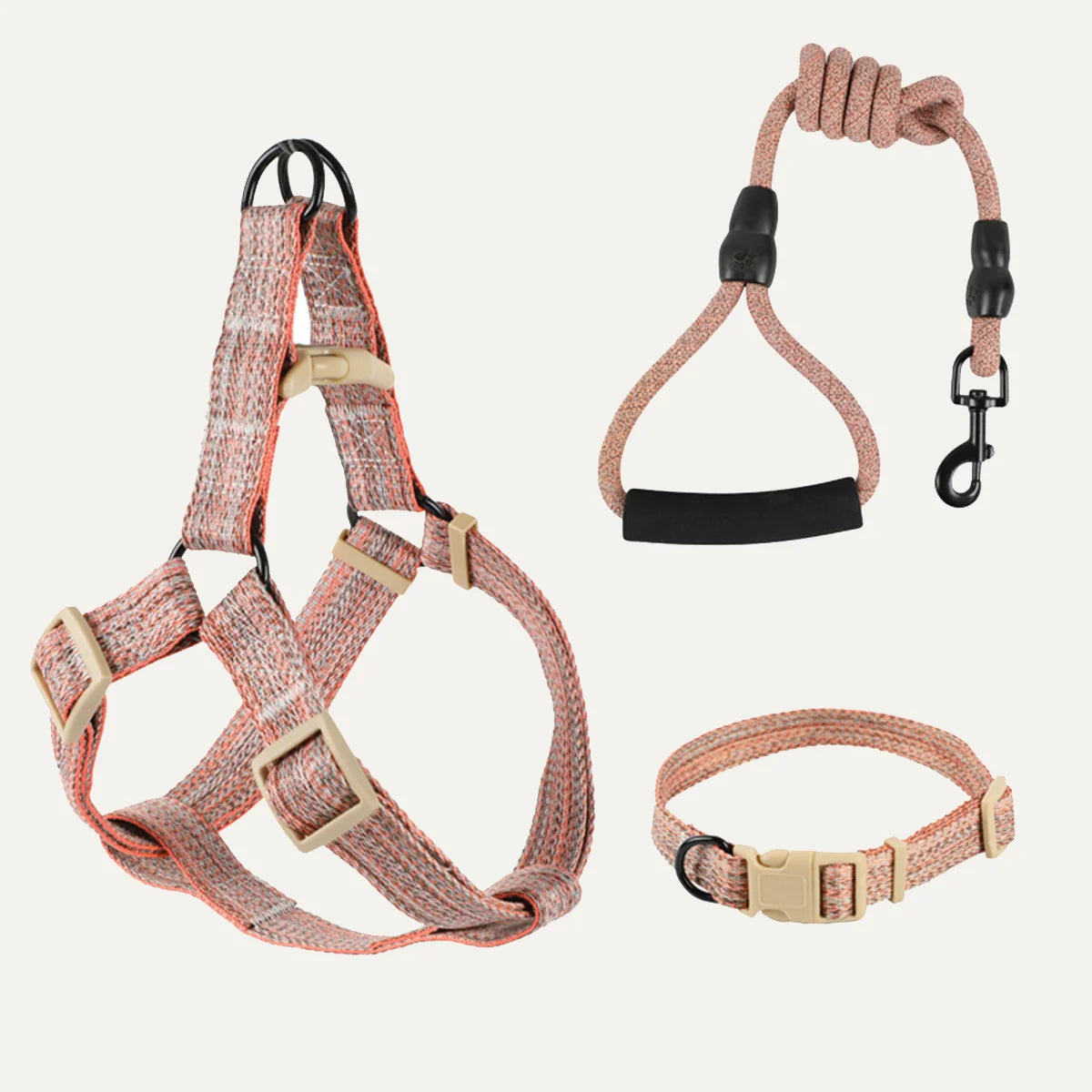

Dog Harness with Handle: How to Choose the Right
- by HuangMila
Walking a large dog can become difficult very quickly when they suddenly pull toward another dog, rush ahead on a busy sidewalk, or need help getting over rocks on a hiking trail. In these moments, relying on the leash alone may not give you enough close control.
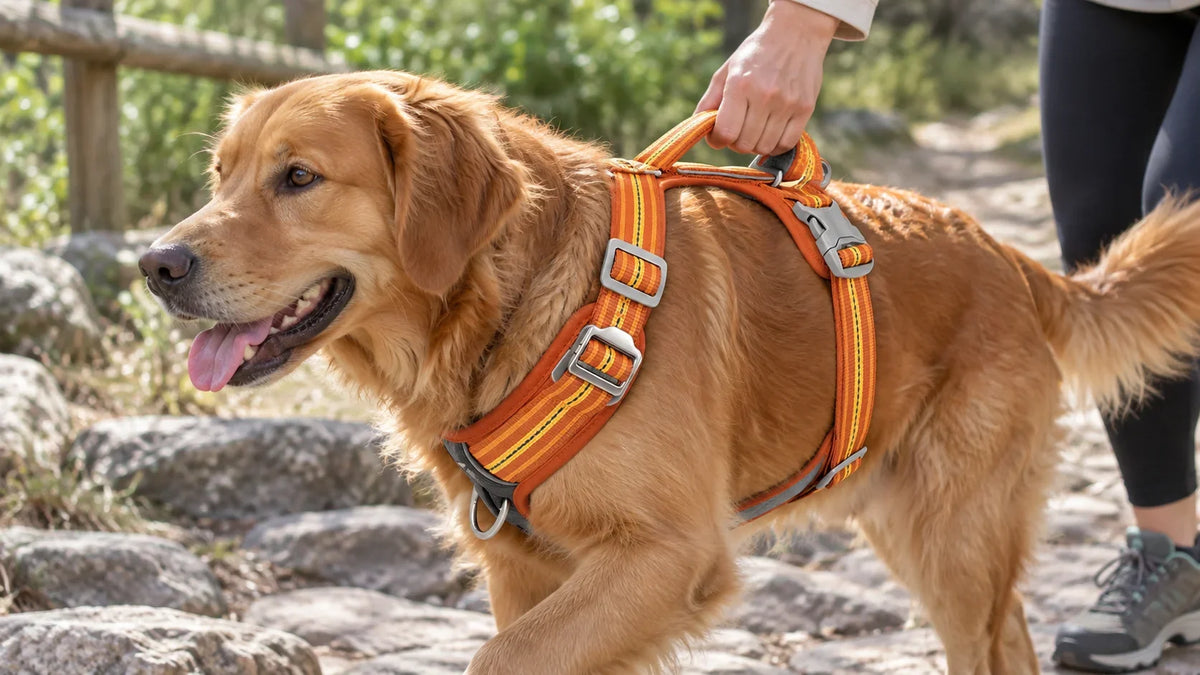
That is where a dog harness with handle can be useful. The built-in handle gives owners an extra point of contact to guide, steady, or briefly hold the dog closer when needed.
For larger dogs, this feature can be especially practical, but the handle is only one part of the design. A good large dog harness should also fit properly, use durable materials, and allow comfortable movement.
In this guide, we’ll explain when a large dog harness with handle is most useful, what features to look for, and how to choose one that matches your dog’s size and daily activities.
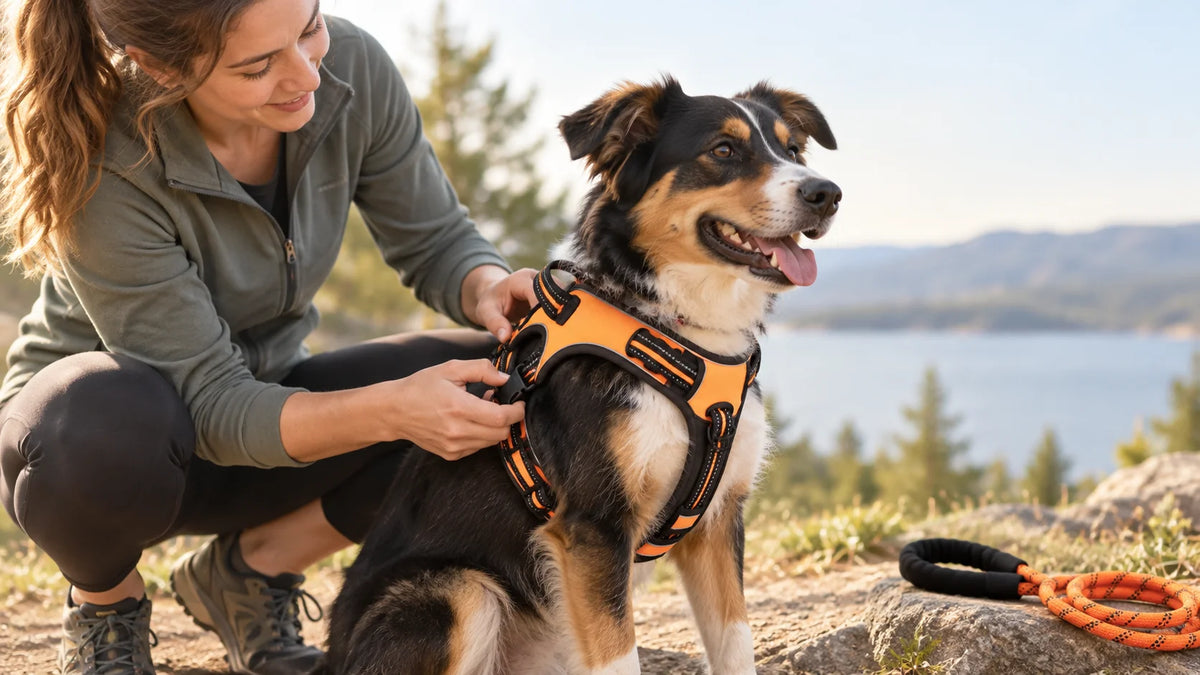
A dog harness with handle is a harness with a built-in grab handle, usually positioned along the dog’s back.
The handle gives owners a quick way to keep the dog close or provide extra guidance without relying only on the leash.
Common uses include:
Most everyday harness handles are designed for control and guidance, not for lifting the dog’s full body weight.


Owners of large dogs often face different challenges than owners of smaller breeds.
A bigger dog can generate considerably more momentum when changing direction, becoming excited, or reacting to something in the environment. A properly fitted large dog harness with handle can provide another way to manage these situations.
Large dogs can generate more force when they suddenly change direction, become excited, or react to something nearby. In these situations, a harness handle gives you a more direct way to guide the dog’s body without relying entirely on leash tension.
Because the handle is positioned on the harness itself, it can help you keep the dog closer for a short period while maintaining better control over their movement.
This is especially useful for strong or energetic dogs that may be difficult to manage with the leash alone.
Large dogs can move quickly when distracted by another dog, wildlife, food, or unfamiliar surroundings.
A handle gives owners another point of contact when waiting at a crosswalk, walking beside parked vehicles, or moving through other situations where keeping the dog close is important.
The leash should still remain attached.
Think of the handle as additional control rather than a replacement for the leash.
Traffic situations leave less room for sudden movement. Near roads, intersections, parking lots, or driveways, a large dog stepping sideways or lunging forward can quickly create a safety risk.
A harness handle allows you to keep your dog physically closer to your side for a short period while crossing a street or moving through areas with passing vehicles.
It should be used together with the leash, not instead of it. The leash provides the primary connection, while the handle gives you an extra point of control when you need your dog to stay close immediately.
Both harness styles are suitable for everyday use, but a harness with a handle offers an extra control point that can be useful for large dogs, outdoor activities, and situations that require closer guidance.
| Feature | Regular Dog Harness | Dog Harness with Handle |
|---|---|---|
| Everyday walking | Yes | Yes |
| Leash attachment | Yes | Yes |
| Close-range control | Limited | Better |
| Hiking assistance | Basic | More convenient |
| Guiding a large dog | Depends on design | Easier |
| Vehicle entry assistance | Limited | More useful |
| Emergency grab point | Usually no | Yes |
A regular harness may be enough for calm daily walks.
A harness with a handle becomes more useful when owners want additional control during hiking, travel, crowded environments, training, or other situations where the dog may need to stay close.
When choosing a large dog harness, focus on the overall construction rather than the handle alone.
The handle should feel secure and comfortable to grip.
Look for:
This is especially important for large or strong dogs.
Large dogs vary significantly in chest shape and body proportions.
Multiple adjustment points can help prevent the harness from:
The harness should stay centered while still allowing natural movement.
Materials such as nylon, polyester, Oxford fabric, and padded mesh are commonly used in dog harnesses.
For large dogs, also inspect the:
These areas experience the most stress.
A wider chest area can help distribute pressure when a dog pulls.
The harness should sit across the chest rather than pressing directly against the throat.
Use this text to share information about your brand with your customers. Describe a product, share announcements, or welcome customers to your store.
A large dog harness with handle should fit snugly without restricting movement.
Start by measuring the widest part of your dog’s chest and comparing it with the manufacturer’s size chart. If you are unsure where or how to measure, see our How to Measure a Dog for a Harness: Step-by-Step Guide for a simple measuring process.
Once the harness is on:
Correct positioning matters just as much as sizing. Our guide on How to Put On a Dog Harness Correctly explains how to position, fasten, and adjust a harness so it stays centered on the dog’s body.
A poorly fitted harness may rotate, rub against the skin, or make it easier for the dog to back out.
Choosing the right large dog harness with handle is not only about finding the correct size. The best option depends on your dog’s strength, daily activities, and how much control you need in different situations.
Two large dogs can have very different handling needs. A calm 70-pound dog may need less reinforcement than a highly energetic dog of the same weight.
If your dog is strong, excitable, or tends to pull suddenly, look for a harness with:
The goal is to avoid placing too much force on one narrow strap or attachment point.
Think about where the harness will be used most often.
For everyday neighborhood walks, comfort and adjustability are usually more important than heavy-duty construction. A lighter harness may also be more comfortable for longer wear.
For hiking, camping, or road trips, durability becomes more important. A large dog harness with handle used outdoors should be able to handle contact with dirt, brush, rocks, and changing weather.
Reflective details can also improve visibility during early-morning or evening outings.
The position of the handle affects how easy it is to use.
A handle placed near the center of the dog’s back usually provides more balanced control when guiding the dog. If it sits too far forward or too far back, it may cause the harness to shift when pressure is applied.
The handle should also be easy to grab without being so loose that it catches on branches or other objects.
Two large dogs can have very different handling needs. A calm 70-pound dog may need less reinforcement than a highly energetic dog of the same weight.
If your dog is strong, excitable, or tends to pull suddenly, look for a harness with:
The goal is to avoid placing too much force on one narrow strap or attachment point.
A dog harness with handle can provide extra close-range control for large or strong dogs, but the handle should be only one part of the overall design. When choosing a large dog harness with handle, focus on proper fit, durable construction, secure hardware, and comfortable movement. Use the handle as an additional control point rather than a replacement for the leash or a lifting tool unless the harness is specifically designed for that purpose.
Please read our FAQs page to find out more.
It can be. A handle provides an extra control point that may be useful for large or strong dogs, especially around traffic, crowds, vehicles, and outdoor obstacles. Fit and construction are still more important than the handle alone.
The handle is mainly used for close control, guidance, and temporary support. It can help owners keep their dog nearby or steady them in certain situations.
The handle can help with brief close control, but it should not be used as the main solution for leash pulling. Loose-leash training and an appropriate harness setup are more effective long-term approaches.
Not unless the harness is specifically designed and rated for lifting. Most everyday harness handles are intended for control and guidance rather than supporting the dog's full body weight.
Both can be useful. A back attachment is common for everyday walking, while a front attachment may provide additional steering during training. Some harnesses include both options.