
- by HuangMila
Waist Leash for Dogs: How to Wear, Adjust, and Use It Safely
- by HuangMila
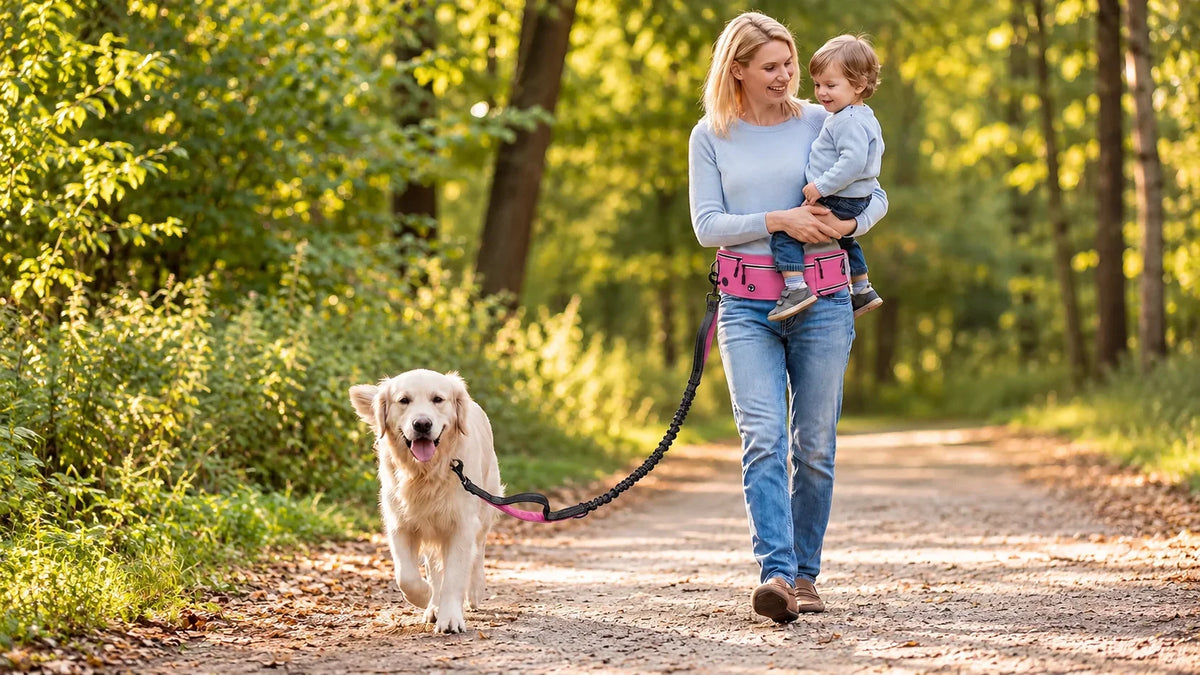
A waist leash for dogs keeps the lead attached to your body while leaving your hands available. It can be useful for daily walks or runs, but the fit needs attention: a loose belt may rotate, while too much leash can fall near your feet.
This guide shows you how to fit a dog leash waist belt, manage the distance between you and your dog, and check the setup on a short walk.
Choose a quiet place for the first fitting rather than fastening the belt just as you leave the house. Put on the shoes and outer layer you expect to wear outside; a jacket can change how tightly a dog leash waist belt sits. Have your dog’s harness ready, but keep your dog unattached while you test the belt.
Think about the route as well. A familiar, uncrowded walk gives you time to notice whether the belt moves and whether the lead stays clear of your feet. If your dog frequently lunges or you need close control for most of the route, work on those situations with a leash you can handle confidently before trying a waist attachment.
Fasten the belt over the clothes you plan to wear outside. Start with it around your waist or hips, wherever it rests securely without pressing uncomfortably against you. The best position depends on your body shape, clothing, and belt design.
Before attaching your dog, try this fit check:
There is no single belt position that works for everyone. What matters is that it remains stable during ordinary movement. Repeat the check when you change from light clothing to a thick jacket.
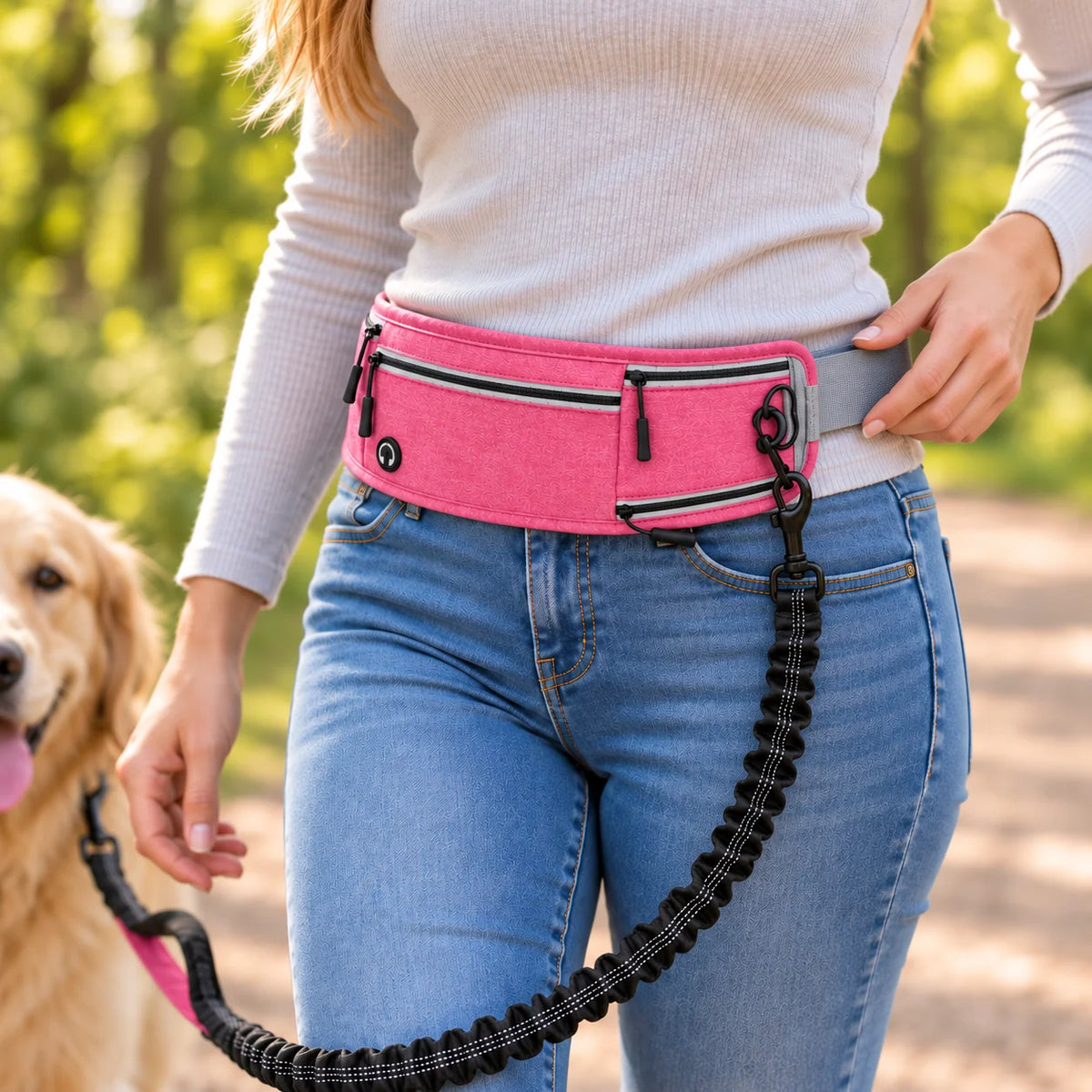
Look over the buckle, stitching, leash, and clip before each outing. Do not use a connection that is frayed, cracked, or unable to close securely.
Attach the lead to the intended ring on a properly fitted harness, then check that the clip closes completely. A harness can help avoid concentrating sudden tension around your dog’s neck during active movement, but it must fit without rubbing or restricting movement. HOWOLL’s dog harness fitting guide explains how to check its position and straps.
Ask your dog to stand on the side where you want them to walk. The hands free dog leash should allow natural movement without regularly falling near your shoes or letting your dog cross directly in front of your legs.
Walk a few steps, then observe the line when your dog is beside you, moves ahead, and stops to sniff. If your model has an adjustable lead, change its length as needed and test it again. A bungee section can extend when your dog moves, so check the distance your dog can reach under light tension as well as when the line is relaxed.
If the lead cannot be adjusted and it leaves too much distance for your usual route, consider a different, shorter setup for that route. A traffic handle helps you hold your dog close briefly, such as at a crossing; it is not a substitute for a suitable everyday leash length.
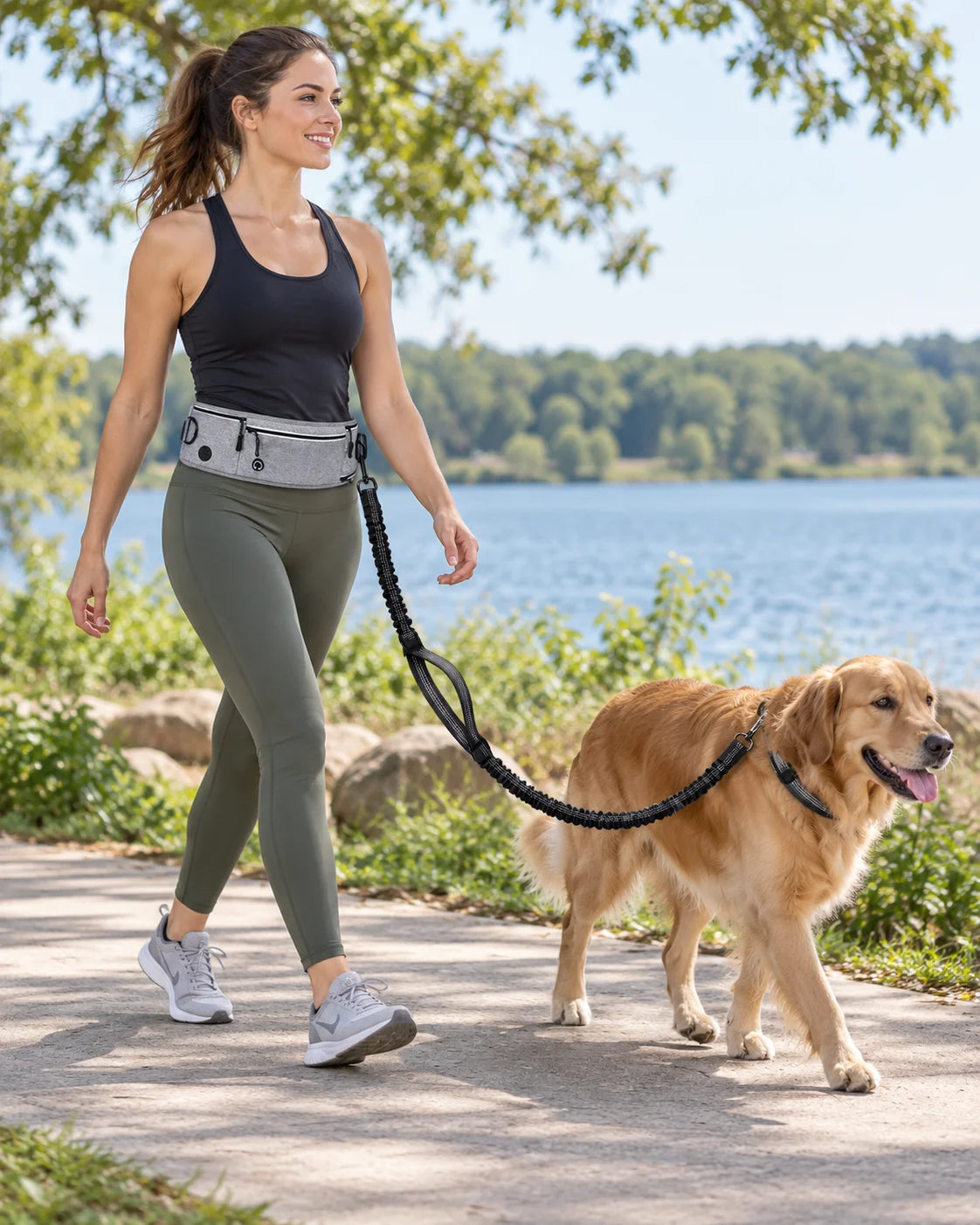
A dog running belt is easiest to use when your dog already walks with you without repeatedly crossing your path. Start at a walking pace in a quiet area. Practice stopping, turning, and changing speed before trying to jog.
Keep watching your dog and the path ahead. Having your hands free does not remove the need to respond quickly when your dog changes direction. If your dog pulls hard or lunges toward distractions, return to close-control walking and work on leash manners first. HOWOLL’s guide to leashes for dogs that pull covers equipment and training considerations.
If your leash includes a traffic handle, locate it before you set off. Practice taking hold of it while stationary so you can bring your dog closer when needed.
Use a familiar, quiet route for your first walk with a waist dog leash. After a few minutes, stop and check the setup again. Has the belt rotated? Is the line brushing your legs? Does the harness remain centered on your dog?
Adjust the belt if it has moved. If an adjustable lead is too long, change its setting. If a fixed-length lead repeatedly gets in your way, use a more suitable leash rather than relying on the traffic handle for the whole walk.
Increase your pace only when you and your dog can walk together comfortably.
On a quiet sidewalk: Start at a walking pace and let your dog settle on one side. Watch the line when they pause to sniff. If it repeatedly drops near your shoes, an adjustable lead may need a shorter setting; with a fixed lead, you may need a different leash for that route.
Near a crossing or other people: Slow down before you reach the tight space. If your lead has a traffic handle, take it briefly to keep your dog close. Give them more room again only when the path opens and you can do so safely.
On a wide trail: Check the ground as well as your dog. An elastic section may extend farther than it looks while relaxed, allowing the line to catch on a root or wrap around your legs if your dog changes direction. Keep enough space to stop and turn without stepping into the lead.
When jogging: Move from walking to an easy pace gradually. If your dog crosses your stride or pulls to the end of the line, slow down and reset their position instead of trying to run through the problem.
The same waist leash can feel very different with a small dog, a large dog, or a dog that likes to move a few steps ahead. For a small dog, check that the clip is not so heavy that it pulls the harness to one side. Watch the line when the dog walks close to you; extra slack can reach your shoes more easily than it would with a taller dog.
With a larger or stronger dog, pay close attention to your own balance during the first short walks. Practice a stop and a turn before you pick up speed. If the dog suddenly reaches the end of the lead and you have to brace yourself, return to a setup you can control comfortably and work on calmer leash walking first.
A dog that changes sides often needs more practice with a consistent walking position. A dog that stays beside you may need less room than one that walks slightly ahead. Use the movement tests in this guide to judge the fit you actually have, rather than choosing a leash length from the dog’s size alone.
The belt slides or twists. Reposition it and adjust the tension, then repeat the walking and turning check. If it still moves substantially, the belt’s shape may not suit your body or clothing.
The leash gets near your feet. Keep your dog on one side and check how far the line extends. Adjust its length if the design allows it; otherwise, use a shorter setup where space is limited.
Your dog pulls you off balance. Slow down and move away from distractions. An elastic lead may soften smaller changes in pace, but it cannot replace training or attentive handling.
You need closer control. Take the traffic handle if available. If you need to hold it through most of the walk, a shorter handheld leash may be more practical for that setting.
Before putting the gear away, look for new fraying around the clip, belt attachment, handles, and any elastic section. Open and close the clip to make sure it still moves freely. Check whether the buckle fastens securely and whether the belt padding has shifted or bunched.
If the leash is muddy or wet, follow its care label or the maker’s cleaning instructions. Let it dry fully before storage. Avoid leaving a damp belt tightly folded in a bag, where it is harder to notice wear at the stitching and hardware on your next walk.
Replace a damaged lead or buckle instead of assuming the intact sections will compensate. A quick inspection is especially useful after a walk where the line snagged on an obstacle or took a strong pull.
A waist leash is a tool for the parts of a walk where you and your dog can move together predictably. A shorter handheld leash may be more useful on a consistently crowded route, during close training, or whenever your dog’s sudden movements make it hard for you to stay balanced. You can also switch setups for different parts of the same outing.
Pay attention to how often you need the traffic handle. It is useful for short moments of close control, but if you hold it for most of the walk, your regular setup may not match the route. Choose the arrangement that gives you reliable control and a comfortable amount of room for your dog.
When comparing designs, look at how the belt fits, whether the lead length can be adjusted, and whether a close-control handle is easy to reach. HOWOLL’s hands-free dog leash comparison covers different options for walking and running.
The HOWOLL reflective hands-free running dog leash has an adjustable padded waist belt, an elastic leash section, and a traffic handle. Its product page lists the elastic leash’s length range, but does not specify a separate leash-length adjustment. Check that its reach suits the places you normally walk or run.
Before every outing, confirm that the belt stays in place, the clip is closed, the harness fits, and the line remains clear of your feet. Those quick checks make a waist leash for dogs easier to use as your route and pace change.
A waist leash can transfer a sudden pull directly to your body. If your dog often lunges or pulls hard, first practice loose-leash walking with a setup you can control confidently. Start waist-leash practice in a quiet area and keep a hand near the traffic handle when you need closer control.
Use the position where the belt stays secure and comfortable over your walking clothes. Try walking, turning, and bending before attaching your dog. If the belt rides up, slips down, or rotates, adjust its fit or position before going out.
Leave enough room for your dog to walk naturally, while keeping the line clear of your feet and nearby people. On crowded paths, shorten the distance with the traffic handle or switch to a handheld leash if you need more immediate control.
Yes, if the belt, leash, and harness fit securely and your dog can move at a steady pace beside you. Test the setup on a short walk first, then build up gradually. Check the leash’s reach and any elastic section so it does not swing into your stride.