
- by HuangMila
Front-Clip vs Back-Clip Dog Harness: Which Gives Better Control?
- by HuangMila
For a dog that pulls, a front-clip harness can make it easier to guide a change of direction. For a dog that already walks on a loose leash, a back-clip harness is often the simpler everyday option. A dual-clip design gives you both attachment points.
The difference is where leash tension acts on the harness, not a guarantee that one style will stop pulling or fit every dog. Compare the options below, then check comfort and stability with the leash attached.
New to harness terminology? Our guide to different types of dog harnesses explains other common designs.
Compare the attachment position, the help it offers, and the trade-off you will need to watch for.
| Attachment | Leash position | Useful for | Main advantage | Main limitation |
|---|---|---|---|---|
| Front-clip | Center of the chest | Dogs needing directional guidance during training | Can help redirect forward pulling | Leash may cross the front legs; harness may rotate under tension |
| Back-clip | Upper back | Calm everyday walks and ordinary trails with suitable equipment | Keeps the connection above the body | Less directional redirection when the dog pulls straight ahead |
| Dual-clip | Chest and back attachment points available | Switching between training and relaxed walks | Offers a choice of attachment points | Fit still matters; using both rings requires a compatible leash and manufacturer instructions |
These recommendations are starting points, not strict rules. Harness design, fit, and your dog's individual response can influence which setup works best.

A front-clip harness connects the leash near the center of the dog's chest. When the leash becomes taut, this position can help turn the dog's body toward you. VCA Animal Hospitals' guide to front-clip harnesses explains how gentle leash pressure can help guide a dog away from distractions.
That can make direction changes easier, but it does not teach loose-leash walking on its own. Watch for the leash catching near the front legs or the chest panel sliding sideways, and avoid sudden jerks.

A back-clip harness connects the leash on the upper back. The leash generally stays farther from the front legs, which can make relaxed walking and sniffing simpler.
The trade-off is less help turning a dog that pulls straight ahead. A back attachment does not automatically cause pulling, but a dog may still lean into the harness and continue forward. Choose based on how your dog walks and how securely the harness fits.
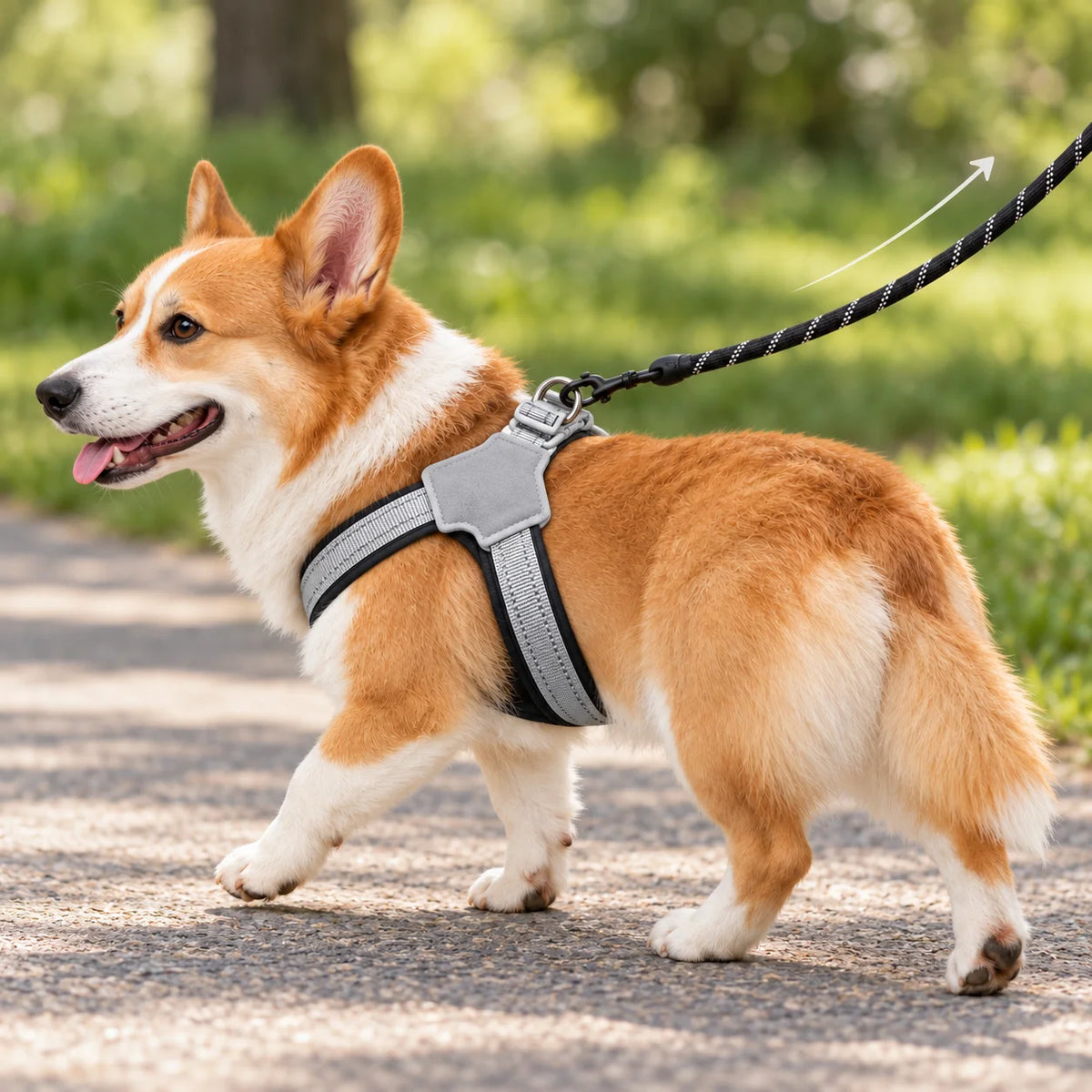
These examples illustrate everyday choices; they are not reports of product testing.
A front attachment may help you guide a turn away from the distraction. With either clip position, keep a secure hold, avoid jerking, and create enough distance for your dog to respond calmly. Reward attention and a loose leash rather than relying on the harness to stop a lunge.
A back attachment is often convenient because the leash stays above the body. If your current setup fits well and the leash stays loose, there may be no reason to change it solely for more control.
A back clip can keep the leash clear of the front legs, but terrain, secure hardware and freedom of movement also matter. Use our adventure dog harness selection guide to assess the complete design. Specialized pulling activities require purpose-built equipment, not just a different clip position.
One concern owners sometimes have is whether a front-clip harness can restrict shoulder movement.
The answer depends on the complete harness design, its adjustment, and how your dog moves while wearing it.
Some harnesses place material or straps across areas involved in shoulder movement. When these components press against the body or shift under leash tension, they may affect the dog's natural walking pattern. VCA's veterinary guidance on controlling pulling recommends looking for a harness that avoids chafing and leaves the shoulders free to move.
For example, a 2023 study examining harness design and canine biomechanics evaluated 66 dogs and found that the effects on walking mechanics differed depending on the harness design and the dogs being assessed.
This is evidence about complete harness designs and movement, not proof that a chest attachment is universally better or worse than a back attachment. It does not establish that every front-clip harness causes injury. Assess the individual dog's comfort and movement in the actual harness.
Observe your dog while walking naturally. Look for the following signs:
If the harness repeatedly shifts sideways, causes discomfort, or visibly changes your dog's gait, stop using that setup until you can reassess the fit and design.
For dogs with existing joint, mobility, or orthopedic concerns, consult your veterinarian before choosing a harness.
The important distinction: Front-clip and back-clip describe where the leash attaches. They do not, by themselves, guarantee a comfortable or unrestricted harness design.
A dual-clip harness is useful if you want to change attachment points without changing the harness: for example, using the front ring during training and the back ring on a relaxed walk. If one attachment already meets your needs, a second ring is optional.
Some designs support a compatible double-ended leash attached to both rings. Follow the manufacturer's instructions; the setup should not twist the harness or catch your dog's legs.
Consider the HOWOLL No-Pull Dual-Clip Handle Dog Harness if you are looking for both attachment options and want to assess a design with a top handle. Check the product page for the adjustment layout, measurements and handle-use instructions before choosing.
Also compare the HOWOLL No-Pull Reflective Dog Harness if reflective details are part of your shopping checklist. Confirm the current size range and included items on the listing.
Start with the size chart and fit requirements for your dog, then compare the features you will actually use. The product name and number of rings alone do not establish which harness will fit or control your dog better.
After deciding between front-clip and back-clip attachments, focus on whether the harness actually fits your dog.
Measure the areas requested by the manufacturer's size chart, typically including chest girth and neck circumference.
Avoid selecting a harness based only on weight or breed. Two dogs of the same weight may have very different chest shapes. Our dog harness fit guide by breed offers additional context on body proportions and sizing considerations.
If you are unsure where to measure, use our How to Measure a Dog for a Harness: Step-by-Step Guide.
A harness may appear to fit correctly when your dog stands still but shift when leash tension is applied.
Before heading outside:
You should be able to slide your fingers comfortably beneath the straps, but the harness must remain secure enough that your dog cannot easily back out.
For more detailed fitting instructions, see How to Put On a Dog Harness Correctly.
Before taking a new harness into a busy environment, try it in a quiet, familiar area.
Watch how your dog walks, turns, sniffs, and changes pace.
If your dog repeatedly stops, moves unnaturally, or tries to escape the harness, check the fit and consider a different design.
The goal is to find a harness that stays secure while allowing your dog to move comfortably.
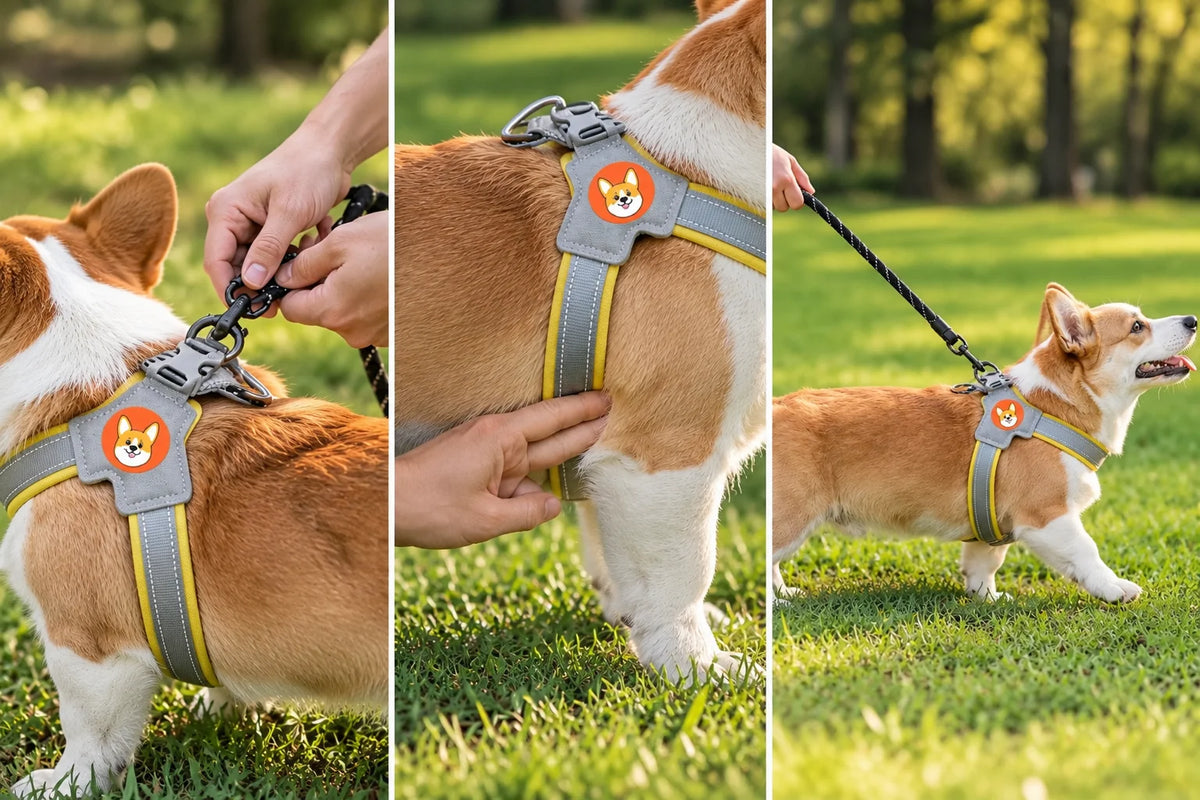
Changing the leash attachment can make a difference in how pulling is managed, but it does not automatically teach a dog to walk calmly.
Dogs may pull because they are excited, want to investigate something, or have learned that pulling helps them reach interesting places. The leash matters too: our guide to leashes for dogs that pull covers additional equipment considerations.
A front-clip harness may help you guide your dog while teaching better leash manners, but lasting improvement requires consistent training.
A simple reward-based approach is to:
The RSPCA's guidance on teaching loose-leash walking emphasizes rewarding desired walking behavior rather than relying on equipment alone.
If you want to understand how no-pull equipment works, read our guide to What Is a No-Pull Dog Harness?
Choose the attachment that helps you walk comfortably with a loose leash: front for additional directional guidance, back for relaxed walking, or dual-clip when you need both options. Confirm the fit during a short, quiet walk before using it around bigger distractions.
If you want to compare a dual-clip option, review the measurements and attachment details for the HOWOLL No-Pull Dual-Clip Handle Dog Harness. Keep reward-based training part of the plan whichever harness you choose.
A front-clip harness may help provide directional guidance for a strong puller, but results depend on the harness design, fit, and the dog's behavior. Strong or sudden lunging may require additional safety precautions and guidance from a qualified, reward-based trainer.
A front-clip harness is generally not the preferred choice for sustained running because leash tension from the chest may interfere with forward movement. For running or canicross, choose equipment specifically designed for the activity and your dog's needs.
Not necessarily. Back-clip harnesses can be comfortable and appropriate for many dogs, but they generally provide less directional redirection when a dog pulls forward. Training remains important regardless of the attachment point.
Some dual-clip harnesses allow a compatible double-ended leash to connect to both attachment points. Check the manufacturer's instructions before using this setup, and make sure the leash does not twist the harness or interfere with your dog's legs.
No. A front attachment does not make a harness escape-proof. Proper sizing, secure buckles, strap placement, and body shape all influence how easily a dog might slip out. Dogs that regularly escape may need a harness specifically designed for escape resistance.