
- by HuangMila
Y-Shaped Dog Harness Guide: Benefits, Fit & How to Choose
- by HuangMila
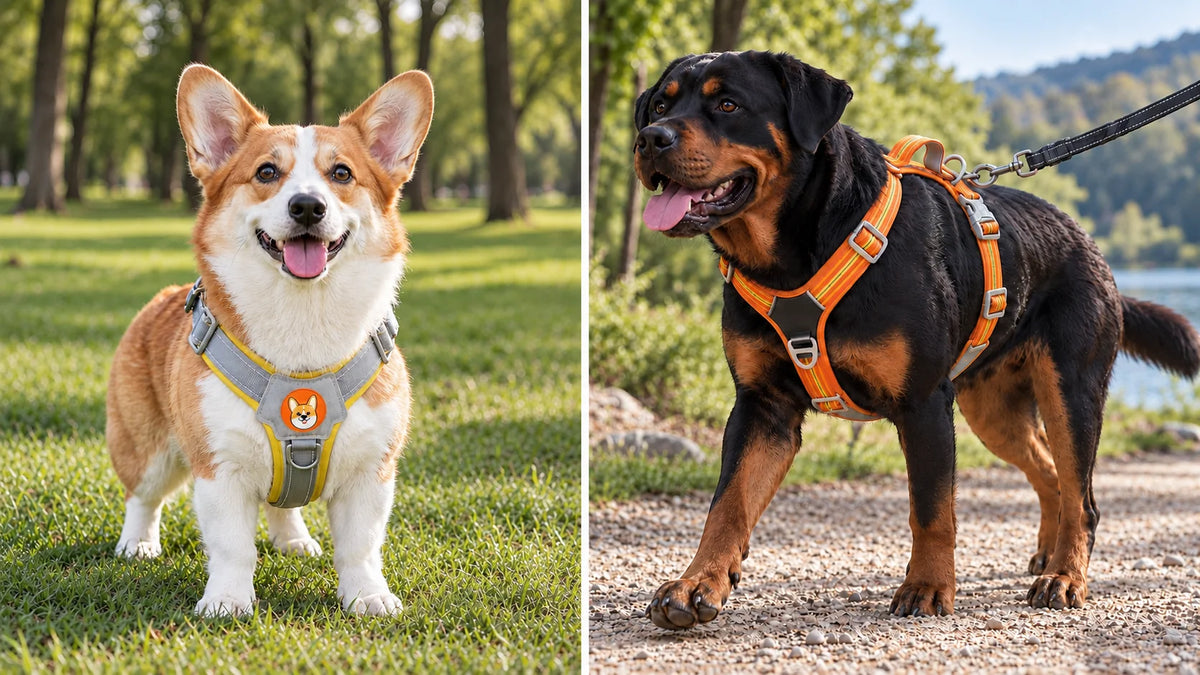
Choosing a dog harness isn't just about finding the right size or color. The way a harness sits across your dog's chest and shoulders can also affect how comfortably it fits during walks.
One design you'll often see is the Y-shaped dog harness, also called a Y-front dog harness. Its front straps form a Y-like shape across the chest, rather than running horizontally across the front of the shoulders.
But does a Y-shaped harness actually make a difference? Is it better for walking, hiking, or dogs that pull? And how can you tell whether one fits your dog correctly?
This guide explains how Y-shaped harnesses work, their potential benefits and limitations, and what to check before choosing one for your dog.
Quick answer: A Y-shaped harness may suit dogs that need leash pressure kept away from the throat and enough room around the shoulders. However, the shape alone does not make a harness non-restrictive or no-pull. The correct size, chest-panel length, strap position, and your dog’s movement matter more than the label.
A Y-shaped dog harness is named after the appearance of its front straps when viewed from the front of the dog.
Typically, two straps run down either side of the lower neck and meet along the center of the chest, creating a Y-like shape. Another section connects this front structure to the straps that wrap around the dog's rib cage.
Unlike designs with a horizontal strap across the front of the shoulders, a Y-front harness is intended to position its straps around the chest while avoiding direct contact with the throat.
However, not all Y-shaped harnesses have the same construction. The width of the straps, chest-panel length, adjustment points, and overall fit can vary considerably.
A Y-shaped front also doesn't determine where the leash attaches. Depending on the model, a harness may have a back clip, a front clip, or both.
If you're still exploring different harness structures, our guide to dog harness types explains how common designs compare.

One reason owners choose a harness instead of a collar is to avoid concentrating leash pressure around the neck.
A correctly positioned Y-shaped design can help direct leash forces toward the chest and body rather than the throat.
This may be particularly useful for dogs that occasionally pull forward or feel uncomfortable when pressure is applied around their neck.
However, the harness must fit correctly. If the front section rides too high, it can still press against the lower neck or throat.
The most recognizable feature of a Y-front harness is the way its straps sit around the front of the chest.
This arrangement is often described as less restrictive than a horizontal chest strap, but appearance alone doesn't guarantee greater freedom of movement.
In fact, research on dog harnesses has found that different harness styles can alter shoulder movement, including designs marketed as non-restrictive.
A 2019 study published in Veterinary Record examined shoulder extension in dogs wearing restrictive and non-restrictive harnesses. The researchers observed changes in shoulder extension with both types, highlighting the importance of evaluating actual movement rather than relying solely on design labels.
The practical takeaway is simple: look at how your individual dog moves in the harness rather than assuming one shape is automatically better.
A properly fitted Y-shaped harness may work well for daily walks, outdoor exploration, and other activities where a secure, comfortable harness is needed.
Useful design features include:
The best combination depends on your dog's body shape, walking habits, and the activity you're planning.
Some Y-shaped harnesses use a back leash attachment, while others offer a front clip or dual-clip system.
A back clip can be convenient for relaxed walks because the leash stays above the dog's body.
A front clip may help a handler gently guide a dog that tends to pull, although it doesn't automatically teach loose-leash walking.
A dual-clip harness gives owners flexibility between these two attachment positions.
Remember that the Y-shaped structure and the clip location are separate features. A Y-front harness is not necessarily a no-pull harness.
Y-shaped and H-shaped harnesses are often compared, but these names can describe different aspects of a harness.
A Y-shaped harness is generally identified by the arrangement of its straps at the front of the chest.
An H-shaped harness often refers to the layout of the neck and body loops connected by straps along the back and underside.
Some harnesses may share characteristics of both designs, so these labels aren't always mutually exclusive.
| Feature | Y-Shaped Harness | H-Shaped Harness |
|---|---|---|
| Main identifying feature | Y-like front chest structure | Connected neck and body loops |
| Front strap placement | Straps typically meet at the chest center | Varies with the specific design |
| Adjustment | Depends on the model | Depends on the model |
| Leash attachment | Front, back, or dual clip | Front, back, or dual clip |
| Best choice | Depends on actual fit and movement | Depends on actual fit and movement |
Instead of choosing solely by the shape name, examine where the straps contact your dog's body and whether they remain comfortable during movement.
Even a well-designed harness can cause discomfort if it's too tight, too loose, or incorrectly positioned.
Use the following checks before heading outside.
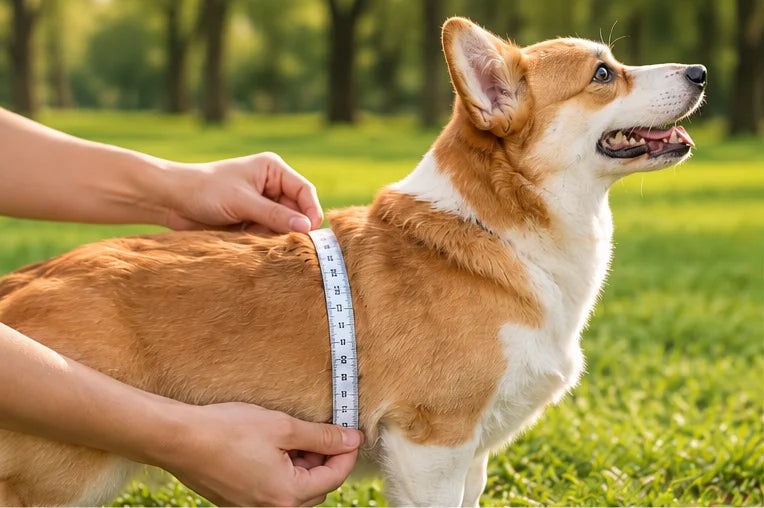
Before selecting a size, measure your dog's chest girth using a soft measuring tape.
Wrap the tape around the widest part of the rib cage, usually just behind the front legs. If the harness manufacturer requires a neck measurement, measure around the base of the neck as instructed.
Compare both measurements with the specific product's size chart.
Don't choose a size based on breed or weight alone. Two dogs of the same breed can have very different proportions.
For detailed instructions, follow our step-by-step guide to measuring a dog for a harness.
Once the harness is on, look at your dog from the front.
The Y-shaped straps should sit evenly on either side of the lower neck and meet along the center of the chest.
Check that:
If the front section repeatedly moves toward the throat, the design or size may not be appropriate.
Next, check the straps that wrap around your dog's body.
They should sit far enough behind the front legs to avoid rubbing directly against the armpits.
There isn't one exact clearance measurement that works for every dog. A small dog and a large, deep-chested dog will need different amounts of space.
What matters is whether your dog can walk, turn, and extend its front legs without repeated contact or pinching.
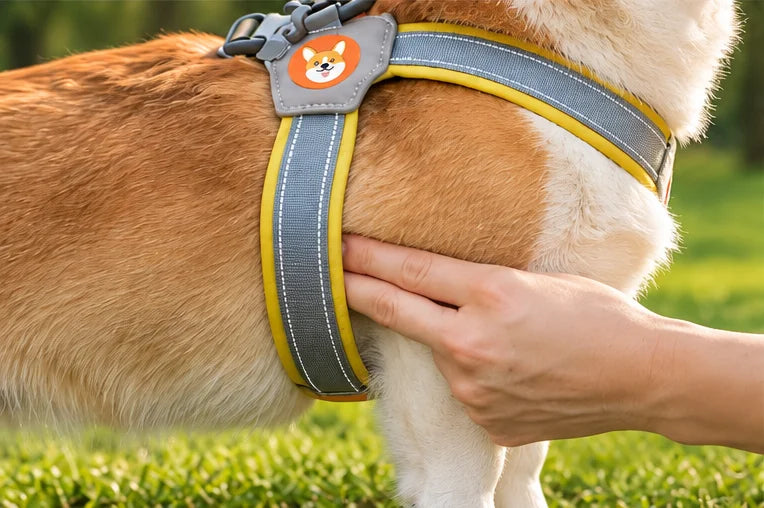
A common starting point is the two-finger rule: you should generally be able to slide about two fingers beneath the straps without excessive difficulty.
However, this is only a practical guideline, not a substitute for checking the manufacturer's instructions and your dog's actual fit.
The American Kennel Club's guide to choosing the right dog harness also emphasizes the importance of balancing a secure fit with comfort, since coat thickness and body shape can affect how snugly a harness should sit.
A harness that's too tight may rub or limit movement. A harness that's too loose may shift sideways or make it easier for a dog to slip out.
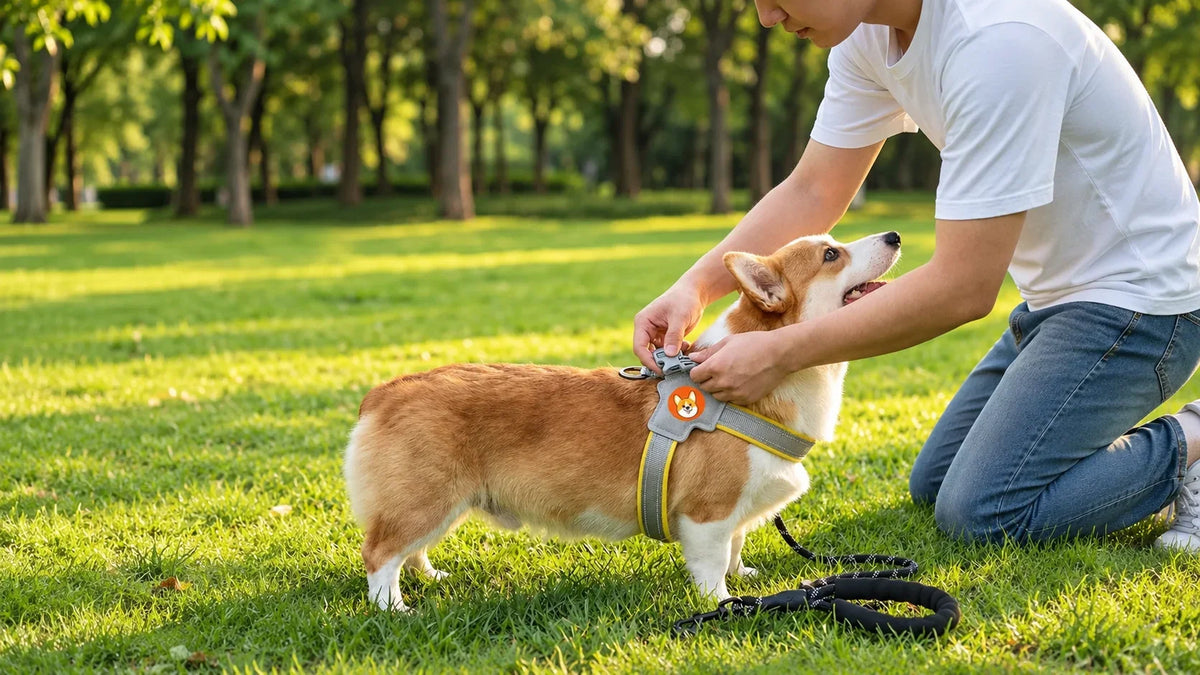
Adjust both sides evenly so the harness stays centered without squeezing the body.
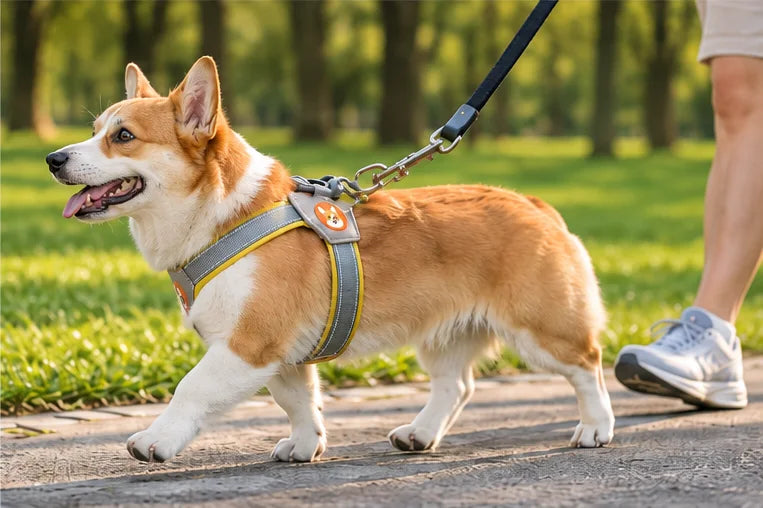
The final fit test happens when your dog moves.
Have your dog walk a short distance on a loose leash, turn in both directions, and sit if comfortable.
Watch for:
After a short walk, remove the harness and inspect the skin for redness or rubbing.
If the harness continues to shift or interfere with movement after adjustment, consider another size or design.
For more detailed fitting and adjustment instructions, see our guide on how to put on a dog harness correctly.
A Y-shaped harness may be worth considering for several different situations, but the decision should be based on your individual dog.
A Y-shaped harness may not be the best choice if the front panel repeatedly rises toward the throat, the body strap rubs behind the front legs, or the harness rotates even after balanced adjustment.
Consider another size or design if your dog shows shortened front-leg movement, changes posture, resists walking, or can back out of the harness. Dogs with orthopedic, respiratory, or mobility concerns should be fitted with guidance from a veterinarian or other qualified professional.
For a dog that enjoys regular neighborhood walks, look for a lightweight harness with a secure fit and comfortable materials.
A back-clip option may be sufficient for a dog that already walks calmly on a leash.
For hiking, fit and durability become especially important.
Look for strong stitching, reliable buckles, adjustable straps, and materials suited to the weather and terrain.
Check the fit while your dog walks uphill, downhill, and over uneven ground. A harness that feels comfortable on a short sidewalk walk may behave differently during a longer outdoor adventure.
For activity-specific features, see our guide to choosing an adventure dog harness.
A Y-shaped front doesn't automatically prevent pulling.
If your dog regularly pulls toward distractions, consider whether a properly fitted front-clip or dual-clip harness would help with gentle directional guidance.
Pair the equipment with reward-based loose-leash training rather than relying on leash pressure alone.
The American Veterinary Society of Animal Behavior (AVSAB) recommends reward-based training methods, reinforcing the importance of teaching desired walking behavior rather than depending solely on equipment.
Dogs with broad chests, narrow waists, short legs, or long bodies may require more careful fitting.
For example, a deep-chested dog may need a different chest-panel length than a compact, short-legged dog.
If a harness repeatedly shifts, rubs, or leaves gaps, don't assume tightening it further will solve the problem.
A different harness shape may fit better.
For more guidance on how body proportions affect equipment choices, explore our article on choosing the right dog harness by breed and body shape.
For dogs with existing orthopedic, respiratory, or mobility concerns, consult your veterinarian before choosing specialized equipment.
A few common mistakes can make even a promising harness uncomfortable or difficult to use.
Choosing by appearance alone: A harness may look ergonomic in product photos but still fit your dog poorly. Always check the actual structure and sizing information.
Assuming Y-shaped means no-pull: The front shape doesn't determine leash control. Check the attachment points separately.
Ignoring the space behind the front legs: Straps positioned too close to the armpits may rub during repeated movement.
Overtightening the harness: Pulling every strap tight doesn't necessarily make a harness safer. Excessive tension can create uncomfortable pressure.
Skipping the walking test: A harness can appear properly fitted while your dog stands still but shift noticeably during movement.
Assuming one design works for every breed: Individual proportions and comfort matter more than a general label.
Before buying, use this quick checklist:
There is no universally best Y-shaped dog harness for every dog. The right choice depends on the interaction between its design, your dog's proportions, and how you use it.
A Y-shaped dog harness offers a distinctive front-strap arrangement that may suit many dogs during everyday walks and outdoor activities.
However, the shape itself is not a guarantee of comfort, unrestricted shoulder movement, or better leash control.
The most important things are correct sizing, thoughtful strap placement, secure adjustment, and how your dog actually moves while wearing the harness.
Start with accurate measurements, check the fit from multiple angles, and take a short test walk before relying on a new harness for longer outings.
A harness that fits your dog's body and activities is more useful than one chosen for its shape alone.
If you're ready to compare options, browse HOWOLL's dog harness collection to explore different designs, adjustment features, and leash attachment points. Review each product's actual construction and sizing information before making your choice.
Not necessarily. A Y-shaped harness can be a good choice when it fits correctly and doesn't rub or interfere noticeably with movement. However, research doesn't establish that every Y-shaped design is better than other harness styles. The best option depends on the individual dog and product.
No. A Y-shaped front describes the harness structure, not a guaranteed pulling-control feature. A model with a front leash attachment may offer additional directional guidance, but consistent loose-leash training is still important.
Yes, puppies can wear appropriately sized Y-shaped harnesses if the design fits their bodies comfortably. Our guide to the best puppy harnesses explains what to look for in a first harness. Choose an adjustable model suited to the puppy's current measurements and check the fit frequently as they grow.
They can be. Large dogs may benefit from adjustable straps, durable hardware, and a secure chest fit. However, a harness should be selected according to the dog's actual measurements, strength, and activity rather than size category alone.
It's generally better to remove a walking harness when it isn't needed, especially during sleeping, crating, or unsupervised periods. Extended wear can increase the opportunity for rubbing or snagging. Check your dog's skin and comfort regularly.
First, check whether the straps are adjusted evenly and whether the chest panel is centered. If the harness continues rotating during normal walking, its size or structure may not match your dog's body shape. Consider another design rather than repeatedly overtightening it.