

- by HuangMila
5 Best Hands-Free Dog Leashes for Large Dogs
- by HuangMila
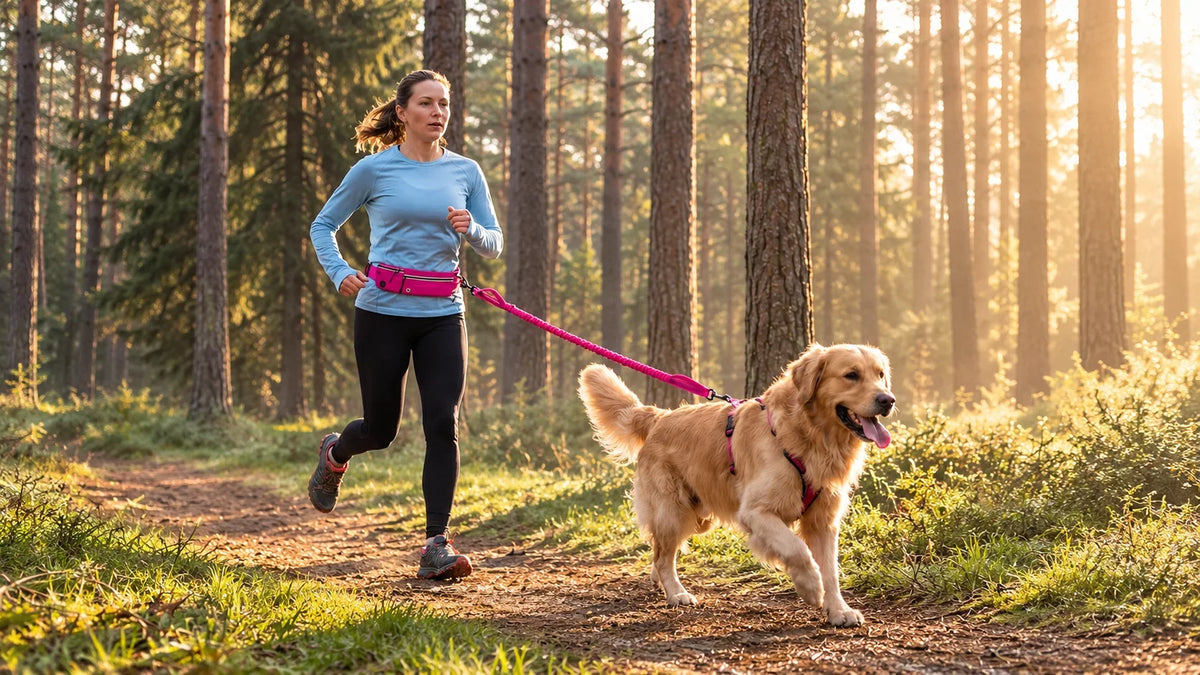
Walking a large dog hands-free can be convenient, but the right leash depends on your dog and your route. Belt fit, hardware, maximum reach, and your ability to take close control matter more than an impressive feature list. If your dog regularly lunges or pulls you off balance, practice with a handheld leash before trying a waist-worn setup.
At a glance: This guide compares five named hands-free leashes marketed for large dogs. These products have not been independently tested for this article. Compare each maker's current size guidance with your dog's leash manners before buying.
The five products are iYoShop Hands Free Dog Leash with Zipper Pouch (Large), LANNEY Hands Free Dog Leash with Zipper Pouch, iYoShop Retractable Hands Free Dog Leash (Medium/Large), Tuff Pupper Heavy Duty Hands Free Dog Leash, and Tuff Mutt Hands Free Dog Leash. They represent four brands because two are different iYoShop models.
A calm large dog may walk beautifully on a waist leash. A dog that suddenly changes direction can pull against your torso, disturb your balance, or bring the line across your legs. The best buying decision starts with the dog's behavior, not breed or weight alone.
The American Kennel Club's leash guide recommends considering a dog's size, training level, and activity. It notes that hands-free leashes can help when running or hiking requires both hands, while larger or untrained dogs need substantial, comfortable equipment. That does not mean a thicker strap makes an untrained dog safe to walk hands-free.
Before shopping, think about your normal route. An open running path has different demands from a crowded sidewalk, a road crossing, or an uneven trail. A belt that feels comfortable at home must also stay secure when you walk, turn, and reach for a short handle. Your dog should be able to move naturally without the line dragging near your feet.
Check the manufacturer's waist measurement range rather than assuming “one size fits most.” The belt should sit where its instructions specify, remain stable when you turn, and allow normal breathing. Padding may improve comfort, but a padded belt that rotates or rides up is still a poor fit. Try it over the clothes you actually wear on walks.
A traffic handle gives you a short grip before passing a cyclist, another dog, or a narrow doorway. Check its position: can you reach it promptly without looking down or letting the line cross your legs? A handle provides an option for planned close control; it is not a guarantee that you can stop a forceful lunge.
Measure a bungee leash at full extension, not only when relaxed. More reach can help a dog move freely on an open path, but it can also let a large dog reach a hazard sooner. Check the rules for the specific park or trail you visit. A leash sold for running is not automatically permitted everywhere.
Inspect the buckle, clips, rings, stitching, and elastic sections. Confirm that the product's stated dog-size guidance applies to your dog and that the leash clips to a designated ring on a properly fitted harness. A claimed weight range is a seller specification, not an independent safety test. Replace damaged gear, and ask the manufacturer if compatibility is unclear.
Each product below has a different combination of belt, handles, bungee, and storage. Confirm current specifications on the linked product page before ordering.
Best fit: An owner of a calm large dog who wants storage on mixed neighborhood walks. This iYoShop large variant lists two padded handles, a zipper pouch, a bungee, and a 25–120-pound dog range.
Before buying: Confirm the current belt range and the leash's full extended length. With your normal walking items in the pouch, check whether the belt shifts or the bag bounces. Both handles should be easy to reach before a crossing. Treat the listed weight range as seller guidance, not proof that the leash can stop a lunge. View the iYoShop listing.

Best fit: A large-dog owner who wants an all-in-one waist belt, leash, and pouch. LANNEY's listing, ASIN B07MYRLH57, identifies LANNEY as the manufacturer and describes dual handles and a retractable bungee for medium and large dogs.
Before buying: Check your waist against the current belt range and your route against the leash's maximum reach. Test the pouch with the phone, keys, or treats you plan to carry; extra weight may affect how the belt sits. If your route is mostly crowded, a shorter fixed line may be easier to control. View the LANNEY listing.

Best fit: A steady walking pair that wants variable reach on an open route. This second iYoShop model, ASIN B08L6Y4HWG, advertises two handles and a 25–150-pound range.
Before buying: Confirm the exact variant and test how far the line extends. Variable reach can be awkward near traffic or when the dog crosses your path. Check whether you can grab the closer handle quickly. The 150-pound figure is a seller claim, not evidence that the leash can restrain a lunging dog. View the iYoShop retractable listing.

Best fit: An owner who prefers broad waist support for a large dog with reliable leash manners. Tuff Pupper's listing describes a lumbar belt for a 28–50-inch waist, reflective padded handles, a bungee, and one dog up to 125 pounds.
Before buying: Confirm those dimensions for the current variant. Try the belt as instructed and check that it stays flat when you turn or bend. Make sure you can reach a short handle. The stated dog-weight limit is a seller specification, not a guarantee of control if the dog bolts. View the Tuff Pupper listing.

Best fit: Someone who wants a simpler adjustable belt without making a pouch the main feature. Tuff Mutt's listing describes a bungee, reflective details, and two handles for walking, running, or hiking.
Before buying: Check the current belt measurement range, full leash length, and dog-size guidance. Test whether the closer handle is easy to reach, and judge the setup against your route and walking habits. View the Tuff Mutt listing.

This separate section presents HOWOLL's Reflective Hands-Free Running Dog Leash as another option to compare against the same fit and control criteria.
HOWOLL's product page lists an adjustable belt with a 4.3-inch padded waist support, an anti-slip back panel, a traffic handle, reflective stitching, and a bungee leash that extends from 57 to 79 inches. The belt and panel are intended to improve comfort and stability, while the handle offers a closer grip when you plan to pass pedestrians or enter a narrow section. The bungee may feel smoother for a large dog that already keeps a fairly steady pace beside you.
The listed maximum of 79 inches exceeds six feet. Check the rules of your walking location using the fully extended reach, and choose a shorter setup where necessary. The product page does not provide a dog-weight rating for this leash. Before buying it for a particularly large or strong dog, ask HOWOLL to confirm compatibility with your dog's size and intended use. Do not interpret shock absorption as protection against an uncontrolled lunge.
If you are comparing other activities or dog sizes, HOWOLL also has a broader hands-free leash buying guide. For harness fit, see how to measure a dog for a harness.
Start by removing options that do not fit your body, your dog's stated size range, or your route's leash-length limit. Then compare the remaining belts and handles. An inexpensive leash with an easy-to-reach handle may suit you better than a feature-rich one whose pouch shifts during a run.
For mostly open, steady jogging routes, a bungee can smooth small pace differences if you remain comfortable with its full reach. On neighborhood walks with crossings, prioritize a short grip and predictable leash length. On narrow trails, stairs, or slippery ground, a handheld fixed-length leash may give you clearer control than any waist-worn product in this list.
Before the first outing, inspect the buckle, clip, and stitching. Attach the leash to a ring intended for leash use on a properly fitted harness. Walk a few minutes in a quiet area, then stop and turn both ways. Check that the line stays away from your feet and that you can take the traffic handle before you need it. If your dog pulls you off balance, return to a handheld setup and work on loose-leash walking. The AKC's training guidance explains reward-based ways to build those skills.
One useful comparison is to try the same short route with each candidate setup, if a return policy or in-store fitting makes that possible. Wear your usual walking clothes and carry the items you normally take. Notice whether the belt moves when your dog stops to sniff, whether a pouch bounces, and whether the leash brushes your shoes during a turn. Check that you can shorten the distance before approaching another person. A belt that feels comfortable while standing still may behave differently once you and your dog are moving. These observations tell you more about your own fit than a feature list can.
These five products offer different combinations of storage, belt support, variable reach, and handles. Compare their current specifications and judge each on fit, control, and the places you walk. For a large dog that already walks calmly, a secure belt, a manageable fully extended length, and an accessible short handle are more useful than an impressive feature list alone.
If you prefer a padded belt with a traffic handle, compare the separately featured HOWOLL Reflective Hands-Free Running Dog Leash against the same criteria. Choose the setup that you can use comfortably and control reliably with your own dog.
Start with the maker's dog-size and waist-size guidance. Then compare the belt fit, hardware, fully extended leash length, and whether you can reach a short handle quickly. The better choice is the one that fits both your dog and your normal route.
If your dog frequently lunges or pulls you off balance, use a handheld setup you can control and practice loose-leash walking first. A bungee or padded belt may change how tension feels, but neither replaces training or makes a sudden pull safe.
A properly fitted harness is often a practical choice when movement and pace may change. Use its designated leash ring and check that it allows normal movement without rubbing. The AKC's harness and collar overview discusses fit and use; ask your veterinarian about individual neck, airway, or orthopedic concerns.